
REVIEW · CROATIA
SPLIT-PREMIUM Emperor’s Walking Tour for History Lovers + Museum
Split’s great historical surprise is that Diocletian’s Palace is not a deserted ruin. It is the working heart of Split, with homes, cafés, shops, churches, and narrow lanes built into and around the Roman walls. This tour helps you read that remarkable mix instead of simply walking past it.
I like the small maximum of 15 people, which makes it easier to hear the guide and ask questions. I also like the local point of view. Guides such as Joško, Daniela, and Joseph bring in stories about Split, Dalmatia, and modern Croatia, not just dates and building names. The main caution is that the group tour is for adults only, and the €10 admission to the Diocletian’s Cellars is not included.
Key points
- Roman palace turned living city: See how Split grew inside and around Diocletian’s fourth-century residence.
- Local licensed guides: Joško, Daniela, and Joseph are praised for clear explanations, humor, and personal knowledge of Split.
- Small-group format: Groups are capped at 15, with a minimum of four required for the scheduled group tour.
- Broad Old Town route: The walk includes the Peristyle, Golden Gate, Riva, People’s Square, Fruit’s Square, Jupiter’s Temple, and more.
- Cellars cost extra: The best-preserved section of the palace can be visited, but museum admission is €10 per person.
- Best for history-minded adults: This is a serious history walk with local stories, not a costumed show or a Game of Thrones-themed tour.
Why Diocletian’s Palace Makes This Walk Different
Many city tours take you to a palace, explain its past, and then leave you at the gate. In Split, the palace is the city center. Emperor Diocletian built his vast retirement residence around 305 AD, but later generations reused its stone, rooms, passages, and courtyards. The result is part Roman palace, part medieval town, and part modern neighborhood.
That layering is easy to miss on your own. You may see an arch or a column without realizing how it fits into the original plan. A good guide gives you the basic map first: the palace had ceremonial areas, religious buildings, military defenses, and private quarters. Once that framework is clear, the lanes of Old Split make much more sense.
I especially like that this walk treats the palace as more than an archaeological site. You will see where Roman design meets later Croatian life. The guide’s job is not just to point out old stones, but to explain how Split kept adapting to them.
A few more vineyard days around Croatia worth a look
- Porto: Cálem Cellar Tour, Interactive Museum & Wine Tasting
★ 4.5 · 4,113 reviews - Gran Canaria: Winery Tour, Wine Museum, and Tasting
★ 4.7 · 131 reviews - Banana Museum, Rum Distillery & Winery with Tasting: Premium tour
★ 4.5 · 62 reviews
Starting on the Riva and Entering the Old City
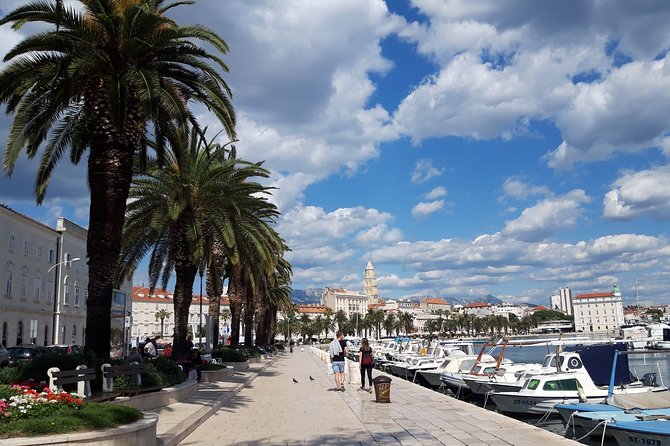
The tour begins and ends at the Main Stage on the Riva promenade, at Obala Hrvatskog narodnog preporoda 22. This is a practical meeting place near the waterfront, and the route stays within central Split. If you arrive by cruise ship, the starting point is within walking distance of the port area, according to the tour information.
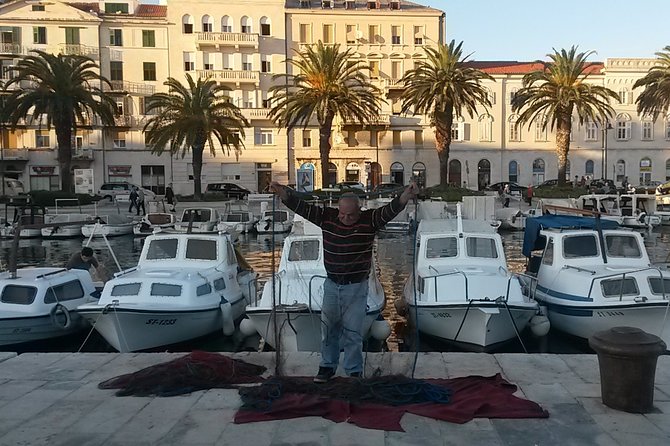
The Riva gives you a useful opening view. Behind the waterfront are the palace walls and the dense streets of the old center. In only a few steps, you move from an open promenade into a compact urban maze. That contrast helps explain Split’s appeal: the sea is always close, but the oldest part of town feels enclosed and inward-looking.
From there, the guide leads you through the medieval Old Town. The walk is not one long Roman lecture. It moves across different periods, showing how the settlement changed after the emperor’s palace became the foundation for a city.
Diocletian’s Palace and the Peristyle
The central stop is Diocletian’s Palace, a UNESCO World Heritage Site. About 25 minutes are devoted to the palace itself, though the full walk returns to palace features several times. The important thing here is the scale. This was not a small villa. It was a fortified complex built for an emperor who wanted a secure retirement residence near his birthplace and the Adriatic coast.
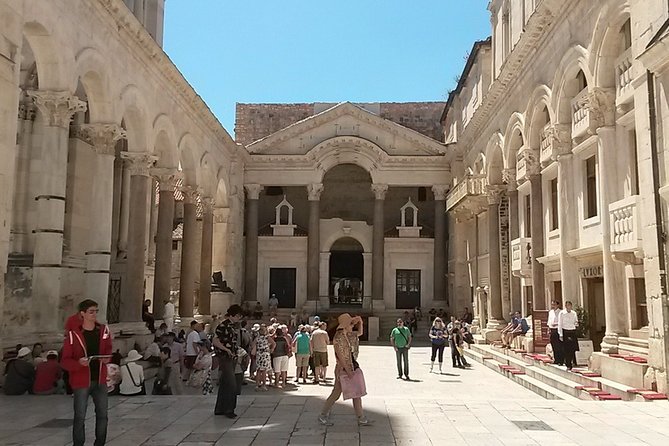
The Peristyle, or Emperor’s Square, is the emotional center of the visit. Its columns and surrounding buildings create one of Split’s most memorable spaces. This is where the formal Roman palace feels most visible, even though later construction has changed the setting.
A guide can also help you understand the unusual transition from imperial residence to living town. Instead of seeing the Peristyle as a frozen monument, you see it as a place still tied to daily life. The five-minute listed stop may sound brief, but the square is revisited as part of the larger palace explanation.
You should expect plenty of standing while the guide talks. On a busy day, the square can be crowded, and the stone reflects heat. Wear comfortable shoes and bring water, especially in August. One guide kept a group moving and engaged even in temperatures around 38 degrees Celsius, but early departures remain the sensible choice.
Cathedral of Saint Domnius and Jupiter’s Temple
The Cathedral of Saint Domnius is seen from outside. That matters if you want to enter the cathedral, treasury, or bell tower, because those visits are not part of this tour. The exterior itself is tied closely to the palace story, since the cathedral occupies what was originally Diocletian’s mausoleum.
Nearby, the former Temple of Jupiter is also viewed from outside, with an optional visit inside. Again, admission is not included. This arrangement keeps the group moving and holds the tour to roughly two hours, but you should budget extra time and money if you want to explore these interiors later.
I consider this a sensible approach for a first walk. You get the setting and the historical connection without being locked into every paid site. If you already know you want to visit the cathedral or temple interiors, ask the guide for the best order after the tour.
More Historical Tours in Croatia:
- Vienna: Historical Pharmacy Cellar Guided Tour
★ 4.8 · 541 reviews - Private Lisbon-Arrábida Wine Tour: 3 Wineries, Coast & Heritage
★ 5.0 · 450 reviews - From Albufeira: Wine Tasting & Historic Silves Tour
★ 4.9 · 421 reviews - Albufeira Wine Tasting: Boutique Winery Tour & Historic Silves
★ 5.0 · 380 reviews
The Palace Cellars and the €10 Decision
The Diocletian Palace Substructures are described as the best-preserved part of the palace. These underground rooms show the original layout more clearly because later domestic life did not alter them as much. The tour allows about 20 minutes for this part, but the museum admission costs an additional €10 per person.
This is the one extra charge to plan for. At $30 per person, the guided walk is fairly priced for a small group and a licensed local guide. Add the cellar fee only if you want a fuller look at the palace foundations and storage areas. The fee is not hidden, but it is easy to overlook because the main tour price does not cover it.
I would pay the extra amount if Roman architecture is your main reason for coming to Split. The cellar visit gives you something more solid than a view from the street. If you are mainly after orientation, local stories, and a walk through the center, the included outdoor route may be enough.
The tour also visits the Vestibulum, the main entrance to the emperor’s private residence. This circular entrance helps connect the ceremonial palace to the private side of Diocletian’s world. It is a small stop, but it gives the route a clear sense of progression.
Golden Gate, Grgur Ninski, and the Northern Route
The Golden Gate was the main entrance to Diocletian’s Palace and is often considered the most impressive of the four principal gates. The guide explains its role in the palace plan and points out details that are easy to miss when you are focused on getting through the old city.
The route also includes the statue of Grgur Ninski, one of Croatia’s important historical figures. This stop shifts the focus away from Roman emperors and toward Croatian identity. The guide uses the statue to explain why Grgur Ninski matters and how later Croatian history fits into Split’s older Roman setting.
These short stops are useful because they prevent the tour from becoming too narrowly focused on Diocletian. You get Roman architecture, medieval urban growth, and Croatian cultural history in one compact walk.
Fruit’s Square, People’s Square, and the City Clock

Fruit’s Square, officially Trg Braće Radić, occupies the site of a former green market. It includes a famous statue of Marko Marulić, often called the father of Croatian literature. This is a good example of how the tour moves beyond grand monuments. A market square and a literary figure tell you something about the city’s public life and cultural memory.
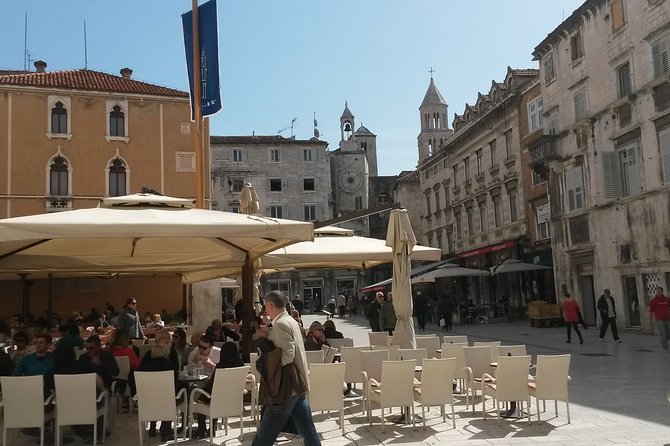
Narodni Trg, or People’s Square, is the largest and liveliest piazza in the Old Town. The name is plain, but the space helps you understand how Split expanded outside the palace walls. Here the medieval and later city feels more open, with room for public gathering and everyday activity.
The route also passes the 500-year-old City Clock. It is a small detail, but these are often the moments that make a walking tour useful. Once the guide points it out, you can return to it later and see the Old Town with sharper eyes.
The listed timing gives many of these places about five minutes each. That does not mean you are rushed through the entire square. It means the guide uses them as focused stops within a continuous walk. Some tours have lasted closer to two and a half or three hours when questions, photographs, mobility needs, or group interest slowed the pace. The advertised duration is about two hours, so treat any extra time as possible rather than guaranteed.
What the Guides Add
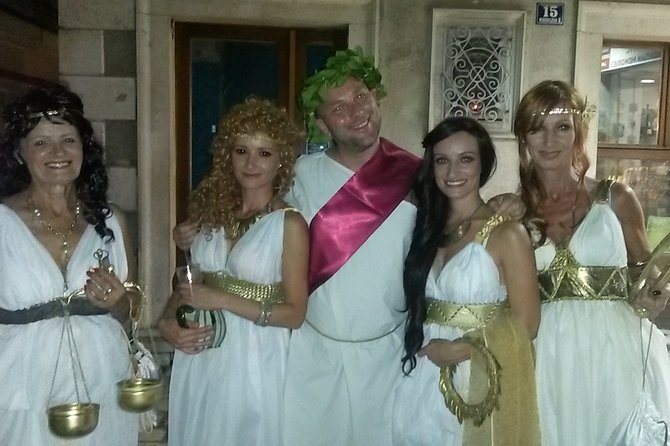
The strongest part of this experience is the guide’s delivery. Joško is described as funny, thorough, and especially strong at explaining how Split developed across different centuries. Daniela is praised for her clear account of Dalmatia and her ability to bring the palace to life. Joseph is a Split local who combines history with personal feeling for his hometown.
That variety matters. A licensed guide can supply dates and architectural facts, but the best moments come when the information is linked to place. The guides also appear willing to answer questions about modern Croatia, local food, bakeries, and restaurants after the formal walk ends.
One useful detail is the help some visitors received after the tour. Joško helped arrange a restaurant visit for a person with a specific diet, and guides offered local dining suggestions. That is not a formal feature you should book the tour for, but it reflects the personal scale of the experience.
The humor also gets frequent praise. That is important on a history walk because palace construction, dynastic politics, and centuries of change can become heavy going. The right jokes keep the pace lively without turning the tour into a comedy act.
This is a real history tour. You will see locations associated with Game of Thrones, but the guide does not center the walk on filming scenes. If that is your main interest, you will need to research those locations separately.
Group Size, Age Limits, and Walking Comfort
The group tour has a maximum of 15 people and requires at least four participants to operate. That is much more manageable than a large city group, especially in the narrow streets of Split. You can usually stay close to the guide, hear explanations, and ask a question without holding up a crowd.
The scheduled group option is for adults only and is not recommended for anyone under 18. A private tour is available for all ages. Families with children should pay close attention to that distinction before booking.
The walk is suitable for most people, but it involves standing and moving over old-town surfaces. One guide adjusted the pace carefully for a person with limited mobility and allowed the tour to run longer. That suggests a considerate approach, but you should still mention mobility needs when booking rather than assume every route or surface will be easy.
Heat is the bigger practical concern. Split’s stone streets and open squares can become hot early in the day. Comfortable shoes, water, a hat, and a morning start will make the experience much more pleasant.
Is $30 a Fair Price?
At $30 per person, this is good value if you want a structured introduction to Split rather than a quick orientation. The price includes a licensed resident guide, a custom-designed route, and a small-group format. Those matter more here than they would in a simple stroll because Diocletian’s Palace is confusing without a map and context.
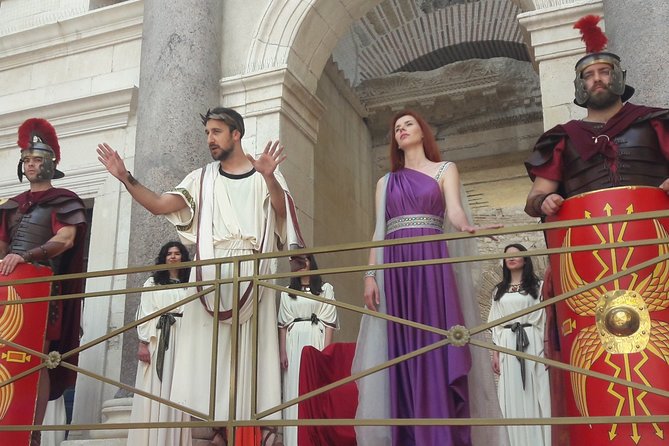
The price does not include the €10 Diocletian’s Cellars admission, gratuity, or entry to the cathedral and Jupiter’s Temple. The tour also does not include a costumed theater show. That last point is worth noting because some palace experiences lean heavily on staged performances. This one is built around explanation and conversation.
The value rises if you are in Split for only a day, arriving by cruise ship, or visiting for the first time. The guide gives you an overview that helps you choose what to revisit on your own. If you already know the palace well and prefer to wander at your own pace, the paid walk may feel less necessary.
Free cancellation is available up to 24 hours before the start time. Cancellations made inside that window are not refunded. Poor weather or failure to reach the minimum group size can lead to a new date or a full refund.
Who Should Book This Split Walking Tour?
I would choose this tour if you want Roman and Croatian history explained by a local, with enough humor to keep the walk moving. It suits adults who like architecture, urban history, and stories about how a city changes over time.
It is also a strong choice for a cruise stop. The meeting point is on the Riva, the route covers the central sights, and guides have shown flexibility with tight schedules. Still, leave yourself a buffer before your ship’s departure. The walk may last longer than the stated two hours if the group asks questions or needs a slower pace.
I would not choose it if your main goal is a costumed performance, a dedicated Game of Thrones route, or extensive interior access to every monument. The cathedral and Jupiter’s Temple are not included as full visits, and the cellar ticket costs extra.
Final Verdict: A Smart First Look at Split
Book this tour if you want to understand why Split feels like a city built inside a Roman palace. The route covers the essential sights, but its real strength is the connection between them: emperor, medieval town, Croatian culture, public squares, and present-day life.
For the best experience, book an early time in hot weather, wear good shoes, and decide in advance if you want to add the €10 cellar visit. If you prefer a personal, history-led walk and do not need staged entertainment, this is one of the better ways to get your bearings in Split.
FAQ
How long does the tour last?
The advertised duration is approximately two hours. Some tours may take longer when the group has questions, needs a slower pace, or spends extra time on certain stops.
Where does the tour begin and end?
It begins and ends at the Main Stage on the Riva promenade, at Obala Hrvatskog narodnog preporoda 22, Split.
Is admission to Diocletian’s Cellars included?
No. Admission to the Museum of Diocletian’s Cellars costs €10 per person and is not included in the tour price.
Is the tour suitable for children?
The group tour is for adults only and is not recommended for anyone under 18. A private tour is available for all ages.
How many people can join the group?
The group tour has a maximum of 15 participants and requires a minimum of four people to operate.
What happens if the weather is poor or the minimum group size is not reached?
You will be offered a different date or experience, or a full refund. You can also cancel up to 24 hours before the start time for a full refund.
More Walking Tours in Croatia
- SPLIT-PRIVATE Walking Tour of Diocletian’s Palace & Old Town
★ 5.0 · 467 reviews - Toledo Tour & Vineyard Walk with Wine Tasting from Madrid
★ 5.0 · 2,546 reviews - Saint-Émilion: Vineyard Walking Tour and Tasting
★ 5.0 · 404 reviews - City Walking Tour & Port Wine Cellar
★ 5.0 · 115 reviews
Just added around Croatia
- Winery Tour and Tasting with the Sommelier in KRK★ 4.5 · 10 reviews
- Best of Korcula island winery’s by 4X4 Canam buggys with lunch★ 3.5 · 3 reviews
- Wine Tasting Round Trip from Hvar – Family Winery at a Hilltop★ 4.0 · 17 reviews
- Twice the Wine – Two wineries half day tour, with delicacies★ 4.5 · 56 reviews
- Wine Adventure with Peljesac Winery and Ston Tour★ 5.0 · 4 reviews
- Oyster Farm, Ston and Winery Tour★ 5.0 · 10 reviews
- Peljesac Vineyards & Oysters – Private Day Trip from Dubrovnik-Mercedes Vehicle★ 5.0 · 7 reviews
- Sunset wine tasting in vineyard★ 5.0 · 58 reviews
Croatia Vineyard Tours, compared.
Game of Thrones Tour with Diocletian’s Palace Cellar
Read our review →

Game of Thrones Small group Tour with Diocletian’s Cellar
Read our review →
Twice the Wine – Two wineries half day tour, with delicacies
Read our review →
Coastal Vineyards: A Dream Wine Tour to Elaphiti Islands
Read our review →
Wine Tasting Round Trip from Hvar – Family Winery at a Hilltop
Read our review →
Browse the lists this tour appears in