REVIEW · PORTO
City Walking Tour & Port Wine Cellar
Porto’s best introduction may be a downhill walk from the city center to the river, ending with port wine in Vila Nova de Gaia. This tour connects grand architecture, tiled history, old lanes, river views, and the wine trade in about three hours.
I like the way the route starts at São Bento station, where more than 20,000 hand-painted azulejos turn a railway hall into a history lesson. I also like the small-group limit of 12, which gives guides such as Nuno, David, and João room to answer questions and adjust the pace.
The main drawback is simple: this is a history walk first and a wine tasting second. The tasting comes at the end, not throughout the walk, and the route includes roughly 3 kilometers of walking, stairs, slopes, and uneven old streets.
Key points to know before booking
- São Bento station is a major stop: The blue-and-white tile panels are explained rather than treated as a quick photo stop.
- The walk runs downhill to Gaia: You cross beneath the lower part of the Dom Luís I Bridge and finish across the river.
- History comes before wine: Expect Portugal’s religion, invasions, discoveries, politics, and port production, with tasting at the end.
- The group is capped at 12 people: That is a useful size for questions and personal guidance.
- You taste three port wines: The cellar visit is included, but hotel transport is not.
- The end point is in Gaia: You finish at Largo Joaquim Magalhães, close to restaurants and other port houses.
Why this route works for a first day in Porto
At $42.33 per person, this is not the cheapest way to walk around Porto. You can see many of the same streets on your own, and free walking tours cover the center. The value here comes from putting the pieces together: a local guide explains the city, leads you down a carefully chosen route, crosses into Gaia, and arranges a cellar visit with tasting.
I especially like this format if you have just arrived and want to get your bearings fast. By the end, you know where the cathedral, old neighborhoods, riverfront, bridge, and port cellars fit together. You also finish in an area where you can continue with lunch, dinner, or another wine visit.
The tour is listed at about three hours. In practice, your pace may depend on the group. One account describes a walk of about 3 kilometers, while another notes a fair number of stairs. This is manageable for anyone with moderate physical fitness, but it is not a sit-down sightseeing experience.
More Wine Cellar Visits in Porto
- Porto: Bridges Cruise & Sunset & Port Wine Cellar Option
★ 4.2 · 4,180 reviews - Porto: Cálem Cellar Tour, Fado Show & Wine Tasting
★ 4.4 · 3,530 reviews - Porto: City Train Tour, River Cruise & Wine Cellar
★ 3.9 · 2,601 reviews
Starting at São Bento and its 20,000 tiles
Meet at the McDonald’s at Praça da Liberdade 126. The location is central and near public transport, but check the exact meeting instructions carefully before setting out. The tour has had an isolated problem involving a missed meeting point, so arriving early and keeping the confirmation message handy is sensible.
The first major stop is São Bento station. The building is famous for its azulejos, the painted ceramic tiles used across Portugal, but the point of the stop is more than decoration. The panels form a visual account of Portuguese events and traditions, spread across the station hall in more than 20,000 hand-painted tiles.
This is one of the strongest parts of the walk because the guide gives you a way to read the station rather than simply admire its blue walls. A good explanation helps you notice how public buildings in Portugal can function as history books.
Nuno has been singled out for making this stop especially engaging, and David is also described as bringing local stories into the explanation. Guides can vary, so the tone may change, but the subject remains one of Porto’s most worthwhile introductions.
Porto Cathedral, the bishop’s house, and high viewpoints
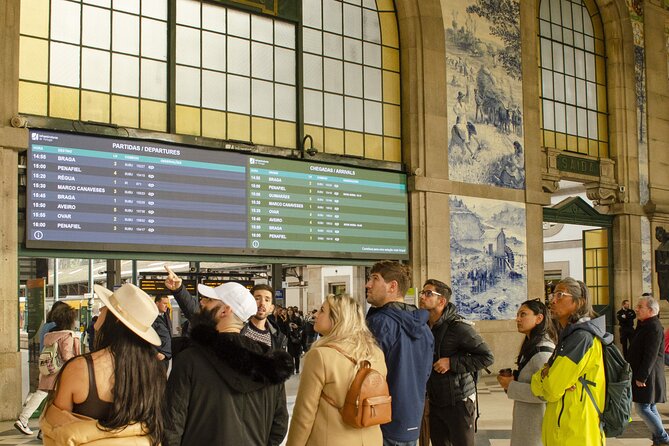
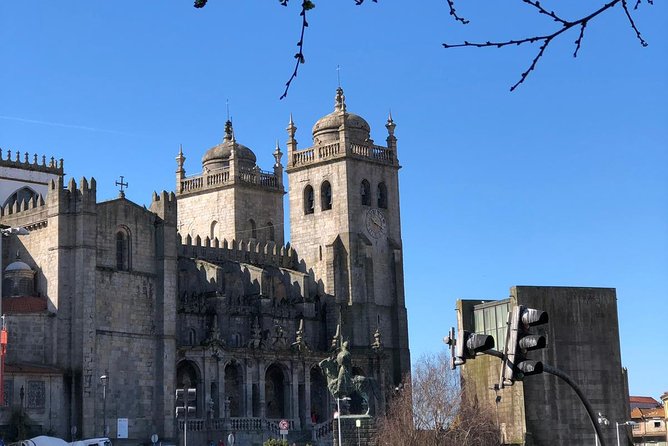
From the station area, the route passes the Porto Cathedral and the bishop’s house. Here the guide discusses religion in Portugal and the long connection between church authority, civic power, and daily life.
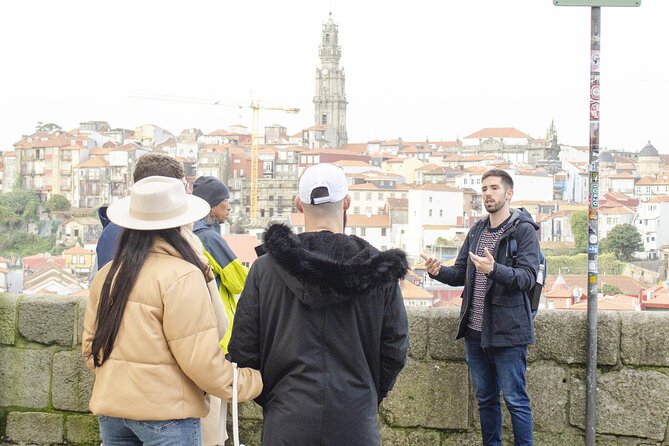
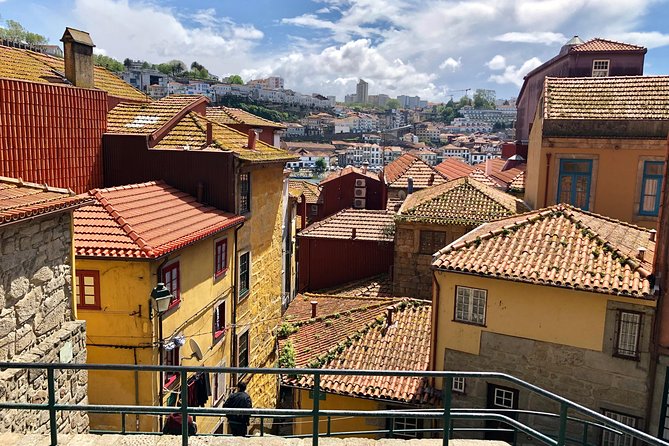
This section also brings you to viewpoints over parts of Porto. The exact stopping points can vary with the guide and group pace, but the basic reward is clear: you begin seeing the city from above before walking down toward the river.
I like this sequence because it gives the city some shape. Porto can feel steep and confusing when you first arrive. Looking across rooftops and slopes from a high point helps you understand the city’s topography before the route takes you through its older quarters.
Do not expect a long photography session at every viewpoint. The guide is balancing several subjects in a short tour, and one critical account felt that some stops lasted too long. If you prefer a brisk walk with only brief explanations, this may feel talk-heavy.
The oldest neighborhood and stories of conflict
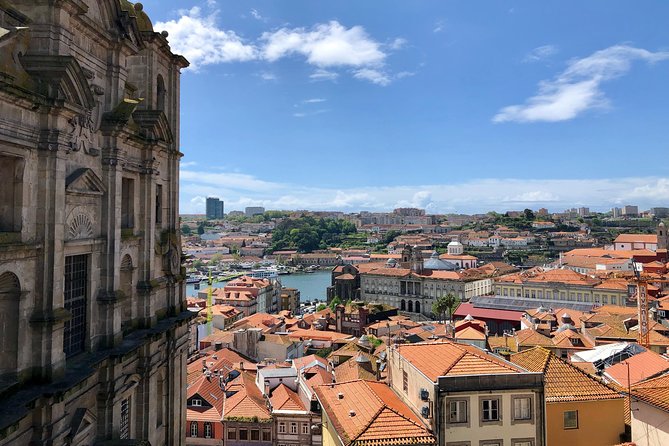
The route continues through Porto’s oldest neighborhood. This is where the tour shifts from famous buildings to the layered story of the city itself.
The guide discusses Muslim invasions and Portugal’s Age of Discoveries, linking local streets to events that shaped the country. Other explanations have included the struggle for power between the king and the church, as well as present-day social and political issues.
That wider scope is useful. You are not just hearing dates attached to monuments. You are being shown how religion, royal authority, trade, and exploration affected the people who lived here.
David has been praised for taking visitors through less-used parts of Porto and for explaining how the city works today, not only what happened long ago. Nuno is also described as animated and easy to follow. If your guide likes questions, this is a good part of the tour to ask about local customs, food, or the city’s changing neighborhoods.
The trade-off is pace. Guides who tell stories with energy may spend five or ten minutes longer than you expect at a stop. This tour suits you best if you enjoy context and conversation. It may frustrate you if you want to reach the bridge and cellar as quickly as possible.
More Wine Cellar Visits in Portugal
- Porto: Hop-on Hop-off Bus with Optional Cruise & Wine Cellar
★ 4.1 · 934 reviews - Porto: Magic Train Tour and Port Wine Cellar with Tastings
★ 3.9 · 730 reviews - Visit to Cockburn’s Cellars
★ 5.0 · 526 reviews - Porto: Port Cellar Visit and Wine Tasting at Fonseca
★ 4.2 · 450 reviews
Down to the river and across to Vila Nova de Gaia
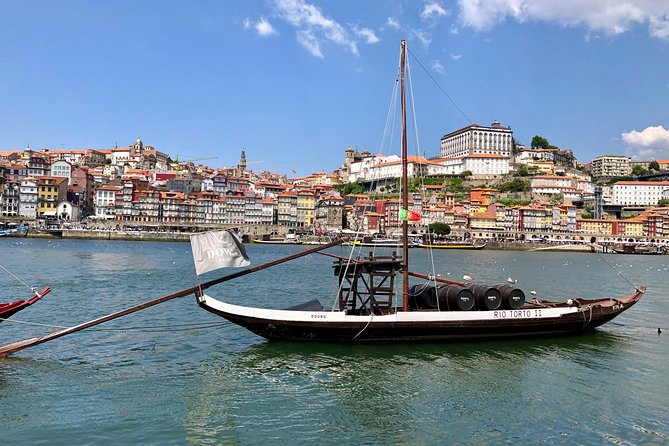
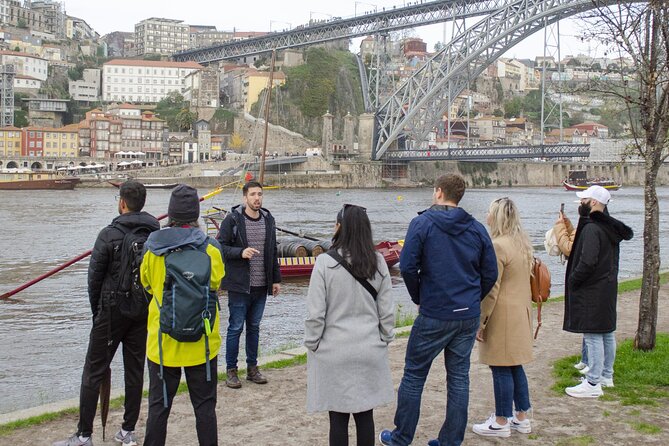
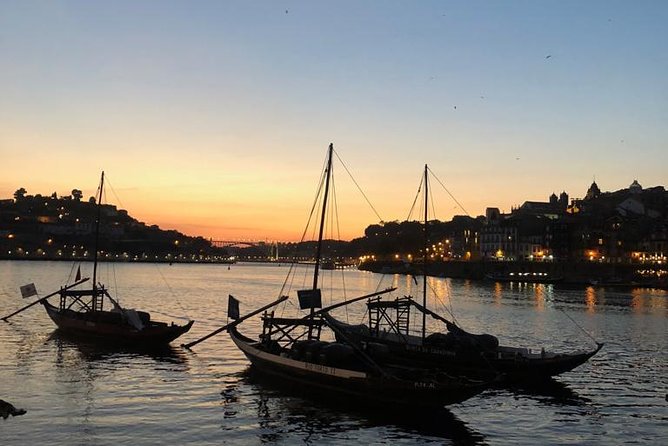
The route heads downhill toward the Douro River and crosses beneath the lower part of the Dom Luís I Bridge. You are moving from Porto into Vila Nova de Gaia, the city on the south bank where port wine is aged.
That crossing gives the tour a clear narrative. You begin in the city where much of Porto’s civic and religious story unfolds, then move toward the commercial side of the wine industry. The bridge is also one of the route’s most useful orientation points, since it connects the upper city views with the riverfront below.
The downhill direction is a real advantage for many walkers. One visitor with an injury still enjoyed the route but needed an Uber to return uphill afterward. That is a useful warning: the tour finishes lower than it begins, and you may need to arrange your own way back if you do not want to climb.
The walk offers strong views across Porto, especially as you approach Gaia. Bring shoes suited to slopes and old paving. The tour description calls for moderate physical fitness, and that is fair advice.
The Gaia port cellar and three tastings
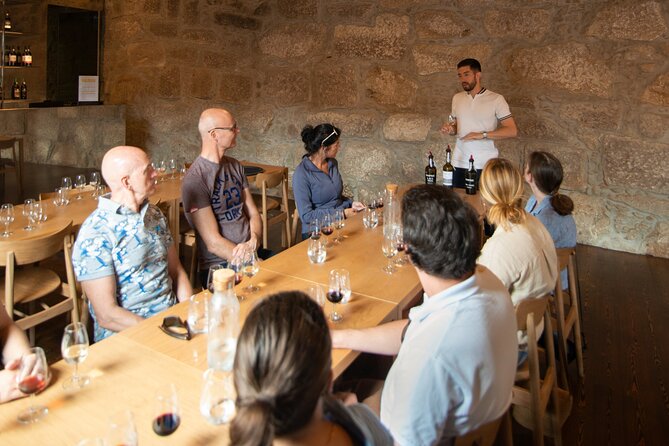
The final stop is in Cais de Gaia, where you visit a producer’s port wine cellar. The cellar visit lasts about 1 hour and 30 minutes according to the schedule, although the full experience is listed at approximately three hours, so timing can vary.
The published inclusion is a tasting of three port wines. You should think of this as a guided introduction, not an open-ended drinking session. The guide explains how port is made and helps you notice differences among the wines, including the sweeter profile that some people may not enjoy.
This is where the city walk pays off. By the time you taste, you have already heard why Gaia matters to port production and aging. The wine is no longer an isolated tasting at the end of a bus ride. It is connected to the river, the bridge, and the history of the two cities.
The format also gives you a chance to ask practical questions about labels, styles, and flavors. One guide has been praised for coaching the group through the character of each port. Another account describes a private group tasting with the option to buy the wines tasted, but purchasing arrangements can vary by producer, so do not treat that as guaranteed.
Port is often sweet and fortified. If you prefer dry table wine, the tasting may not be your ideal wine experience. Still, three samples are enough to compare styles without turning the afternoon into a marathon.
The guides and the feel of a small group
The named guides connected with this experience include Nuno, David, and João. Nuno is described as funny, energetic, and passionate about Porto. David is noted for his local pride, patient answers, restaurant suggestions, and willingness to show less-traveled corners. João is described as clear and well-prepared on both the city and port production.
Guide quality matters a great deal on a history walk. The same streets can feel flat with a rushed explanation or memorable when the guide connects them to ordinary life. Here, the strongest pattern is a guide who talks freely, answers questions, takes photos, and offers advice on food and drinks after the tour.
The maximum group size is 12. That is small enough to hear the guide and ask questions without needing a microphone, while still large enough to meet other people. Some departures may be much smaller. One account describes only four people, which created a more personal feel.
The style is not silent or minimalist. Expect plenty of explanation. If you like local stories, political context, and questions, you will probably enjoy the format. If you want a quick procession from sight to sight, choose a shorter highlights walk instead.
Price, timing, and practical value
The $42.33 price includes the local guide, the cellar visit, and three port tastings. It does not include hotel pickup or drop-off. You need to reach the central meeting point yourself and make your own arrangements after finishing in Gaia.
For me, the price is fair if you value interpretation and a planned tasting. A self-guided walk costs less, but you would need to research the history, choose a route through the old neighborhoods, find your way across the bridge, and arrange a cellar visit separately.
The booking pattern also matters. The experience is often reserved about 98 days ahead, which suggests that popular dates can fill early. If your Porto stay is short, booking ahead is sensible.
Free cancellation is available up to 24 hours before the start time. Cancellations made inside that period are not refunded, and changes are not accepted. The tour also requires a minimum number of participants, so if the provider cancels for that reason, you receive an alternative or a full refund.
Animals, including service animals, are not allowed. The experience is offered in English and uses a mobile ticket.
Who should choose this Porto tour
I would choose this experience for a first visit when I wanted a guided introduction rather than a dedicated wine lesson. It suits you if you like:
- Walking through old neighborhoods instead of staying on a coach
- Hearing stories about religion, invasions, discoveries, and city politics
- Seeing São Bento station with an explanation of its tile panels
- Finishing near Gaia’s restaurants and port houses
- Meeting other people in a group of no more than 12
- Tasting port after learning where and why it is aged
I would think twice if you have limited mobility, dislike stairs, or need a fast-paced sightseeing schedule. I would also skip it if your main goal is to taste wine throughout the afternoon. The port portion comes at the end, and the walking and history take most of the experience.
Rain does not automatically ruin the tour. Guides have continued in wet weather, and the route still includes indoor or sheltered highlights such as the station and cellar. Still, bring suitable clothing because much of the route is outdoors.
Should you book it?
Book this tour if you want Porto explained as a connected place: station tiles, church power, old lanes, bridge views, Gaia cellars, and port wine in one route. The best feature is not simply the tasting. It is the way the walk makes the tasting make sense.
Skip it if you want a short, wine-heavy outing or a gentle route without slopes. For most reasonably fit visitors who enjoy history and local guidance, $42.33 is a solid buy, especially at the start of a Porto stay. You will finish with a better map of the city, several useful food suggestions, and a clear idea of where to continue exploring.
FAQ
How long does the City Walking Tour and Port Wine Cellar experience last?
The tour lasts approximately three hours. The Gaia cellar visit is listed as lasting 1 hour and 30 minutes, though the exact timing can vary.
Where does the tour begin?
It begins at McDonald’s, Imperial, Praça da Liberdade 126, 4000-322 Porto, Portugal.
Where does the tour finish?
It finishes at Largo Joaquim Magalhães, 4400-174 Vila Nova de Gaia, Portugal.
How many port wines are included?
The published inclusion is a tasting of three port wines.
Is hotel transportation included?
No. Hotel pickup and drop-off are not included. You must reach the meeting point and arrange your own return from Gaia.
How much walking is involved?
The route involves about 3 kilometers of walking, along with stairs, slopes, and old streets. A moderate level of physical fitness is recommended.
More Walking Tours in Porto
- Porto: Guided City Walking Tour & Port Wine Cellar
★ 4.9 · 18 reviews - Porto to Gaia Experience: City Walk and Wine Cellars
★ 4.7 · 12 reviews - Toledo Tour & Vineyard Walk with Wine Tasting from Madrid
★ 5.0 · 2,546 reviews - SPLIT-PRIVATE Walking Tour of Diocletian’s Palace & Old Town
★ 5.0 · 467 reviews
More Port Wine Quinta Tours in Porto
- Port Wine Tour | 3 Cellars | 7 Tastings | 12 Participants Maximum
★ 5.0 · 443 reviews - Porto: Taylor’s Port Cellars Visit & Port Wine Tasting
★ 5.0 · 414 reviews - Porto Half-Day Guided Historical Tour with Port Cellar Visit and Tasting
★ 5.0 · 217 reviews - Douro Valley: Winery Tour at Quinta do Tedo and Tastings
★ 4.6 · 147 reviews
Just added around Porto
- Porto to Gaia Experience: City Walk and Wine Cellars★ 4.7 · 12 reviews
- Porto tour with Port Wine tasting in a hidden wine cellar!★ 5.0 · 3 reviews
- Porto: Douro Valley Private Grand Experience – Private★ 5.0 · 16 reviews
- Porto: Guided City Walking Tour & Port Wine Cellar★ 4.9 · 18 reviews
- Private Porto Half-Day Tour – Wine Cellars & Cheese Tasting★ 5.0 · 3 reviews
- Porto: Fonseca Wine Cellar & WOW The Wine Experience★ 4.6 · 25 reviews
- Porto: Douro Valley Tour with 2 Wineries, Lunch and Cruise★ 4.9 · 18 reviews
- Porto: Fonseca Cellar Tour & WOW Museum Pack★ 3.7 · 3 reviews
Porto Vineyard Tours, compared.
Douro Valley with Winery Lunch, Tastings & Cruise
Read our review →
Douro Valley Tour: 2 Vineyard Visits, River Cruise, Winery Lunch
Read our review →
Tastings at 2 Wineries, Chef’s Lunch & Boat Tour
Read our review →
Douro Valley with Two Winery, Boat Trip and Lunch From Porto
Read our review →
Douro Valley Wine Tour: 3 Vineyard Visits, Wine Tastings, Lunch
Read our review →