
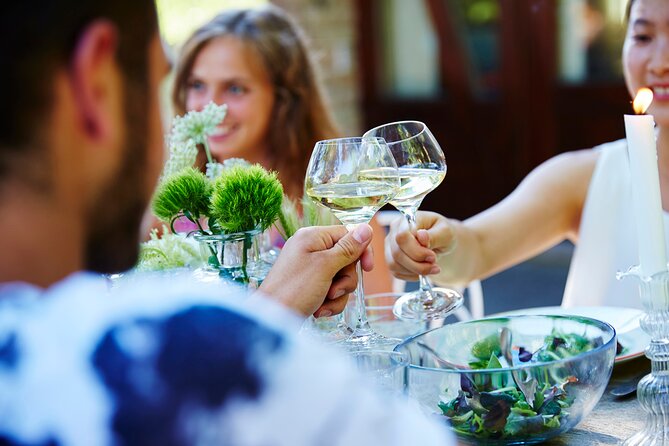
REVIEW · STRASBOURG
Immersive winery visit, tasting and picnic cart
The most unusual part of this Alsace wine visit is the 180-degree film projected onto cellar barrels. It turns the Zeyssolff family story and winemaking work into a short show before you move into the working cellar, where about 20 old oak barrels still hold up to 10,000 liters each. I like the mix of technology and old-fashioned wine production, and I like that the visit ends with a proper picnic rather than a few crackers.
The five-wine tasting is another strong point, especially if you want an introduction to Alsace wines without committing to a long day on the Route des Vins. The main consideration is pacing: roughly 30 minutes of the 90-minute visit is spent watching the film, and the train from Strasbourg runs only about once an hour, so your timing may require patience.
Key points before you book
- See the 1897 Zeyssolff drum: This unusual wine vessel was made for the 1900 Universal Exhibition in Paris and is still used today.
- Taste five wines: The tasting is guided and progressive, with the glass normally kept for several wines.
- Take away a full picnic: Expect three cheeses, three cold cuts, bread, water, a seasonal fruit, a muffin, and half a bottle of wine.
- Watch the cellar film: The 180-degree presentation lasts about 30 minutes and explains the family story and working methods.
- Reach it without a car: Gertwiller station is about a five-minute walk from the cellar, though train schedules need careful planning.
- Small-group setting: The activity accepts a maximum of 20 people and is offered in English.
A wine visit built around old barrels and new technology
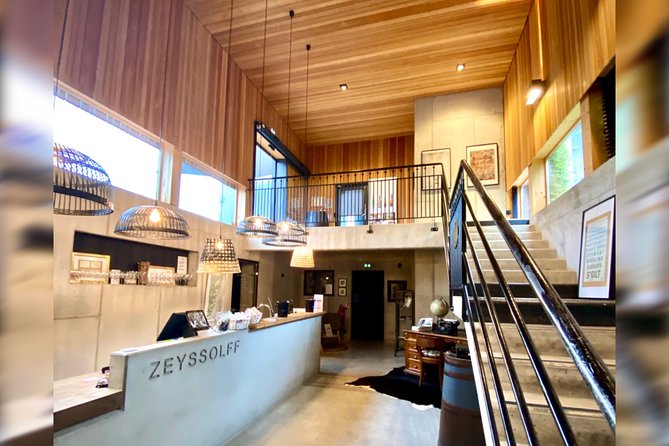
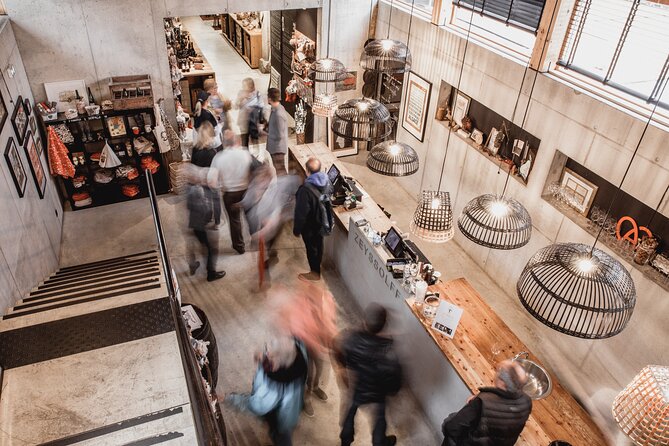
Maison Zeyssolff, also known as Au Péché Vigneron, is in Gertwiller, about 20 minutes from Strasbourg. This is not a grand château tour. It is a working family cellar with a renovated visitor area, a shop, large wooden containers, and a clear focus on how wine is made and enjoyed.
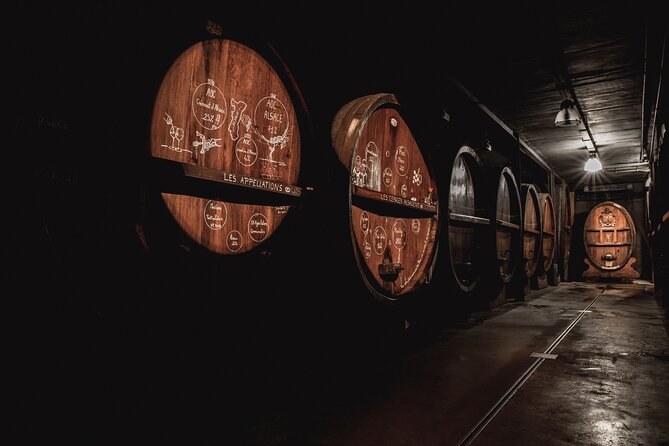
The cellar’s scale gives the visit its character. Around 20 oak barrels are roughly a century old, and each can hold 10,000 liters. That is a useful detail to grasp in person because it shows the difference between a small tasting room and a place designed for serious wine production.
The star object is the Zeyssolff drum. It was made in 1897 for the Universal Exhibition in Paris in 1900, then kept in service rather than being treated as a museum piece. You get a direct link between the family’s past and its present work. This is the sort of detail that makes a short cellar visit feel rooted in place.
The winery has also completed a full biological conversion. The supplied information does not give a detailed list of farming methods or certification terms, so I would not book this expecting a technical organic-wine seminar. Still, the change is part of the house’s current philosophy and is included in the story told during the visit.
More Vineyard Picnics in France
- Bordeaux Full Day Wine Tour – 3 Wineries & Gourmet Picnic Lunch
★ 5.0 · 307 reviews - Saint-Emilion: Grand Cru Classé Guided Winery Visit & Picnic
★ 4.7 · 296 reviews - Bordeaux Full Day Wine Tour – 3 Wineries & Picnic Lunch
★ 5.0 · 29 reviews
The 180-degree film comes first in the experience
The renovated cellar includes a scenographic area where film is projected across the barrels. The presentation covers the family story and the way the house approaches its work. It lasts about 30 minutes, or one-third of the full visit.
That format will suit you if you like a clear visual introduction before a guide explains the details. Instead of beginning with a long talk about grape varieties and fermentation, you first get a sense of the people, place, and atmosphere behind the bottles. The setting does some of the teaching, with the barrels becoming part of the screen.
It may not suit you if you want every minute spent walking through production rooms or tasting wine. One German-language comment specifically found the film too long and wished for more of a traditional picnic arrangement. That is a fair warning. This is a planned show, not a quick introductory video.
The film is also one reason the experience has won several industry honors, including the Tourism Trophy Alsace in 2021, Wine Tourism Trophy in 2022, and a marketing award from France Vins d’Alsace in 2023. Those awards do not guarantee that the format will match your taste, but they help explain why the cellar has invested in presentation as well as production.
What the cellar tour adds after the film
After the film, your guide takes over and explains the work in person. The balance is important. You are not left alone with a screen for the entire visit. The film accounts for about 30 minutes, while the rest of the 90-minute program combines personal explanation, cellar viewing, and tasting.
The guide covers wine production and the spaces where Zeyssolff wines are born and aged. The old barrels make the explanation concrete. You can connect the talk about storage and aging to objects that are right in front of you, rather than trying to picture the process from a diagram.
The available details do not name the individual guide, so you should not expect a particular presenter by name. The experience is offered in English, which makes it practical for international visitors. The cellar also welcomes service animals, is near public transportation, and is open to most participants.
The group limit is 20 people. That is small enough to keep the tasting and explanations manageable, although the exact feel will depend on the number booked on your date. If you prefer a private, highly technical consultation, this is not advertised as one. It is a shared visit designed for a broad audience.
Five wines, with a practical tasting format
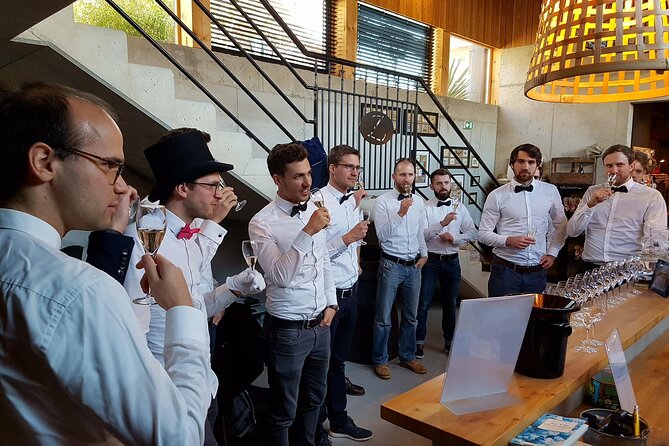
The tasting includes five wines and is commented by the guide. The selection is not listed in advance, so you should expect an introduction to the house rather than a guaranteed set of named bottles. This is useful for comparing styles and deciding what you might want to buy later.
The tasting is progressive. The cellar explains that glasses do not need to be changed between every wine because the wines are served in an order that limits one flavor from overpowering the next. A glass is changed when moving from red to white. One Italian-language comment would have preferred rinsing between each pour, so this is worth knowing if you are particular about tasting technique.
I see this as a small practical compromise. For a casual 90-minute visit, one glass is simpler and reduces fuss. For a formal wine education session, rinsing or changing glasses between every sample would give cleaner comparisons. The experience aims for an approachable introduction rather than a sommelier examination.
The wines themselves receive strong praise in the supplied comments, and one useful detail is that a Strasbourg lunch waiter later recommended three of the same wines tasted at the cellar. That suggests the tasting includes bottles with enough local presence to appear on restaurant lists, not just obscure samples chosen for novelty.
You can also buy bottles and other products in the shop. If you find a wine you like, note its name during the tasting rather than relying on memory after five pours.
More Winery Tours in France
- Saint-Émilion: Grand Cru Classé Winery Visit and Tasting
★ 4.6 · 1,118 reviews - Saint Emilion Half-Day Trip with Wine Tasting & Winery Visit from Bordeaux
★ 4.5 · 1,034 reviews - Médoc Region Half-Day Wine Tour with Winery Visit & Tastings from Bordeaux
★ 4.5 · 211 reviews - Beaune: Winery Tour by Bike with Wine Tasting
★ 4.5 · 116 reviews
The picnic basket is more substantial than a snack
At the end, you receive a picnic basket to enjoy on the terrace or in the cellar, or to take away. The listed contents are:
- One pretzel
- Three cheeses
- Three cold cuts
- Bread
- Water
- One seasonal fruit
- One muffin
- Half a bottle of wine
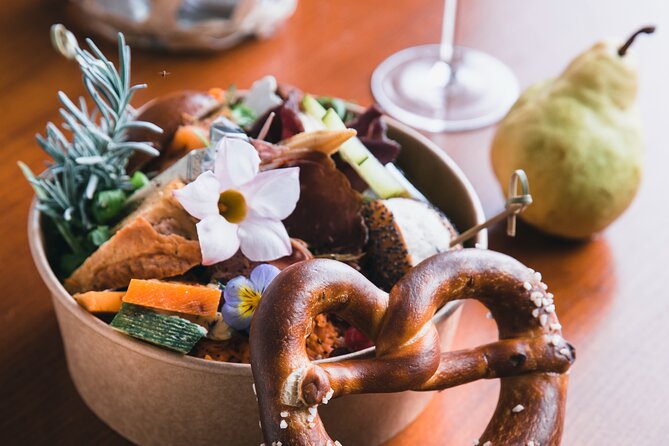
The food is presented as a generous picnic rather than a token bite with the tasting. Specific descriptions include salami, salad, cucumber cubes, a large pretzel, a crisp apple, French bread, and cheese. The exact seasonal items may vary, but you can expect enough variety to make this feel like a light lunch.
The half bottle is a particularly useful inclusion. It gives you wine for the picnic without requiring you to buy a full bottle, and it helps explain the price of the package. The basket also makes the visit easier to fit into a day of sightseeing. You do not have to find a restaurant immediately after leaving the cellar.
Vegetarian baskets are available on request. This is important: ask when booking or before the visit rather than assuming the standard basket will suit you. Vegetarian needs were accommodated successfully in the supplied comments.
The picnic is not styled as a linen-covered country feast. It is packed for eating on the terrace, in the cellar, or elsewhere. One person wanted a picnic blanket and a more carefully arranged presentation, while still finding the ingredients good. If you care most about atmosphere and table service, bring your expectations down. If you care about fresh food, local bread, and enough to eat, the basket makes better sense.
Terrace or take-away: choose based on your day
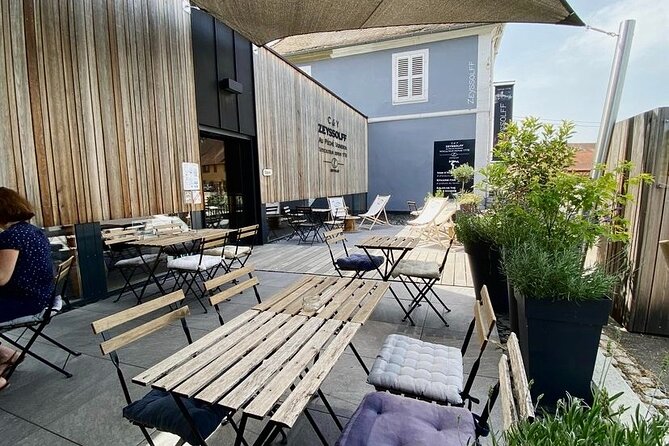
You can eat the picnic on site or take it with you. On a sunny day, the terrace gives you a pleasant place to continue the tasting at a slower pace. A comment also describes sitting outside in the sun after the tour, while another says the staff arranged an indoor table when rain arrived.
That flexibility matters in Alsace, where weather can change your plans quickly. The cellar is not offering a formal restaurant meal, but it does provide a place to eat without rushing away. If the weather is poor, ask about an indoor table. The visit has enough room for that option, though the information does not promise a specific seating setup.
Taking the basket away may be the better choice if you plan to walk through the vineyards or continue toward another town. The contents are portable, and the half bottle gives you a ready-made break. Do remember that the experience ends back at the cellar, so your onward plans should allow time to carry the food.
Getting to Gertwiller from Strasbourg or Colmar
The meeting point is 156 Route de Strasbourg, 67140 Gertwiller, France. From Strasbourg, the cellar is about 20 minutes away by the stated travel estimate. Gertwiller station is approximately a five-minute walk from the meeting point, making the train a realistic option.
The catch is the timetable. Trains run only about once an hour, and the tour schedule may not line up neatly with departures. You can end up waiting before or after the visit. That does not add cost, but it can add a fair amount of dead time to a short activity, so check the return train before booking.
From Colmar, the journey is described as about 30 minutes, with a train change in Barr or a 20-minute walk depending on the route. The walking option may be less convenient if you are carrying luggage or counting on a quick connection. Public transport works, but this is one of those outings where a little timetable planning pays off.
The maximum group size is 20, and confirmation arrives at booking. The activity is offered in English. Most people can participate, and service animals are allowed.
Is $58.81 a fair price?
At $58.81 per person, this is more than a basic cellar tasting. You are paying for a 90-minute visit, a guided presentation, five wines, access to a historic working cellar, and a substantial picnic with half a bottle included.
The value is strongest if you would otherwise pay separately for lunch and a tasting. Three cheeses, three cold cuts, bread, dessert, fruit, water, and wine add real substance. The price also covers the production behind the 180-degree film and the renovated visitor space.
The value is weaker if you want a quick tasting and plan to spend the rest of your day visiting several wineries. About 30 minutes is devoted to the film, and the train schedule can stretch the outing beyond its advertised duration. You are buying a complete experience, not just five pours.
For many visitors, the package is a sensible middle ground: more informative and filling than a shop tasting, but much shorter than a full vineyard day. The 4.7 rating from 19 reviews and 95 percent recommendation rate support that overall value, while the lower scores point to the film length, glass handling, and picnic presentation as the main areas to consider.
Who will enjoy this visit most?
I would choose this for a first visit to Alsace wine country, especially if you are based in Strasbourg and want a manageable half-day outing without renting a car. The English presentation, train access, and food included make it easy to understand and easy to plan around.
It also suits couples and small groups who want to taste wine but do not want a highly formal lesson. The film gives you context quickly, and the guide fills in the practical details. Families and mixed-interest groups may appreciate the visual format and picnic more than a long technical tasting.
Wine specialists may find the five-wine format too broad, and people who dislike screens may find the 30-minute film a poor use of time. You should also ask for the vegetarian basket in advance if needed. The cellar is welcoming, but the experience is not designed as a private masterclass or a polished restaurant meal.
Free cancellation is available up to 24 hours before the start time for a full refund. Changes or cancellations inside that window are not accepted for a refund.
Should you book the Zeyssolff cellar visit?
Book it if you want a compact introduction to Alsace wine with a real meal attached. The 1897 wine drum, enormous old barrels, five-wine tasting, and generous basket give the visit more substance than a standard tasting-room stop.
Skip it if you want to spend the full time in vineyards, dislike film-based presentations, or need perfectly timed train connections. For everyone else, this is a good-value outing from Strasbourg, provided you check the timetable and understand that the picnic is practical rather than decorative.
FAQ
How long does the Zeyssolff cellar experience last?
The visit lasts approximately 1 hour and 30 minutes.
How many wines are included?
The experience includes a commented tasting of five wines.
What food comes with the picnic basket?
The standard basket includes a pretzel, three cheeses, three cold cuts, bread, water, one seasonal fruit, one muffin, and half a bottle of wine.
Can I request a vegetarian picnic basket?
Yes. A vegetarian basket is available on request.
Is the tour offered in English?
Yes. The experience is offered in English.
How do I get there from Strasbourg?
You can travel by train to Gertwiller station, which is about a five-minute walk from the cellar. The journey from Strasbourg is described as approximately 20 minutes, but trains run about once an hour.
Can I cancel for a full refund?
Yes. You can cancel at least 24 hours before the local start time for a full refund. Cancellations or changes made less than 24 hours before the start are not accepted for a refund.
More Food and Drink Experiences in France
- Medoc or Saint Emilion Wine Tasting and Chateau from Bordeaux
★ 5.0 · 1,415 reviews - Saint-Émilion: Bordeaux Vineyard Tour and Wine Tasting
★ 4.8 · 578 reviews - Bordeaux: Vineyards Wine Tasting Half-Day Trip
★ 4.2 · 470 reviews - Saint-Émilion: Vineyard Walking Tour and Tasting
★ 5.0 · 404 reviews
Just added around France
- 3-Hour Private Painting tuition in a beautiful Cognac vineyard★ 3.5 · 2 reviews
- 4×4 tour in a winery followed by a tasting★ 5.0 · 46 reviews
- Winery Visit with Food and Wine in Carcassonne★ 5.0 · 59 reviews
- Walk in the vineyards of Chablis Grands Crus★ 4.5 · 7 reviews
- Wine Getaway with Tasting in the Chablis Vineyard★ 5.0 · 3 reviews
- Winery Tour & Wine Tasting – Deli Plate & 3 Wines★ 5.0 · 72 reviews
- Visit to the Faugères Vineyards with Picnic from Béziers★ 5.0 · 7 reviews
- Languedoc Vineyard Tours★ 5.0 · 25 reviews
Strasbourg Vineyard Tours, compared.
Alsace Wine Route Small Group Half-Day Tour with Tasting from Strasbourg
Read our review →
Alsace Wine Route Wineries & Tasting Small Group Guided Tour from Strasbourg
Read our review →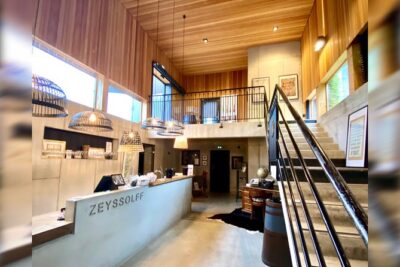
Visit of Cave Immersive – tasting – Kougelhopf to Strasbourg
Read our review →
Browse the lists this tour appears in