
REVIEW · MEXICO
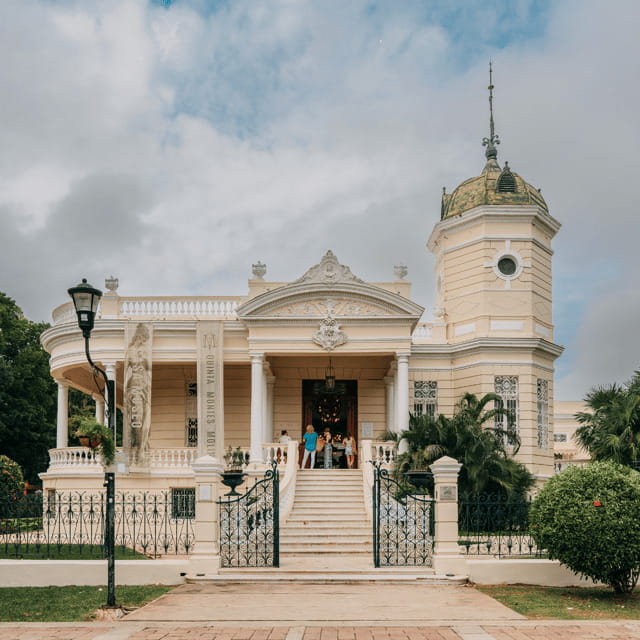
Mérida: La Quinta Montes Molina Museum Entrance
La Quinta Montes Molina gives you a close look at Mérida’s old upper-class life, room by room. The mansion is filled with original family furnishings, from seasonal chairs and Baccarat chandeliers to clocks, paintings, miniatures, and tableware. I like the chance to study these objects at my own pace, and I especially like the clues that make the house feel lived in, such as winter upholstery beside summer wicker chairs. The marble floor and the family portraits also connect the rooms to Mérida’s green gold era.
The $8 admission is a fair price if you enjoy architecture, decorative arts, and local history. I also like that the property is wheelchair accessible and allows flexible booking with cancellation up to 24 hours ahead. The main drawback is clear: there is no guided tour included, so anyone looking for a detailed, narrated explanation may find the visit too quiet or brief.
Key details before you go
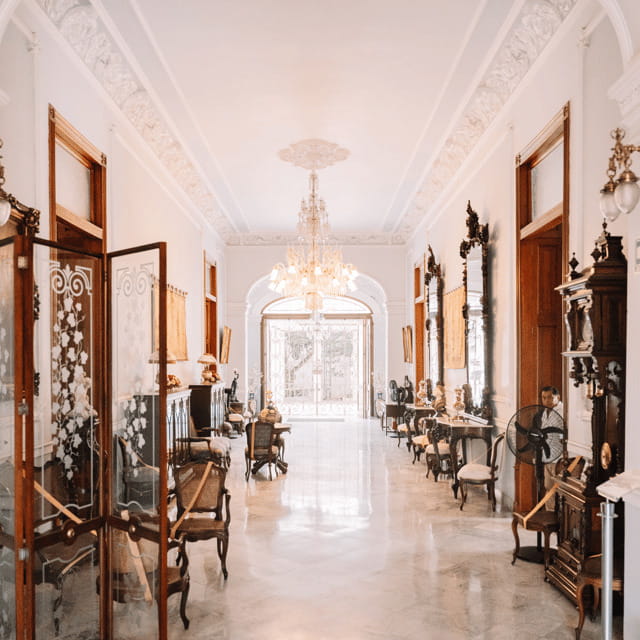
- Three Baccarat crystal chandeliers: The central chandelier came from a Mérida mansion in the 1950s, along with two large wall mirrors.
- A preserved family home: Portraits of Avelino Montes Linaje, María Molina Figueroa, and Avelino’s parents remain near the main hall.
- Two ways to enter: Use the main entrance or come through the garden by way of a sliding glass door.
- Four principal rooms: Admission includes the main hall, piano room, library, and dining room.
- A record of Mérida’s green gold era: The mansion offers a glimpse into the period when henequen wealth shaped the city’s grand homes.
- Self-guided rather than fully narrated: English and Spanish host or greeter support is available, but a guided tour is not included.
Why this mansion matters in Mérida
La Quinta Montes Molina is more than a display of handsome furniture. It shows how wealth, trade, taste, and family life came together in Mérida during the era associated with green gold, the local name for henequen.
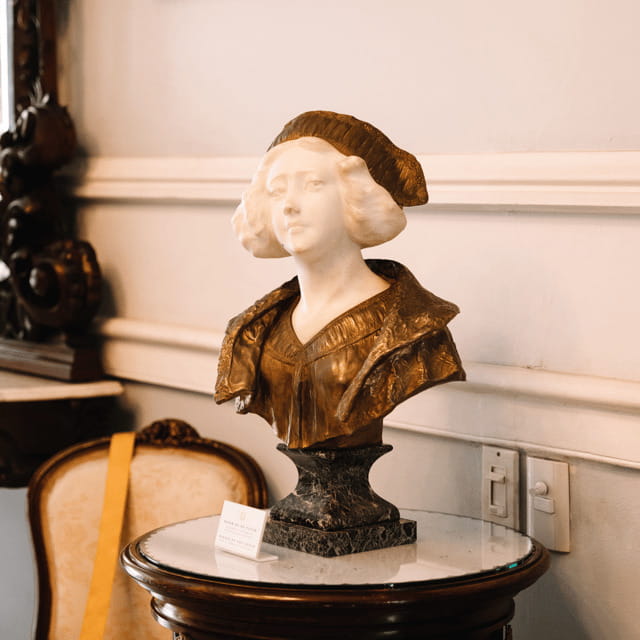
The mansion’s importance comes partly from what remains inside. Instead of seeing only an empty shell with polished walls, you encounter clocks, lamps, vases, sculptures, paintings, miniatures, furniture, and household objects connected to the family who lived there. That makes the visit useful for anyone trying to understand how Mérida’s prosperous families furnished and used their homes.
I find this kind of historic house more revealing than a room filled with unrelated museum pieces. A chair can show how people adapted to the heat. A mirror can hint at the scale of a reception room. A floor can tell you about imported materials and status. Here, those details are part of the story.
The property is connected with Don Avelino Montes Linaje and Doña María Molina Figueroa. Their portraits hang near the main entrance, while portraits of Avelino’s parents, Saturnino and Luciana, appear farther down the hall. These paintings give you a simple family map before you move deeper into the house.
A few more vineyard days around Mexico worth a look
- Porto: Cálem Cellar Tour, Interactive Museum & Wine Tasting
★ 4.5 · 4,113 reviews - SPLIT-PREMIUM Emperor’s Walking Tour for History Lovers + Museum
★ 5.0 · 333 reviews - Gran Canaria: Winery Tour, Wine Museum, and Tasting
★ 4.7 · 131 reviews
Entering through the garden or main door
You can enter La Quinta Montes Molina through the main entrance or from the garden using a lovely sliding glass door. The garden entry gives you a more relaxed approach, while the main door places you directly in the formal part of the home.
The entrance also shows how the mansion has been adapted for present-day use. A folding glass screen is one of the more modern items you may notice. It does not belong to the same visual period as the older furnishings, but it reminds you that this is a preserved home still being used as a public cultural site, not a room frozen entirely in the past.
Once inside, the main hall becomes the focus. Give yourself time here instead of rushing toward the other rooms. The hall contains many of the objects that define the visit: clocks, paintings, sculptures, vases, lamps, furniture, and miniatures.
Because no guided tour is included, I would pause and look for relationships between the objects. Notice which pieces are formal and which seem more practical. Compare the scale of the mirrors with the chandeliers. Look at how the furnishings work together rather than treating each object as an isolated antique.
The main hall and its three Baccarat chandeliers
The three Baccarat crystal chandeliers are among the most memorable details in the mansion. The central chandelier was purchased in the 1950s from another mansion in downtown Mérida. The two large wall mirrors came from that property as well.
That detail adds a useful layer to the visit. The objects are not just decorative items with a famous name attached. They also show how historic furnishings moved between Mérida homes and continued to be valued long after their first installation.
The chandeliers are especially effective in the hall because they work with the mirrors to create a formal setting. You can picture the room being used for receiving family friends or marking special occasions. The surrounding lamps, vases, paintings, and sculptures help you understand the full decorative scheme.
Look closely at the chairs, too. The upholstered chairs were used in winter, while the wicker chairs were used during the summer. In a hot Yucatecan city, this is a small but telling detail. It shows that comfort depended on the season, and that household style had to respond to the climate.
For me, the chairs are more informative than a simple statement about luxury. They reveal daily habits. The house was not only arranged to impress. Its furnishings also helped the people living there adjust to Mérida’s heat.
Carrara marble, Spanish tile, and the painted family line
The floors are made of Carrara marble and Spanish tile. These materials give the mansion much of its formal character, but they also carry historical meaning. Imported marble and tile required money, connections, and careful installation. Their presence points to the international reach of Mérida’s wealthy families during the green gold era.
Take a moment to compare the floor materials as you move through the accessible areas. The change is not just visual. It helps divide the house into different moods and uses. The polished marble contributes to the grand feeling of the hall, while Spanish tile brings another texture and pattern into the home.
The paintings near the main entrance show Don Avelino Montes Linaje and Doña María Molina Figueroa. At the end of the hall, you will find portraits of Avelino’s parents, Saturnino and Luciana.
These paintings help you read the mansion as a family home rather than a collection of expensive things. You can trace one generation to another and place the furnishings within a family story. I find that useful because historic houses can otherwise feel anonymous. Here, the portraits give the rooms names and relationships.
A detailed spoken explanation would make these objects easier to place, but you can still get something from the arrangement if you take your time. If you want names, dates, and a fuller account of the family, ask the English or Spanish host or greeter what information is available.
Same wine country, a different day out:
- Guadalupe Valley Wine Route Tour in Baja California
★ 5.0 · 320 reviews - ATV Off-Road Adventure through Valle de Guadalupe + Winery Visit
★ 4.5 · 201 reviews - Off Road Tour Experience plus Winery visit in Baja
★ 5.0 · 174 reviews - Valle de Guadalupe winery and brewery tours
★ 5.0 · 123 reviews
The piano room, library, and dining room
Your admission includes the piano room, library, and dining room, along with the main hall. These rooms give the visit more range than a quick look at the entrance alone.
The piano room adds a musical and social dimension to the house. Even without a scheduled performance or guided explanation, the room suggests how a family of this period might have entertained at home. It is worth seeing as part of the mansion’s domestic layout, not just as another decorated room.
The library offers a different mood. In a formal house, a library can tell you how private and public life were separated. The hall was made for arrival and display, while a library points toward reading, work, or quieter family time. The provided information does not specify the library’s books or furnishings in detail, so I would focus on the room as part of the home’s daily structure rather than expect a large book collection.
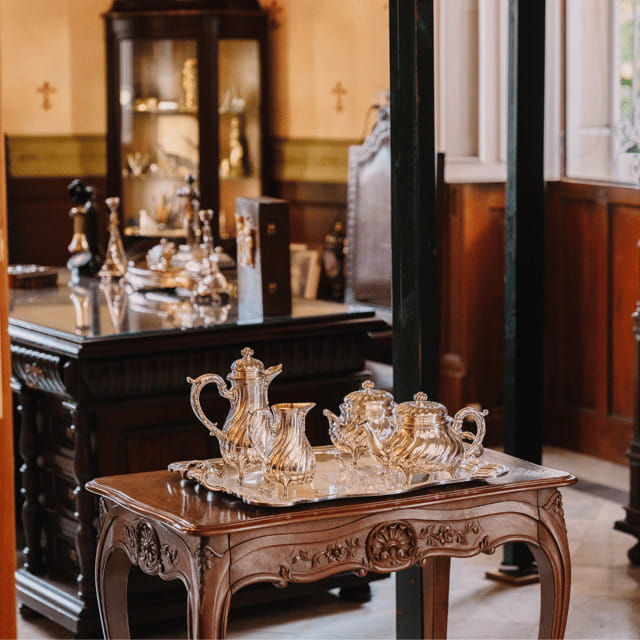
The dining room brings the household back to shared meals and formal service. The preserved furniture and table-related objects help connect the mansion’s wealth to ordinary routines, even if those routines were more elaborate than most families could afford.
The house also preserves original objects such as furniture, paintings, tableware, and other personal items associated with the family. Jewelry is among the types of preserved objects noted in the visit’s descriptions. Photography may be restricted in certain areas, so ask before taking pictures.
Tiffany stained glass and the newer café atmosphere
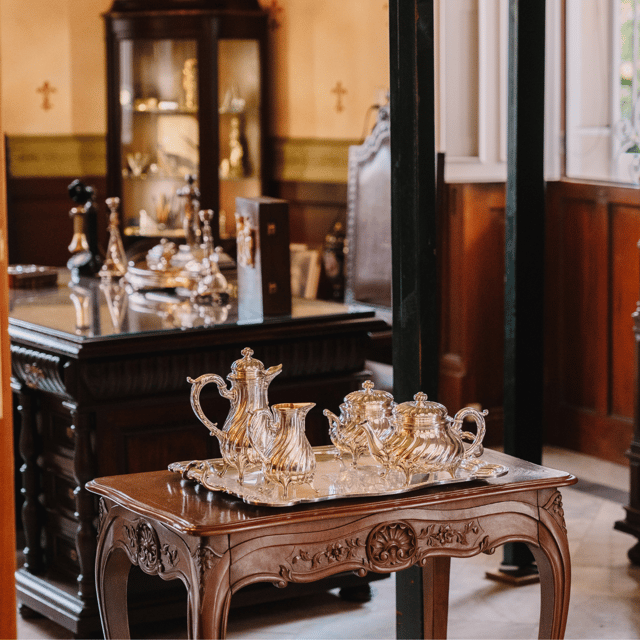
The Tiffany stained glass windows are one of the details I would make a point of finding. They add color and filtered light to a house otherwise defined by marble, polished furniture, mirrors, and formal decoration.
Stained glass works best when you stop looking at it as a single object and notice how it changes the room around it. Depending on the light, the windows can soften the harder surfaces and make the interior feel less solemn. Since the mansion contains many dark or highly polished furnishings, the glass gives your eye a welcome change.
After the house, you can finish at the café. Its modern, cozy atmosphere has the feel of a small bookstore, which makes it a pleasant contrast to the formal rooms. Food and drinks are not included in the $8 admission, and the activity does not include personal expenses, so plan to pay separately if you choose to stop there.
The café is not the main reason to buy admission, but it can make the visit feel less abrupt. You move from a historic family interior into a contemporary public space without leaving the property.
What the $8 admission gives you
At $8 per person, this is a low-cost cultural stop in Mérida. The price is easiest to justify if you take time with the details rather than treating the mansion as a ten-minute photo stop.
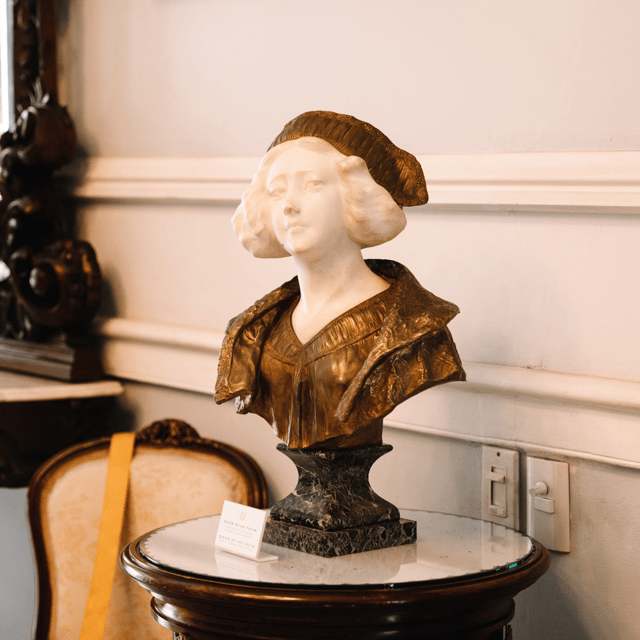
You receive admission to La Quinta Montes Molina and access to the main hall, piano room, library, and dining room. You can see the Baccarat chandeliers, large wall mirrors, marble and tile floors, family portraits, 20th-century furniture, lamps, clocks, sculptures, vases, and miniatures.
The value depends on your interests. If you enjoy historic homes and decorative arts, the price is reasonable because the objects are preserved together in their original domestic setting. You are not paying for a long guided program, transportation, food, or a large museum complex.
If you need a guide to explain every room, the value is less certain. No guided tour is included, and one recent booking received a low rating specifically because the visitor expected more explanation and did not find the house interesting without it. That is a fair warning, not a reason to dismiss the mansion. It simply means you should arrive knowing this is primarily a self-guided visit.
Time, access, and practical planning
The admission is valid for one day, with starting times subject to availability. The information provided does not give a fixed length for the visit, so you should allow your own schedule to decide how long you stay.
I would plan enough time to examine the hall carefully, see the three additional rooms, look for the stained glass, and pause at the café if you want refreshments. The mansion is primarily explored on foot, so wear comfortable walking shoes.
The property is wheelchair accessible. That is helpful, although the house contains historic floors and furnishings that may make movement feel more measured than in a modern museum. Ask the staff about any room-specific access questions when you arrive.
English and Spanish host or greeter support is available. This does not mean a full guided tour is provided. If you want more context, use the opportunity to ask focused questions about the family portraits, green gold history, floors, or objects in the hall.
You can cancel up to 24 hours in advance for a full refund, and reserve now while paying later. Those terms are useful if your Mérida schedule is still changing.
Who will enjoy La Quinta Montes Molina most
I would recommend this visit to you if you like:
- Historic houses that preserve furniture and household objects in place
- Architecture, floors, stained glass, mirrors, and decorative arts
- Family portraits and stories tied to Mérida’s green gold era
- Quiet, self-guided sightseeing at your own pace
- Short cultural stops that fit easily into a day in Mérida
You may want to choose another activity if you need a full lecture, a tightly structured itinerary, or constant interpretation. The lack of a guided tour is the central limitation.
The property is also not suitable for people with visual impairments, according to the activity information. Much of its appeal comes from seeing details in the furniture, paintings, glass, floors, and decorative objects.
Should you book this Mérida mansion visit?
Book La Quinta Montes Molina if you can enjoy looking closely and building your own understanding from the rooms. The Baccarat chandeliers, Tiffany stained glass, Carrara marble, Spanish tile, seasonal chairs, and family portraits give the house plenty to notice, especially at only $8.
I would not book it expecting a long narrated tour. Go for the preserved interior, the connection with Mérida’s green gold era, and the chance to see how one family’s home was furnished across generations. If that sounds like your kind of sightseeing, this is a worthwhile and affordable addition to your Mérida plans.
FAQ
How much does admission to La Quinta Montes Molina cost?
Admission costs $8 per person.
Is a guided tour included?
No. A guided tour is not included. English and Spanish host or greeter support is available.
Which rooms can I visit?
Admission includes the main hall, piano room, library, and dining room.
What can I see inside the mansion?
You can see 20th-century furniture, clocks, paintings, sculptures, vases, lamps, miniatures, Baccarat crystal chandeliers, large wall mirrors, family portraits, and historic floors made of Carrara marble and Spanish tile.
Can I take photographs?
Photography may be restricted in certain areas. Check with the staff before taking pictures.
Is the mansion wheelchair accessible?
Yes, the activity information states that La Quinta Montes Molina is wheelchair accessible.
Can I cancel my booking?
Yes. You can cancel up to 24 hours in advance for a full refund. You can also reserve now and pay later.
Just added around Mexico
- Private Vineyard and Wine Testing Tour From Guanajuato★ 5.0 · 2 reviews
- Route of Cantinas, Music, Fiesta and Mexican Flavor★ 5.0 · 2 reviews
- Valle de Guadalupe Premium Wine and Vineyard Wagon Tour★ 3.0 · 2 reviews
- Tractor Pull Around Vineyards and Wine Tasting Tour★ 3.0 · 2 reviews
- PRIVATE BAJA WINERIES EXPERIENCE (Transportation,concierge,custom schedule)★ 5.0 · 2 reviews
- Private Tour in Guadalupe Valley, Vine Yards & Wine Route ENS MX★ 5.0 · 10 reviews
- Wine Tasting Among Vineyards with Panoramic Views of the Valley★ 5.0 · 4 reviews
- Tasting of 5 wines and tour at the winery Rondo del Valle★ 4.5 · 12 reviews
Mexico Vineyard Tours, compared.

Guadalupe Valley Wine Route Tour in Baja California
Read our review →
ATV Off-Road Adventure through Valle de Guadalupe + Winery Visit
Read our review →

Santiago de Querétaro: Pueblos Mágicos Cheese and Wine Route
Read our review →
Local Vineyard Tour & Wine Tasting at the Independence Valley
Read our review →
Vineyard, tour, tasting and fun in San Miguel de Allende
Read our review →
Querétaro: Haciendas, Vineyards, and Magical Towns Day Trip
Read our review →Browse the lists this tour appears in