
REVIEW · GERMANY
Wine Tasting in the Winery in Kröv
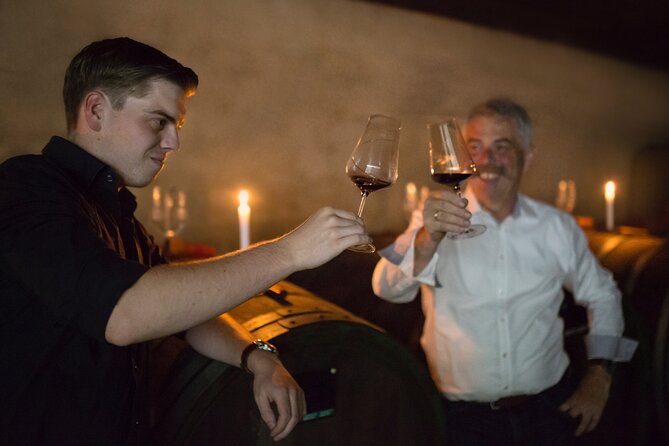
A tasting at Weingut Gerhard Trossen gives you more than a row of glasses. You begin with the people and place behind the wine, visit the cellar where fermentation takes place, then taste five wines while following the work of a winemaker through the seasons. The cellar visit and the plain-speaking explanation of Riesling aromas are the most useful parts.
I like the direct access to the winemaking process, and I like that descriptions such as fruity, mineral, and wood influence are explained rather than tossed around as fancy wine language. The tasting also earns points for its friendly, entertaining tone and good selection of wines. The main consideration is the limited public feedback, so you should book for the format and value rather than expecting a polished, large-scale wine show.
Key points about the Kröv wine tasting
- Five wines in context: You taste five wines from the winery’s range while learning what gives each one its character.
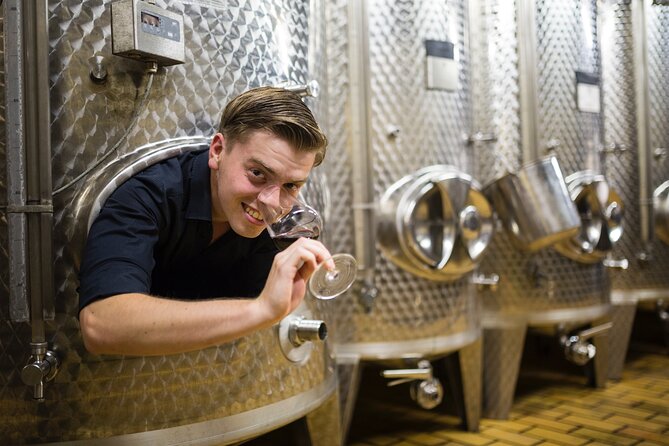
- A real working cellar: The tour includes a look at where the wine ferments, not just a tasting room presentation.
- The winemaker’s year explained: Words and pictures connect the wines to the work carried out across the seasons.
- Small-group setting: The maximum group size is 20 people, which gives you a reasonable chance to ask questions.
- Good low-cost introduction: At $11.61 per person, the experience offers a useful introduction to Mosel wine at a modest price.
- Simple afternoon timing: The tour starts at 4 p.m. and lasts about two and a half hours, making it easy to fit into a day in Kröv.
Starting at Jesuitenhofstraße 31 in Kröv
You meet at Jesuitenhofstraße 31, in the Mosel wine village of Kröv. The start time is 4 p.m., so plan to arrive with enough time to find the address and settle in before the introduction begins.
The exact town setting matters here. This is not a tasting staged in a city-center bar or a generic tourist venue. You are visiting a winery and hearing about wine from the people who make it. That gives the tasting a more grounded feel from the first minutes.
The activity ends back at the same meeting point. It lasts about 2 hours and 30 minutes, which is long enough for a proper introduction, a cellar visit, a guided tasting, and questions without turning the afternoon into an all-day commitment.
The group can include up to 20 people. That is not an intimate visit for two or three people, but it is still a manageable size. If you want personal answers, ask your questions during the tasting rather than waiting until the end. The format specifically leaves room for conversation with the winemaker.
More Food and Drink Experiences in Germany:
- Reil, Mosel: Guided organic wine tasting and cellar tour
★ 4.8 · 84 reviews - Kröv, Mosel: Covered wagon ride through the vineyards with wine tasting
★ 4.8 · 46 reviews - Discovery tour – cellar tour with wine tasting
★ 4.2 · 26 reviews
Meeting the people behind the bottles
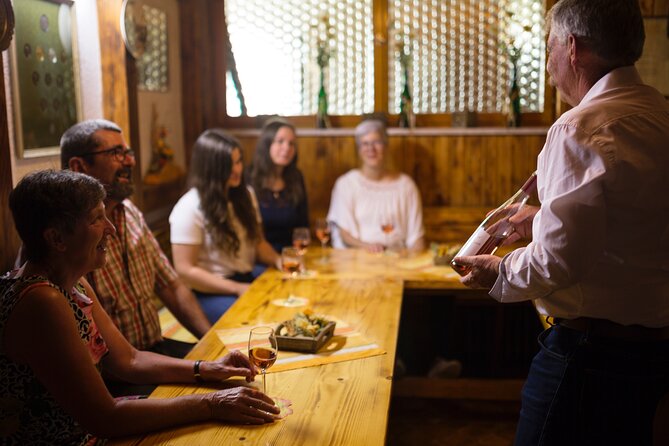
The first part introduces the personalities and the winery itself. This is a small but important choice. Before you taste anything, you learn who is responsible for the bottles and what kind of place you have entered.
I like this approach because wine can become abstract very quickly. A label, a grape name, and a list of tasting notes do not tell you much by themselves. Hearing about the winery first gives the later tasting a human frame.
The presentation is described as both well informed and entertaining, so you should expect practical explanations rather than a stiff lecture. You are encouraged to ask questions, and answers come directly from the winemaker. That makes this a good pick if you want to understand the choices behind the wine instead of simply sampling several pours.
You should also keep your expectations sensible. This is an educational winery visit, not a formal wine certification class. The aim is to help you notice differences and understand the producer’s language, not to turn you into a professional taster in one afternoon.
Seeing where the wine ferments
The tour then moves into the wine cellar. You get to see where the wine ferments, which is one of the experience’s strongest features because it connects the finished drink in your glass with an actual production space.
Many tastings skip this step and go straight to the bottles. Here, the cellar offers a look at the stage when grape juice becomes wine. Even without technical equipment or a long production lecture, that physical setting can make the rest of the afternoon easier to understand.
The cellar visit also gives you a reason to pay attention to the winemaker’s later explanations. When the discussion turns to the seasons, fermentation, and the final character of the wine, you have already seen part of the place where that work happens.
The available details do not promise a full tour of every production area, nor do they specify the cellar’s age, size, or equipment. You should expect a focused look around the relevant wine cellar, not a behind-the-scenes tour of every corner of the estate.
Following the winemaker’s year
After the cellar visit, the tasting explains the winemaker’s year through words and pictures. This section gives the afternoon its real structure. You are not simply moving from a dry wine to a sweet wine and trying to guess which you prefer. You are learning how the work of the year shapes what reaches the glass.
For a first visit to a winery, this seasonal view is especially helpful. It shows that wine is not made only at harvest time. The final product reflects a chain of decisions and tasks, and the presentation helps you connect those stages with the wines you taste.
The words and pictures also keep the subject approachable. You do not need technical knowledge before arriving. If you know only that you like some Rieslings and not others, that is enough to take part.
I would pay close attention here, even if your main goal is simply to drink wine. This is the part most likely to improve how you understand other tastings later in your trip. Once you have heard how the producer describes the year, you may find it easier to ask better questions at another Mosel winery.
A few more vineyard days around Germany worth a look
- Trier: Discovery Tour – Germany’s Oldest Wine Cellar
★ 4.7 · 218 reviews - Stuttgart: Vineyard Tour by Covered Wagon
★ 4.1 · 217 reviews - Stuttgart: Guided Vineyards Tour
★ 4.3 · 146 reviews - Small Group Rheingau Vineyards Tour with Castles and Abbeys
★ 5.0 · 100 reviews
Tasting five wines from the range
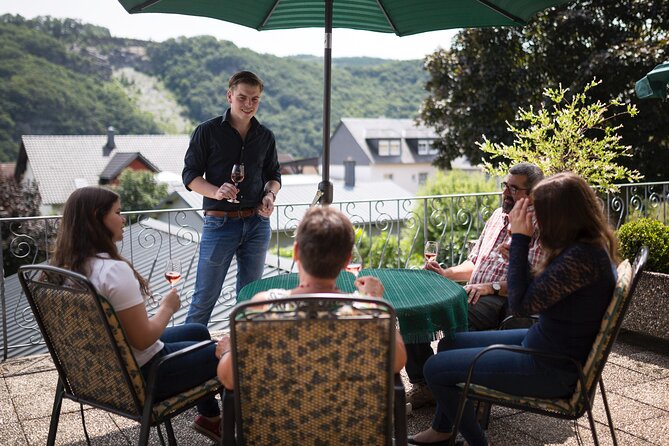
The main tasting covers five wines from the winery’s selection. Five is a useful number: enough to compare styles, but not so many that the tasting becomes a blur of glasses and adjectives.
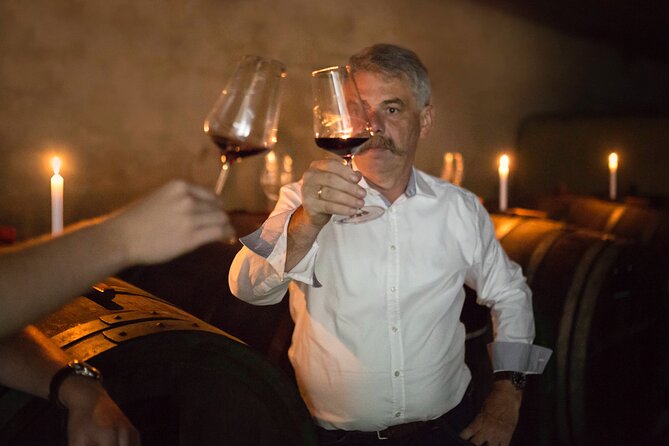
The key benefit is comparison. One wine can seem fruity because another is more mineral. A wine may show wood influence more clearly beside a bottle without that character. Riesling aromas can be easier to identify when you are guided through several examples instead of tasting one wine in isolation.
The tasting asks you to understand the descriptions for yourself. Fruity, mineral, wood influence, and characteristic Riesling aromas are not treated as mysterious code. The winemaker explains what those terms mean and gives you the chance to test the descriptions against what you smell and taste.
That direct method is valuable for beginners. You do not have to agree with every tasting note. You can ask why a wine is described in a certain way, then decide what you notice in your own glass. Wine tasting becomes less intimidating when there is no pressure to produce the expected answer.
The five wines are drawn from the winery’s range, but the exact bottles, vintage, sweetness levels, and grape details are not specified. Those choices may change with availability and season. If a particular style matters to you, ask about it during the tasting rather than assuming it will be included.
Why the explanations matter
Wine language can be useful, but only when someone explains it clearly. The strongest promise of this experience is that the terms are backed up with reasons. You are not expected to accept a string of polished descriptions without asking what they mean.
For example, fruity does not have to mean sweet, and mineral does not simply mean a flavor you can identify by name. The point of the tasting is to help you notice how the wine presents itself and how the producer uses those words. The guide’s role is to connect the language with your own senses.
The same applies to wood influence. You get a chance to understand how that character differs from fruit or Riesling aroma, rather than lumping all strong flavors together. This practical approach is more useful than a long list of technical terms.
I also like that questions are encouraged. If you do not understand something, ask. If a wine tastes different from the description, ask about that too. A small winery tasting works best when it becomes a conversation, and the format is built for exactly that.
Value at $11.61 per person
At $11.61 per person, this is an inexpensive way to spend an afternoon in the Mosel wine country. The price includes about two and a half hours of guided time, a cellar visit, an explanation of the winemaker’s annual work, and five wine samples.
I would judge the value by the amount of personal context rather than by the number of pours alone. A cheaper tasting that gives you five glasses without explanation may be less useful. Here, the cellar and discussion make the price feel fair for someone who wants to learn as well as taste.
The low price also makes this a sensible choice for a first winery visit. You do not need to commit to an expensive meal, a full-day wine excursion, or a formal class. You can learn about one producer, taste the range, and decide what kind of wine experience you want next.
The value depends partly on your interest. If you only want to drink as much as possible, a two-and-a-half-hour educational tasting may feel slow. If you enjoy asking questions and comparing flavors, the modest cost works strongly in its favor.
Timing, group size, and practical details
The 4 p.m. start gives you a fixed late-afternoon plan. Since the activity runs for approximately 2 hours and 30 minutes, you should avoid scheduling another time-sensitive activity immediately afterward.
The group limit is 20 people. That keeps the visit from becoming a very large wine presentation, though the experience will feel different at 20 people than it would with a handful. If you prefer quiet, personal tastings, consider arriving early and staying engaged during the question period.
A mobile ticket is provided, and booking confirmation arrives at the time of booking. The meeting point is near public transportation, which helps if you are not driving. The supplied information does not specify the exact local transit route, so check your route to Jesuitenhofstraße 31 before the day of the tasting.
Service animals are allowed. Wine consumption is permitted in Germany from age 16, which is the stated minimum age for drinking wine during this activity.
Cancellation is flexible if your plans change. You can cancel for a full refund up to 24 hours before the local start time. Cancellations or changes made less than 24 hours before the start are not accepted for a refund.
Who will enjoy this winery visit
I would choose this experience if you want a direct introduction to Mosel wine without spending a great deal. It suits first-time wine tasters because the language is explained in plain terms and questions are welcome.
It also fits people who care about production. Seeing the cellar and hearing about the winemaker’s year adds substance to the tasting. You get a better sense of how the bottle came to be, rather than treating wine as a finished product with no story behind it.
Riesling fans should find plenty to interest them, since characteristic Riesling aromas are part of the discussion. The experience can also help you if you are still figuring out what you like. Five wines offer enough contrast to begin noticing patterns in your own preferences.
I would be less enthusiastic if you want a large entertainment program, a highly polished performance, or a tasting built around rare and expensive bottles. Those things are not promised. This is a straightforward winery visit focused on the producer, the cellar, and clear discussion.
Should you book the Kröv tasting?
Book it if you want a low-cost, hands-on introduction to Mosel wine. The best reasons are the cellar visit, the five-wine comparison, and the chance to ask the winemaker what tasting terms really mean.
Skip it if you have no interest in learning about production or if a two-and-a-half-hour tasting feels too long. For everyone else, the price is modest, the schedule is easy to understand, and the format gives you more context than a quick pour at a wine bar. I would especially recommend it early in a Mosel trip, when the explanations can help you make more sense of later wine tastings.
FAQ
Where does the wine tasting begin?
It begins at Jesuitenhofstraße 31, 54536 Kröv, Germany.
What time does the experience start?
The tasting starts at 4 p.m.
How long does the winery visit last?
The experience lasts approximately 2 hours and 30 minutes.
How many wines are included?
The tasting covers five wines from the winery’s range.
Does the visit include the wine cellar?
Yes. You can look around the cellar and see where the wine ferments.
How many people can join the activity?
The maximum group size is 20 people.
What is the cancellation policy?
You can cancel up to 24 hours before the local start time for a full refund. Cancellations and changes made less than 24 hours before the start are not accepted for a refund.
Just added around Germany
- Get Pfalzed – wine tour to unique wine region to taste Red wines★ 4.5 · 9 reviews
- Bremen: Underworld Tour with the Cellar of the Theatre★ 4.2 · 74 reviews
- Heidelberg: Hills and Wine Region Segway Tour★ 4.9 · 89 reviews
- Reil, Mosel: Guided organic wine tasting and cellar tour★ 4.8 · 84 reviews
- Neustadt: Wine tasting with cellar tour and vineyard visit★ 4.8 · 5 reviews
- Mosel: Accompanied wine tasting directly at the winery★ 5.0 · 3 reviews
- Mendig: Guided tour in the 30m deep volcanic beer cellar★ 5.0 · 2 reviews
- Meißen: Wine hike in the Proschwitzer vineyards including a 3-part wine tasting★ 4.4 · 4 reviews
Germany Vineyard Tours, compared.
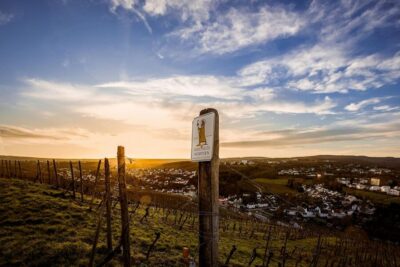
Trier: Discovery Tour – Germany’s Oldest Wine Cellar
Read our review →
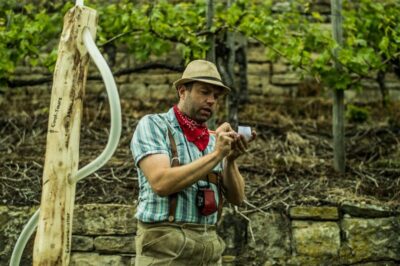
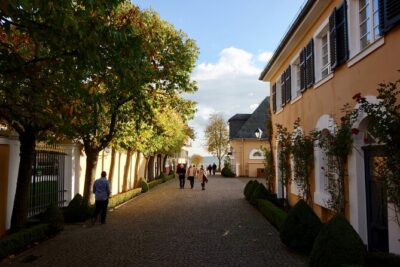
Small Group Rheingau Vineyards Tour with Castles and Abbeys
Read our review →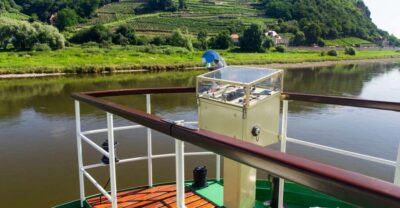
From Dresden: Saxon Wine Route Steamer Day Cruise
Read our review →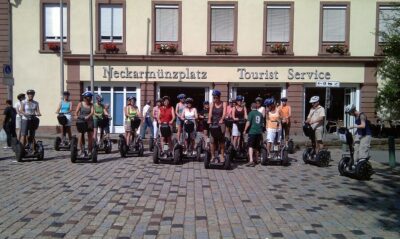
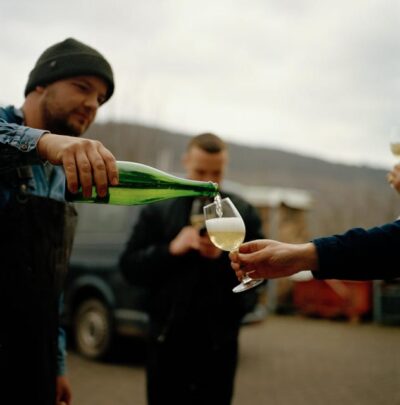
Reil, Mosel: Guided organic wine tasting and cellar tour
Read our review →
Bremen: Underworld Tour with the Cellar of the Theatre
Read our review →Browse the lists this tour appears in