
REVIEW · FRANCE
Riquewihr: the pearl of the vineyards with a local guide and tastings
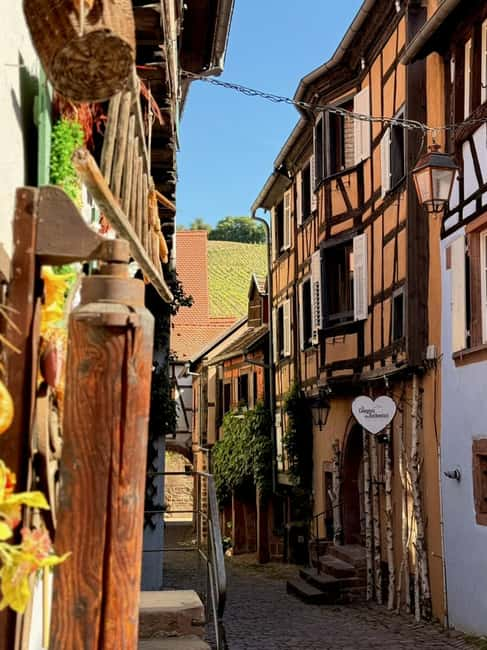
Riquewihr looks like a storybook village, but this walking tour asks you to read it as a document. Behind the painted timber houses, your guide traces medieval defenses, merchant wealth, old prisons, witch trials, wine culture, and symbols carved into stone and wood.
I like the focus on details most people walk past, especially coats of arms, dates, protective signs, and inner courtyards. I also like the tasting stop, since a macaron from Riquewihr gives the tour a simple, local finish. The main drawback is that the tour is conducted in French, and the published timing is slightly unclear: it is sold as 90 minutes, while the description also refers to two hours.
Key points
- Medieval walls and fortified gates: See how Riquewihr protected trade, homes, and wine.
- Merchant houses from the 16th century: Look for frescoes, mottos, coats of arms, and signs of family ambition.
- Witch stories and old justice: Connect local legends with real accusations, trials, and punishments.
- Less-public corners: Visit discreet alleys, courtyards, and passages that reveal a quieter side of the village.
- Wine-shaped town life: Understand how vineyards affected Riquewihr’s economy and architecture.
- Local tasting: Sample the famous macarons of Riquewihr, with local sweet and savory specialties also mentioned in the tour experience.
Start at Place Fernand Zeyer
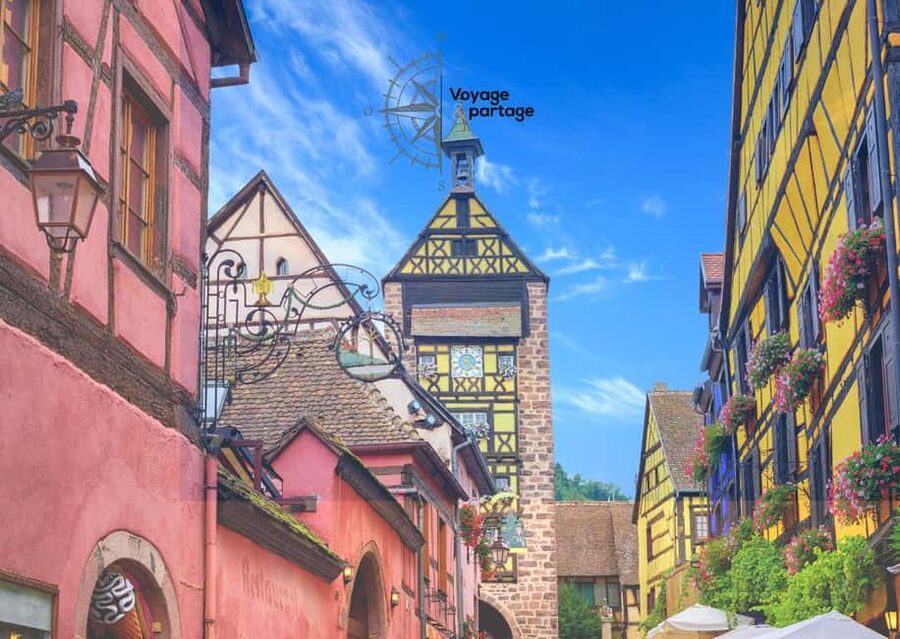
You meet your guide at Place Fernand Zeyer, then set off on foot through central Riquewihr. This is a compact village, but the point of the tour is not to cover ground quickly. It is to slow down and look closely.
I would arrive with comfortable shoes and a few spare minutes. The tour takes place outdoors and runs in rainy weather, so a waterproof jacket matters more than a polished outfit. Since the guide speaks French, you will get the most from the walk if you understand conversational French or are comfortable following historical explanation in that language.
The duration is advertised as 90 minutes. The description also calls it a two-hour guided visit, so check the exact start time and expected length when booking. That small inconsistency may matter if you have a wine tasting, restaurant booking, or bus connection afterward.
A few more vineyard days around France worth a look
- Epernay: Guided Tour of Champagne Cellar with Tastings
★ 4.7 · 507 reviews - Saint-Emilion: Grand Cru Classé Guided Winery Visit & Picnic
★ 4.7 · 296 reviews - Alsace Wine Route Wineries & Tasting Small Group Guided Tour from Strasbourg
★ 5.0 · 229 reviews
Reading Riquewihr’s walls and gates
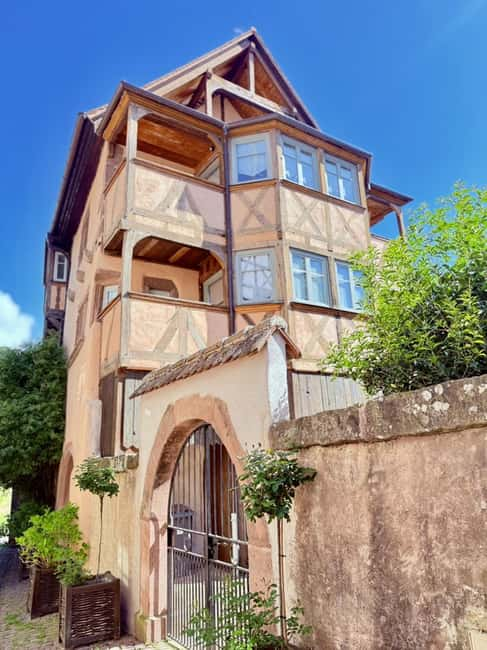
The first major theme is defense. Riquewihr was not built only to look pretty for photographs. Its walls and fortified gates reflect a time when towns needed to protect people, goods, and commercial routes.
Your guide explains how the village worked as a fortified town, a market center, and a wine-growing stronghold. That combination gives the architecture more meaning. A narrow entrance was not simply picturesque. A gate could control movement. A thick wall could protect homes and stored goods. The shape of the town reflected practical concerns as much as local style.
I like this approach because it changes the way you see the village. Instead of treating the old walls as a decorative frame, you begin to notice their job. The tour also places Riquewihr within the wider history of trade and defense, rather than presenting it as an isolated Alsatian postcard.
The walk is suitable for children in terms of subject matter, although the stories of prisons, punishments, and witch trials may need a little explanation for younger children. The guide’s storytelling is likely to be the key factor here.
The merchant houses of the 16th century
Riquewihr’s grander homes tell another story: the rise of prosperous merchant families. During the tour, look for decorated facades, frescoes, coats of arms, mottos, dates, and other marks of status.
These details were not placed randomly. A family coat of arms announced identity and position. A motto could express faith, ambition, or a view of the world. A date could mark construction, rebuilding, or a family event. Your guide helps connect these small signs to the people who paid for the houses and wanted their success seen.
This is where the tour earns its price more clearly than a simple walk around the village. You can photograph a timber-framed facade on your own, but it takes a guide to point out why one feature matters and how it fits into the town’s past.
I would keep your camera ready, but do not let it take over. The useful part of this section is learning what to look for. Once you have been shown the symbols, you can continue noticing them in other Alsatian towns.
Stone, timber, and the symbols in between
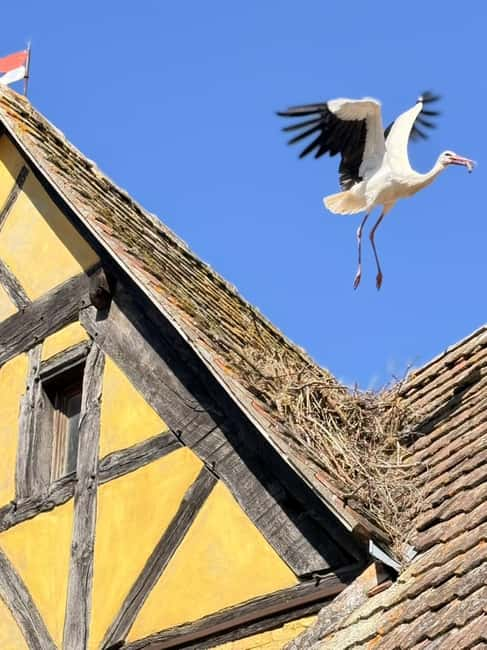
One of the most appealing ideas here is learning to read the village as a historical record. The guide draws attention to protective crosses, coded motifs, dates, and messages carved or painted into buildings.
Some signs may be religious. Others may relate to family identity, protection, trade, or local belief. The tour connects these marks to everyday fears and hopes, which gives the old buildings a human scale.
This is not a museum visit where everything sits behind glass and comes with a label. The evidence remains on the street, mixed into the facades and passageways. You need to look up, slow down, and accept that not every detail will be obvious at first glance.
That makes the experience particularly useful during a first visit to Riquewihr. After the walk, the village should feel less like a pretty collection of colored houses and more like a place with layers of personal stories.
Same wine country, a different day out:
- Medoc or Saint Emilion Wine Tasting and Chateau from Bordeaux
★ 5.0 · 1,415 reviews - Saint-Émilion: Grand Cru Classé Winery Visit and Tasting
★ 4.6 · 1,118 reviews - Saint Emilion Half-Day Trip with Wine Tasting & Winery Visit from Bordeaux
★ 4.5 · 1,034 reviews - Champagne Day Trip with 6 Tastings, Reims and Winery from Paris
★ 5.0 · 902 reviews
The Thieves’ Tower and old prisons
The Thieves’ Tower brings the darker side of medieval Riquewihr into view. The tour covers old prisons, medieval justice, public punishment, and the fears that shaped local ideas about crime.
This part may be less cheerful than the flower boxes and painted shutters, but it helps balance the village’s sweet appearance. Historic towns were not only places of trade and celebration. They also had rules, punishments, confinement, and public examples intended to keep order.
Your guide explains how justice worked and how certain punishments reflected collective fears. The value lies in the connection between the building and the system around it. You are not just seeing an old tower. You are considering what it meant to be accused, imprisoned, or punished in an earlier society.
Families should decide how much detail their children can handle. The tour is described as suitable for children, but the prison and witch-trial stories are more serious than the usual village sightseeing talk.
Witch legends, accusations, and historical fact
The stories of Alsatian witches form one of the most unusual parts of the walk. The guide explores the blurred line between folklore and documented events, including women who were accused, tried, and sometimes burned when superstition influenced the law.
This subject deserves careful treatment, and the tour’s stated aim is to connect legend with historical events rather than repeat spooky tales for entertainment alone. That distinction matters. Riquewihr’s old stories may sound like folklore, but some grew from real accusations and real suffering.
I appreciate this topic because it gives you a different way to understand local history. It also shows how communities explain illness, bad luck, conflict, and fear. A village can preserve a charming appearance while carrying memories of harsh decisions made in its name.
Expect this portion to be atmospheric, but not necessarily light. If you prefer a purely architectural walk, this material may feel heavier than expected. If you enjoy local legends with a historical basis, it adds real character to the visit.
Courtyards, passages, and quieter corners
The tour also seeks out inner courtyards, discreet passages, and forgotten alleyways. These spaces offer a more intimate view of Riquewihr than the main streets do.
The central streets are the village’s public face. Courtyards and side passages reveal how people moved between home, work, storage, and shared spaces. They also help explain why a town can feel different once you leave its best-known viewpoints.
I would pay close attention here, since these corners may be easy to miss if you return on your own. The exact route can vary with access and local conditions, and no detailed stop-by-stop route is provided. Still, the promise of looking beyond the main facades is central to the experience.
This section also suits visitors who have already seen the obvious sights. You may not need another basic introduction to Riquewihr, but you could enjoy a guided look at spaces you would otherwise pass without noticing.
Wine culture and the shape of the village
Wine is not added as a side note. It is one of the main forces behind Riquewihr’s economy, reputation, and architecture.
The guide explains how wine growing helped shape the town over time. That means looking at more than vineyards. Merchant homes, storage needs, trade connections, and family wealth all relate to the wine economy in different ways.
You should not assume this is a dedicated vineyard tasting tour. The available details emphasize wine culture as a historical subject, while the clearly named tasting is the famous macaron of Riquewihr. Local sweet and savory specialties are also part of the experience described by one December group, but the exact products can vary.
That distinction is useful when comparing this tour with a winery visit. Choose this walk if you want to understand how wine affected a historic town. Choose a separate vineyard or cellar experience if your main goal is to taste several wines.
The macaron tasting at the end
The tasting gives the walk a pleasant local finish. Riquewihr’s famous macarons are specifically included, and the experience also refers to local products and, in one December visit, sweet and savory specialties.
A small food tasting can be more valuable than it first appears. It gives you a chance to connect the history talk with present-day local life. You are not only hearing about the village’s past, you are sampling something associated with the place.
Do not book this as a full meal. The available details do not specify the number or size of tastings, and the macaron is the one named item. If you have allergies or dietary restrictions, ask before booking because no ingredient or accommodation information is provided.
The tasting also helps break up the historical material. Ninety minutes of architecture, legends, and medieval justice is a fair amount of information. A local bite near the end gives you a simple pause and a memory to carry into the rest of your visit.
What the $41 price buys you
At $41 per person, this is not the cheapest way to spend 90 minutes in Riquewihr. You can walk the main streets for free, take photographs, and see the village’s most famous facades without joining a tour.
The value comes from the interpretation. You are paying for a local guide, a planned historical route, explanations of symbols and legends, and a tasting component. If Géraldine is leading your visit, her December tour included Riquewihr’s history within the wider European setting, Christmas atmosphere, and several sweet and savory local specialties. The guide may vary by date, so do not assume she will lead every departure.
I think the price makes sense for visitors who would otherwise miss the meaning behind the buildings. It is less compelling if you already have a strong guidebook, speak French poorly, or mainly want a quick photo walk.
The included tips and vouchers for your stay may add some value, but the details of those benefits are not specified. Treat them as a bonus rather than the reason to book.
Who will get the most from this walk
I would recommend this experience to you if you enjoy:
- Old buildings explained in plain historical context
- Local legends tied to real events
- Smaller details such as symbols, mottos, and dates
- Food tastings connected to a particular town
- Guided walks rather than self-guided sightseeing
- A French-language experience
It should suit families with older children who enjoy stories, though the prison and witch-trial material is not light. It also works well for visitors spending a short time in Riquewihr because the walk covers several themes in one compact visit.
You should think twice if you have mobility impairments. The experience is specifically not suitable for people with mobility impairments, and it takes place on foot through an old village. Comfortable shoes are required, and rain does not cancel the walk.
Practical details before you reserve
The meeting and return point is Place Fernand Zeyer. You return there after the guided circuit, which makes planning easier than a one-way route.
The live guide language is French. Some content may be presented in its original language, so do not expect an English-language tour unless the provider confirms otherwise.
The advertised duration is 90 minutes, although the description also refers to a two-hour visit. Confirm the current timing before you schedule another activity. This is especially important in a village where transport and restaurant plans may run on fixed times.
You can cancel up to 24 hours in advance for a full refund, and the reserve-now, pay-later option keeps your plans flexible. Those policies are useful if your Alsace schedule depends on weather, but they do not remove the need to check the meeting time and language.
Should you book the Riquewihr history walk?
Book it if you want more than pretty facades. The best reason to go is the combination of close architectural reading, medieval stories, local legends, wine-town context, and a Riquewihr macaron at the end.
Skip it if you need an English tour, cannot manage a walking route, or are looking mainly for wine sampling. At $41, the experience depends on the guide’s storytelling and your interest in the darker, less polished parts of the village.
For French speakers who want to understand how Riquewihr works, this is a focused and appealing choice. Géraldine’s December visit suggests the walk can also connect the town’s past with seasonal atmosphere and local food. Just verify the guide, language, tasting details, and exact duration before paying.
FAQ
Where does the tour begin?
The tour begins at Place Fernand Zeyer in Riquewihr.
Where does the tour finish?
The walking route returns to Place Fernand Zeyer.
How long does the tour last?
The activity is advertised as 90 minutes. Its description also refers to a two-hour guided visit, so confirm the current duration when checking availability.
What language is the tour in?
The live guide speaks French. Some content is shown in its original language.
Is a tasting included?
Yes. The tour includes local products, with the famous macarons of Riquewihr specifically named. Sweet and savory local specialties are also associated with the experience.
Is wine tasting included?
The tour explains the central role of wine in Riquewihr’s history, economy, and architecture. A separate multi-wine tasting is not specifically stated.
Is the tour suitable for children?
Yes, the activity is described as suitable for children. Some subjects, including prisons, punishments, and witch trials, may be better suited to children who can handle darker historical stories.
Is the tour accessible for people with mobility impairments?
No. The activity is not suitable for people with mobility impairments.
What happens if it rains?
The tour takes place even in rainy weather. Wear comfortable shoes and suitable rain protection.
Can I cancel the booking?
You can cancel up to 24 hours in advance for a full refund. The reserve-now, pay-later option is also available.
Just added around France
- Day Trip to the Sancerre and Pouilly Vineyards★ 5.0 · 20 reviews
- 3-Hour Private Painting tuition in a beautiful Cognac vineyard★ 3.5 · 2 reviews
- 4×4 tour in a winery followed by a tasting★ 5.0 · 46 reviews
- Winery Visit with Food and Wine in Carcassonne★ 5.0 · 59 reviews
- Walk in the vineyards of Chablis Grands Crus★ 4.5 · 7 reviews
- Wine Getaway with Tasting in the Chablis Vineyard★ 5.0 · 3 reviews
- Winery Tour & Wine Tasting – Deli Plate & 3 Wines★ 5.0 · 72 reviews
- Visit to the Faugères Vineyards with Picnic from Béziers★ 5.0 · 7 reviews
France Vineyard Tours, compared.
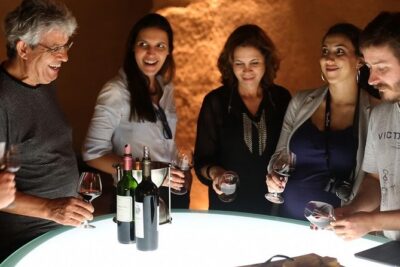
Medoc or Saint Emilion Wine Tasting and Chateau from Bordeaux
Read our review →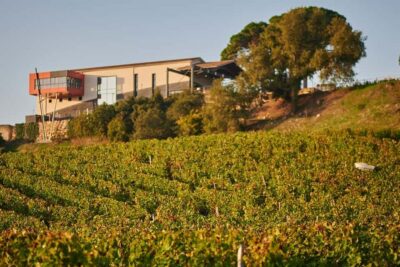
Saint-Émilion: Grand Cru Classé Winery Visit and Tasting
Read our review →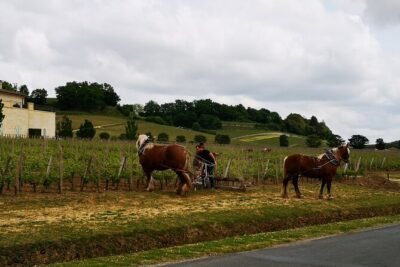
Saint Emilion Half-Day Trip with Wine Tasting & Winery Visit from Bordeaux
Read our review →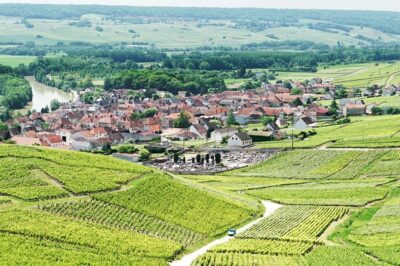
Champagne Day Trip with 6 Tastings, Reims and Winery from Paris
Read our review →
Saint-Emilion Afternoon Wine Tour – 2 Wineries & delicacies
Read our review →
Saint-Émilion: Bordeaux Vineyard Tour and Wine Tasting
Read our review →
Browse the lists this tour appears in