
REVIEW · ITALY
Matera: Pasta Cooking Class Old Farmer Style in Sassi Cellar
Matera’s Sassi are more than a dramatic backdrop for this cooking class. You work inside a restored cave that once served as a wine cellar and family home, then prepare food tied to the everyday cooking of Basilicata. Lorenzo handles the stories and local context, while Chef Cosimo guides you through pasta, sauce, and traditional recipes.
I like the small group of no more than eight, which gives the class a relaxed, personal feel. I also like the way the food lesson connects to Matera’s family traditions, from handmade pasta shapes to the simple farmer’s lunch served at the end. The main drawback is that this is not suitable for anyone with gluten intolerance, and the three-hour format may feel long if you want only a quick demonstration.
Key points
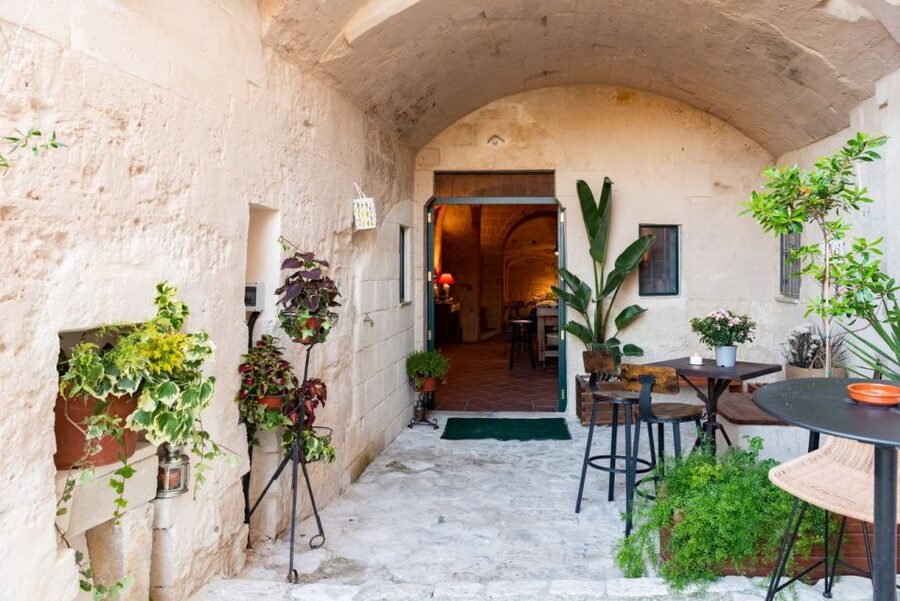
- A restored cave setting: Meet at Cava Marlò, behind the arch and large green door at Recinto Santa Maria, 8.
- Local hosts: Lorenzo shares stories about Matera, while Chef Cosimo explains family recipes and pasta techniques.
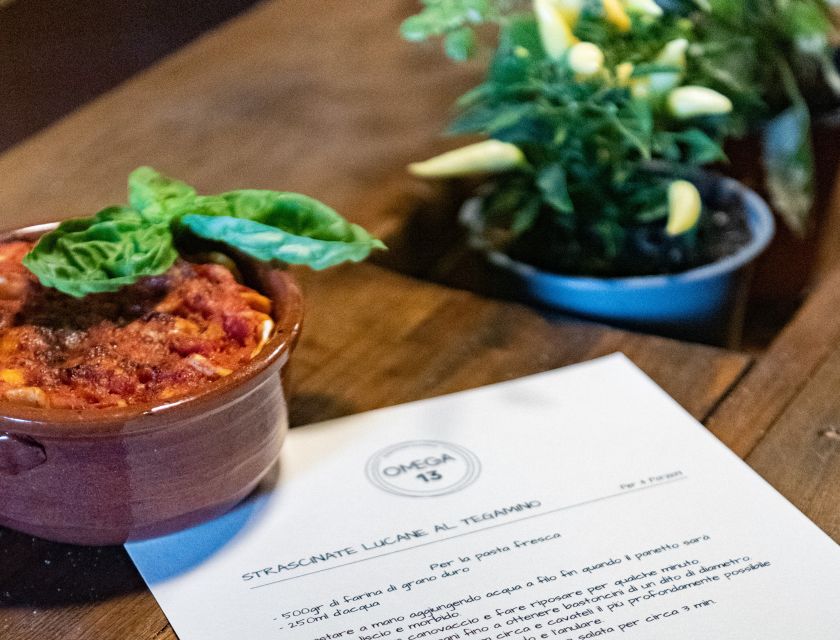
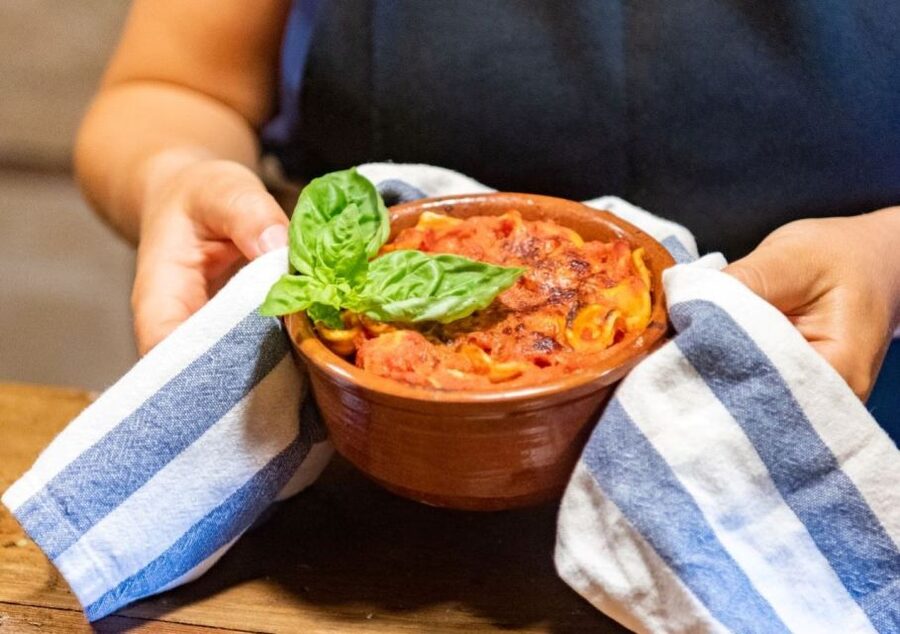
- Hands-on cooking: Knead dough, shape fresh pasta, and prepare dishes such as bruschetta and strascinate al tegamino.
- A full food experience: The class includes a tour, cooking instruction, a short break, and a regional meal.
- Small and social: The group is limited to eight people, with instruction in English, Italian, or Spanish.
- Good booking flexibility: You can cancel up to 24 hours before the start for a full refund, and reserve without paying immediately.
Cooking in a Cave at the Heart of the Sassi
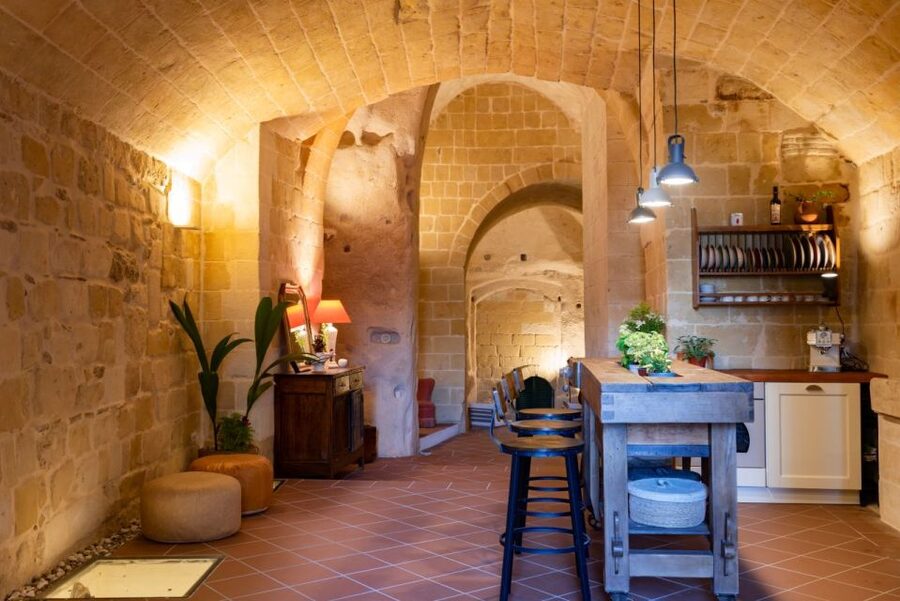
The setting does much of the work before the first handful of flour hits the table. Cava Marlò is an old wine cellar in the Sassi, Matera’s famous cave district. The space has been restored for modern use, but parts of the original cave remain visible, giving you a direct sense of how closely food, shelter, and family life were once linked here.
This is not a class in a standard cooking studio. The stone walls, uneven cave surfaces, and old domestic setting help explain why local recipes developed around simple ingredients and careful preparation. The atmosphere is intimate rather than polished in a hotel-school way.
You meet at Recinto Santa Maria, 8. Look for an arch and a large green door. Searching for Cava Marlò on a map should help you locate the entrance, and the activity both starts and ends at the same place.
More Wine Cellar Visits in Italy
- Montepulciano: Wine Tasting and Cellar Tour
★ 4.8 · 545 reviews - Modena: Balsamic Lunch with Vinegar Cellar Tour and Tasting
★ 5.0 · 395 reviews - Tasting Tour in One of The Most Beautiful Cellars in the World
★ 5.0 · 278 reviews
Meeting Lorenzo and Chef Cosimo
Lorenzo is the main local storyteller and organizer. Chef Cosimo leads the cooking, explaining the methods behind the dishes and sharing memories connected to his mother and grandmother. Adalina is also part of the hosting team on some sessions.
Their roles give the class a useful rhythm. Lorenzo places the cave and the food in Matera’s social setting, while Cosimo keeps your hands busy. The tone is informal, with plenty of room for questions and conversation rather than a strict demonstration where you simply watch from the side.
The personal stories are not just decoration. They help you understand why pasta making in southern Italy is often a household skill rather than a special occasion. Food is presented as something learned at the family table, repeated often, and adjusted according to what was available from the land.
You should expect a warm, talkative class rather than a quiet technical workshop. That will suit you if you enjoy meeting local hosts and hearing family anecdotes. If you prefer exact measurements, restaurant-level precision, and a fast-moving professional kitchen, the relaxed format may feel less focused.
The 20-Minute Tour Before Cooking
The activity begins with a guided look around the traditional cellar and the Sassi setting. This portion lasts about 20 minutes, so it is brief but useful. You hear stories and anecdotes about Matera before sitting down to cook.
The cellar is described as a hypogeum location, meaning a space formed below ground or partly within the rock. This matters because the room is not an artificial theme built to look old. It is part of the cave architecture that defines the Sassi.
You also get a look at how a former family dwelling and wine cellar has been adapted for visitors. Some parts have been renovated for comfort, while other sections preserve the original stone character. The result is a practical place to cook that still keeps its connection to Matera’s past.
I would pay attention during this first section even if your main interest is food. The later dishes make more sense when you know the setting once supported ordinary domestic life. It also gives you a better appreciation of why simple recipes carry so much meaning here.
Rolling Dough and Shaping Fresh Pasta
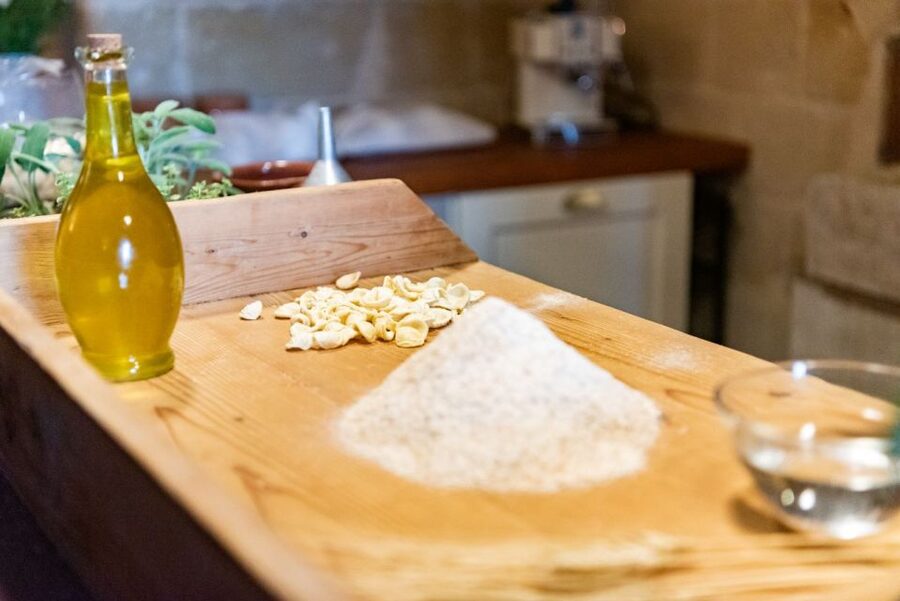
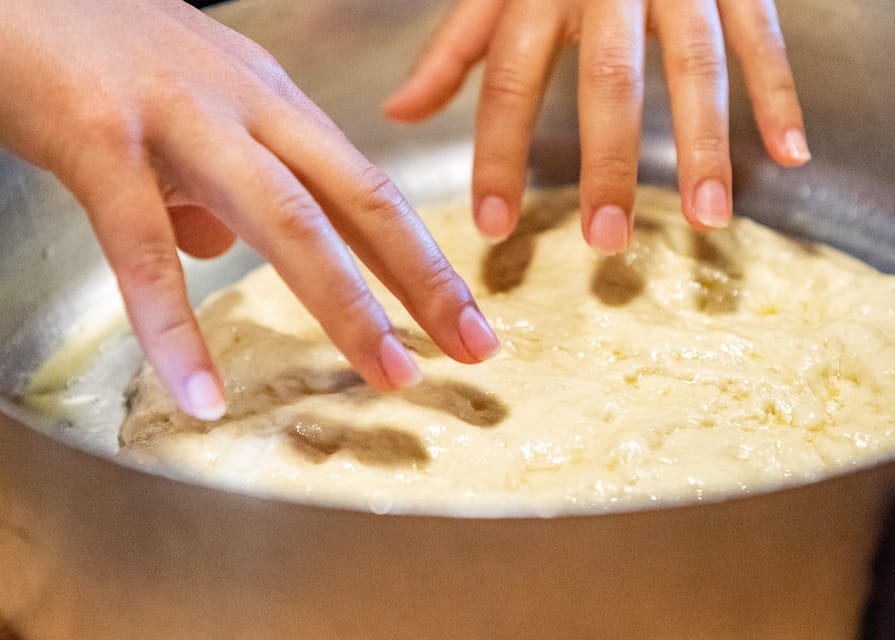
The cooking workshop lasts about 90 minutes. This is the most hands-on part of the experience, and you should expect to get flour on your hands.
Chef Cosimo demonstrates how to bring the dough together, knead it, and shape the pasta. The class focuses on traditional techniques rather than complicated restaurant tricks. You learn by doing, with the chef showing the movement and then giving you time to repeat it.
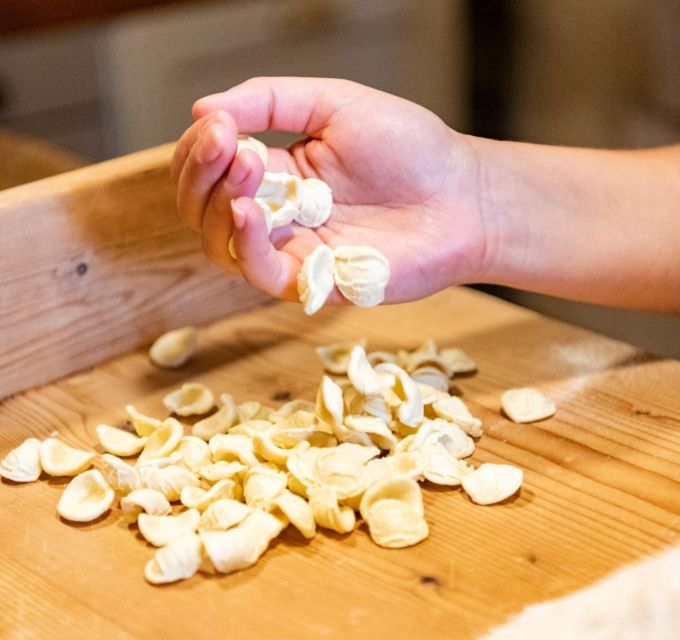
One of the featured pasta styles is strascinate, a local shape made by dragging or shaping small pieces of dough. The exact name can be easy to forget, but the technique is memorable because it shows how a few basic ingredients become a distinct regional food.
The class also covers strascinate al tegamino, a baked or pan-finished preparation of the pasta. You learn how the pasta fits into a larger dish rather than treating handmade noodles as an isolated skill.
The pace appears designed for beginners. Nothing in the supplied details suggests that you need previous cooking experience, and the hosts focus on straightforward methods passed down through family kitchens. You can ask questions in English, Italian, or Spanish.
The best part is that you are not only shown the finished dish. You take part in the transformation from dough to meal. That makes the lesson more useful once you return home, especially if you want to recreate the experience with children or friends.
Same wine country, a different day out:
- Tuscany Day Trip from Florence: Siena, San Gimignano, Pisa and Lunch at a Winery
★ 5.0 · 21,634 reviews - Florence: Chianti Wineries Tour with Wine Tasting
★ 4.5 · 10,071 reviews - From Florence: Siena, San Gimignano, Pisa & Lunch at Winery
★ 4.8 · 4,538 reviews - Half day Chianti Vineyard Escape from Florence with Wine Tastings
★ 4.5 · 2,196 reviews
Bruschetta, Local Ingredients, and Farmer-Style Food
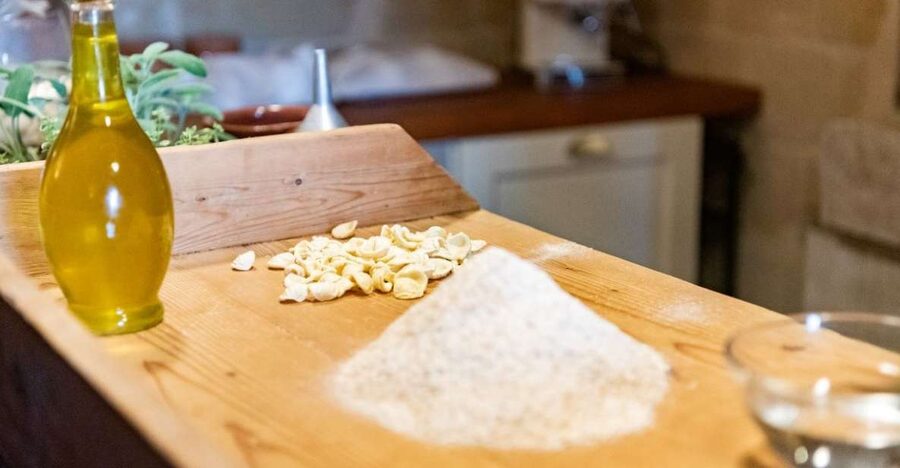
Fresh pasta is only part of the meal. You also learn to prepare bruschetta and other typical dishes connected to the farmer’s table. The point is not a long menu of elaborate courses. It is the careful use of basic local products.
Several dishes mentioned in connection with the class include traditional bread, tomatoes, onions, olives, salad, and regional pasta. Cialledda, a Matera-style bread salad, may also appear depending on the session. Some sessions have focused on focaccia instead, so the exact food preparation can vary.
That variation is worth understanding before you book. The core promise is a local pasta-making and food experience, but the particular dishes may not be identical every time. The class can include recipes chosen by the chef or adapted to the day’s plan.
I like this approach because it reflects how home cooking actually works. Local food traditions are not always fixed menus. They change with the season, the family, and what is available. You get a stronger sense of Basilicata’s cooking when the meal is built around simple produce instead of a long list of showy dishes.
The ingredients are described as fresh and local, and the food is hearty rather than fussy. This is a good fit if you want to understand southern Italian cooking through bread, vegetables, pasta, and family methods.
A Short Break and Time for Photos
After the cooking workshop, there is a 10-minute break. This gives you time to step back from the table, take photographs, and enjoy the cave without trying to knead or shape anything.
A short pause matters during a three-hour food class. The room is an unusual part of the experience, and it is worth seeing it as a place rather than only as a classroom. You may also want a few photographs of the stone interior before the meal begins.
Do not expect a separate sightseeing tour of all Matera during this activity. The visit is centered on the cellar and its immediate Sassi setting. If you want a broader walking tour of the city, plan that separately.
Sitting Down to a Regional Meal
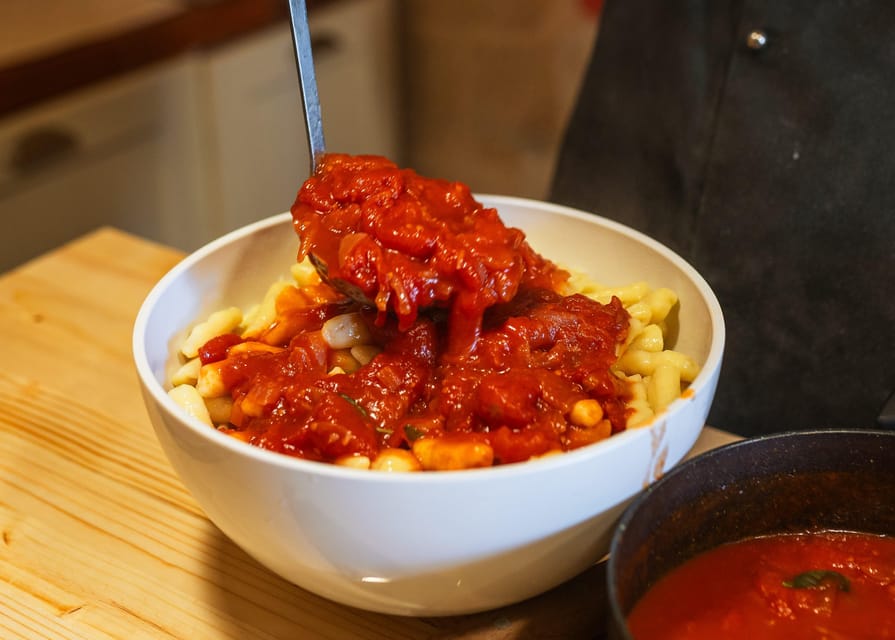
The final food tasting lasts about an hour. This is when the class becomes a long lunch with new acquaintances rather than simply a lesson.
You eat the dishes prepared during the session, including the pasta and regional recipes. The meal gives you time to compare techniques, ask follow-up questions, and hear more from Lorenzo and Cosimo. The hosts’ personal stories about their nonne and family kitchens are an important part of the atmosphere.
The food is meant to show how local cooking can be satisfying without being elaborate. Bread, tomatoes, olives, vegetables, handmade pasta, and simple sauces carry the meal. You get a better understanding of Basilicata when you taste food that reflects everyday traditions instead of only restaurant interpretations.
Some descriptions of the experience also refer to water and local wine being available during the meal. Since the formal inclusions list food tasting but does not give a detailed drinks menu, check the current arrangements if beverages are important to you.
The meal is also where the class earns much of its value. You are not paying only for a recipe sheet and a short demonstration. You receive a guided introduction to the cellar, local stories, hands-on instruction, and a shared meal in a place few standard food tours can match.
Is $80.55 a Fair Price?
At $80.55 per person, this is more expensive than a quick market tasting or a short pasta demonstration. The price makes more sense when you count the full three-hour schedule and the amount of personal attention possible in a group capped at eight.
You receive a cellar tour, local background, a pasta workshop, instruction in traditional recipes, and a sit-down tasting. The experience also takes place in one of Matera’s distinctive cave spaces, which is a major part of its appeal.
I would consider it good value if you are already planning to spend time in the Sassi and want one activity that combines food and local culture. It is less compelling if your main goal is to learn advanced pasta technique. The class is aimed more at connection, tradition, and an enjoyable meal than at professional culinary training.
The small group helps justify the cost. With only eight participants, the chef can watch your technique and answer questions. The hosts can also keep the mood conversational instead of delivering a one-size-fits-all lecture.
Who Will Enjoy This Experience Most?
This class suits you if you like food with a story behind it. It is especially appealing for couples, families, and small groups who want to spend part of a morning or afternoon in a relaxed setting.
Families may appreciate the practical nature of the pasta work. You are not expected to sit quietly while someone else cooks. You can knead, shape, taste, and share the finished dishes.
It is also a strong choice if you have already seen Matera’s main viewpoints and want a closer look at local life. The class does not replace a full city tour, but it adds something that viewpoints cannot provide: an understanding of how food fit into family routines inside the Sassi.
You should skip it if you have gluten intolerance, since the activity centers on wheat-based pasta and bread. You may also want to avoid it if you dislike group meals, hands-on cooking, or long conversations with hosts.
The cellar setting may require some care underfoot, as old cave spaces are not designed like modern kitchens. The supplied information does not give specific accessibility details, so ask the provider before booking if you have mobility concerns.
Timing, Languages, and Booking Details
The total duration is three hours, but starting times depend on availability. The schedule breaks down into roughly 20 minutes for the cellar tour, 90 minutes for cooking, 10 minutes for a break and photographs, and one hour for food tasting.
Instruction is available in English, Italian, and Spanish. That makes the class accessible to a broad range of visitors, though the personal nature of the stories means you will get the most from it if you are comfortable joining conversation.
The activity starts and ends at Cava Marlò. There is no separate transport listed, so plan to reach the meeting point on your own and allow time to find the green door at Recinto Santa Maria, 8.
You can cancel up to 24 hours before the start for a full refund. You can also reserve now and pay later, which is useful when your Matera schedule is still shifting.
Should You Book the Matera Cave Pasta Class?
I would book this if you want more than a standard cooking lesson. The restored cellar, the small group, and the local stories from Lorenzo and Chef Cosimo give the class a strong sense of place.
The best reason to go is the combination of hands-on pasta making and a proper shared meal. You learn a skill, taste the result, and hear how recipes connect to family life in Matera. That is more memorable than simply watching a chef prepare lunch.
Keep your expectations clear. This is not a formal culinary school, a full Sassi walking tour, or a gluten-free activity. It is a friendly, three-hour introduction to Matera through its caves, food, and family traditions.
For most food-focused visitors, couples, and families, I would put it high on the Matera list. Come ready to cook, talk, and eat a substantial meal. If that sounds like your kind of afternoon, the $80.55 price is reasonable for the setting and the amount of time involved.
FAQ
Where does the pasta class meet?
The meeting point is Cava Marlò at Recinto Santa Maria, 8, in Matera’s Sassi. Look for an arch and a large green door. The activity ends at the same location.
How long does the experience last?
The activity lasts three hours. The schedule includes a 20-minute guided cellar tour, a 90-minute cooking workshop, a 10-minute break and photo stop, and about one hour of food tasting.
What languages are available?
The instructors offer the experience in English, Italian, and Spanish.
How many people are in the group?
The group is limited to eight participants.
What food will I prepare?
The class includes fresh pasta, bruschetta, and strascinate al tegamino, along with other traditional regional dishes. The exact menu can vary, and some sessions may include recipes such as focaccia or Cialledda.
Can I cancel or pay later?
You can cancel up to 24 hours in advance for a full refund. You can also reserve your place and pay later.
More Pasta in Italy
- From Rome: Pasta Masterclass & Wine Tour in the Vineyard
★ 5.0 · 132 reviews - Pasta Masterclass and Wine Tour in the Minardi Vineyard
★ 5.0 · 65 reviews - Pasta Making Class at a 12th Century Winery in the Tuscan Countryside
★ 4.5 · 25 reviews - Rome: Private Wine Tour and Pasta Making Class in a Winery
★ 5.0 · 6 reviews
More Cooking Classes in Italy
- A Brunello Cooking Class with Vineyards View Winery
★ 5.0 · 221 reviews - Cortecorbo Irpinia-wines: tour of the vineyards- Cooking class- wine tasting
★ 5.0 · 74 reviews - Organic cooking class with a sommelier in an Olive and wine farm
★ 5.0 · 69 reviews - Irpinia Tour of the Vineyards, Cooking Class and Wine-Tasting
★ 5.0 · 52 reviews
Just added around Italy
- Vineyard Tour and Tasting of Lugana Wines★ 4.5 · 6 reviews
- Picnic and Lugana Tour at Perla del Garda winery★ 5.0 · 6 reviews
- Visit winery and vineyards, tasting 4 wines with 3 matching dishes★ 5.0 · 3 reviews
- Winery tours and tastings in Bolgheri with Wine Guide★ 5.0 · 16 reviews
- Guided tour of vineyards and winery with tasting 4 wines★ 4.5 · 12 reviews
- Private Chianti and SuperTuscan Tour 2 wineries with Light Lunch from Livorno★ 4.5 · 5 reviews
- Winery Tour & Tasting in Pisa Countryside★ 5.0 · 2 reviews
- Private tour from Livorno port to Chianti Wine Region★ 5.0 · 5 reviews
Italy Vineyard Tours, compared.
Tuscany Day Trip from Florence: Siena, San Gimignano, Pisa and Lunch at a Winery
Read our review →

Half day Chianti Vineyard Escape from Florence with Wine Tastings
Read our review →
Tuscany Wine Tour: 2 Wineries & San Gimignano from Florence
Read our review →
Chianti Wineries Tour with Tuscan Lunch and San Gimignano
Read our review →
Private Self-Guided E-Bike Ride in Tuscany with Vineyard Visit
Read our review →
Browse the lists this tour appears in