
REVIEW · SPAIN
La Geria: a walk among volcanoes and vineyards
La Geria is a strange and beautiful place to walk: each vine grows in a hollow scooped into black volcanic ash, often protected by a low stone wall. This is not a standard vineyard visit. You follow old paths through vineyards and volcanoes, then climb Guardilama for broad views across Timanfaya, La Geria, Los Ajaches, the coast, and Fuerteventura.
I like the way the tour connects wine-making with survival, showing why Lanzarote’s dry soil and trade winds shaped this unusual farming method. I also like the small group of no more than 10 people, which gives the guide room to explain the land and answer questions. The main drawback is the uphill walk, so this is not a good fit if you have low fitness, heart or back problems, or difficulty walking.
Key points
- Black ash vineyards: See how vines grow in deep hollows made from volcanic soil.
- Guardilama climb: Walk uphill to one of Lanzarote’s higher peaks for wide views of volcanoes and the coast.
- Volcanic crater farming: Learn how vines can grow inside a crater.
- Small-group guiding: The group is limited to 10, with tours offered in English, Italian, French, and Spanish.
- Bodegas Rubicón tasting: End the walk with a local wine tasting inside a La Geria winery.
- Good preparation matters: Bring water, sunscreen, a jacket, and closed-toe shoes.
Why La Geria’s vineyards look so unusual
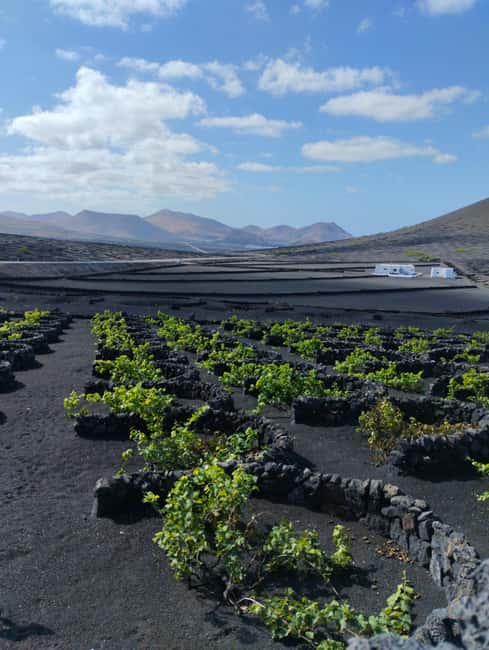
The first thing you notice in La Geria is the color. Black volcanic ash covers the ground, broken by green vines and pale stone walls. The vines are planted in individual hollows, with the ash helping protect them from the dry climate and strong trade winds.
Your guide explains this farming method as you walk. The value of the lesson is that you see the work up close rather than hearing a short explanation at a tasting counter. Each planting hollow shows how local growers adapted to difficult ground and turned volcanic soil into productive farmland.
This is also a walk through a protected part of Lanzarote. The route passes through vineyards, open volcanic terrain, and old stone features. You are not simply moving between a meeting point and a winery. The walk gives you time to notice the shape of the land and the careful human effort behind every row of vines.
The route is circular, so you do not simply retrace your steps. That keeps the outing varied, with different views and changing ground as you move from the vineyard floor toward the slopes of Guardilama.
More Walking Tours in Spain:
- Toledo Tour & Vineyard Walk with Wine Tasting from Madrid
★ 5.0 · 2,546 reviews - Coastal “Winery Camino Trail” Walking Tour from San Sebastian
★ 5.0 · 51 reviews - Sitges sailing, walking and winery tour
★ 3.5 · 6 reviews
Starting at the chapel in La Geria
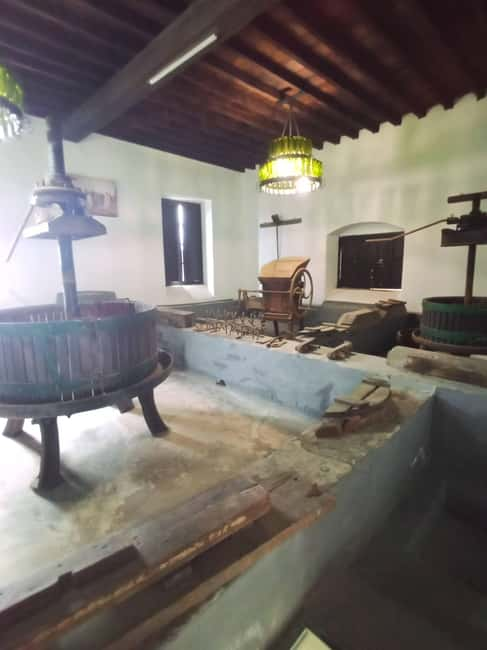
The meeting point is in front of the chapel in La Geria. Transportation is not included, so you need to arrange your own way there. If you are building a day around this outing, allow time to reach the meeting point before the scheduled start.
The route begins among traditional vineyards. This opening section is useful because the guide can explain the local growing method before the walk becomes more demanding. You see the black ash, the low stone protections, and the planted hollows in context.
I would use this early part to get comfortable with the pace and ask practical questions. The guide is there to explain the wine-making tradition, local history, and volcanic setting, not just to point out the next turn. On a departure led by Maria, you can expect an attentive guide who gives information while walking and makes room for questions.
Because the tour lasts 210 minutes, this is a proper half-day activity rather than a quick stop. You have time to understand how the vineyard works, walk into wilder terrain, climb the peak, and finish at the winery without rushing through each part.
Walking from vineyards into open volcanic country
After the first vineyard section, the route heads into more open country. The setting changes from carefully tended plots to a rougher mix of vines, volcanic ground, and distant peaks.
This transition is one of the tour’s strongest features. You can see the link between farming and geology. The wine does not come from a lush valley with easy access to water. It comes from a dry island where growers use ash, hollows, and stone walls to give each vine a chance.
The walking path is described as a gradual ascent, but it still requires a reasonable level of fitness. The tour is not suitable for children under 10, wheelchair users, people with mobility impairments, or people with back or heart problems. Those limits are worth taking seriously. A gradual climb can still feel demanding under the sun, especially if you are not used to uneven volcanic ground.
Wear closed-toe shoes with a secure sole. Bring water, sunscreen, and a jacket. The jacket matters even on a warm day because wind can change how the walk feels, particularly on exposed slopes.
Climbing Guardilama for the wide view
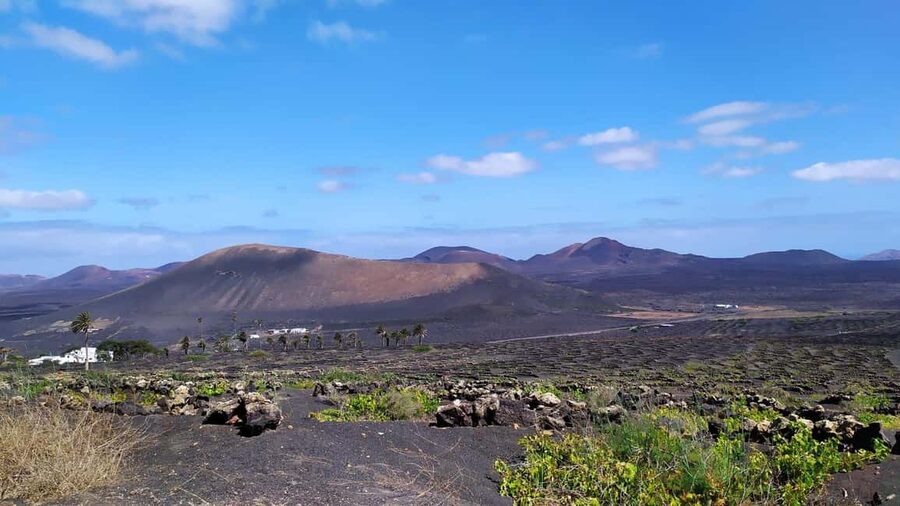
The high point of the outing is the gradual climb of Guardilama, one of Lanzarote’s higher peaks. From the top, you look across the volcanoes of Timanfaya National Park and the protected area of La Geria.
This is where the route earns its hiking label. The view lets you read the whole area at once: the dark volcanic ground, the vineyard hollows, the peaks, and the open horizon. A short break at the top gives you time to rest and take in the setting before the descent.
I like this stop because it adds scale. At vineyard level, the individual planting hollows are the main story. From Guardilama, you can see how large the volcanic region is and how small the cultivated plots are within it.
The summit section also brings the main physical demand. If you want a gentle wine outing with almost no walking, this is the wrong choice. If you enjoy a moderate walk and want more than a winery tasting, the climb makes the experience more rewarding.
The information provided does not give an exact distance or elevation gain, so you should not treat the tour as a measured hiking challenge. What is clear is that there is an uphill section, a summit break, and a descent. Your guide sets the pace for the small group, but you still need to arrive prepared.
A few more vineyard days around Spain worth a look
- Barcelona: Montserrat, Cogwheel, Black Madonna & Winery Tour
★ 4.8 · 5,633 reviews - Montserrat with Black Madonna & Medieval Winery with Tapas/Lunch
★ 5.0 · 5,209 reviews - From Fuerteventura: Lanzarote Volcano and Wine Region Tour
★ 4.4 · 1,220 reviews - Montserrat Full Day Tour with Farmhouse Lunch and Winery Visit
★ 5.0 · 1,068 reviews
Seeing vines inside a volcano crater
Before descending, the route introduces another unusual part of Lanzarote’s wine culture: vines grown inside a volcanic crater. This detail helps show how flexible local growers had to be when working with volcanic ground.
The crater section is not just a scenic pause. It gives the walk a second lesson in cultivation. First you see vines planted in hollows across the ash. Then you see how a volcanic formation itself can become part of the growing system.
This is the kind of detail that makes the experience different from a general volcano walk. You are not only looking at old eruptions or wide views. You are learning how people use the exact forms left by volcanic activity.
The guide’s explanation matters here. Without context, a crater full of vines could seem like an odd visual detail. With the story of the ash, wind, and planting methods, it becomes part of a larger picture of life and agriculture in Lanzarote.
Descending toward Los Ajaches and Fuerteventura
The descent takes you toward the eastern side of the route, where the outlook changes. Instead of looking mainly toward Timanfaya and the interior volcanoes, you see the coast, the Los Ajaches area, and Fuerteventura.
That change keeps the circular walk fresh. You get one set of views from Guardilama and another as the route turns toward the coast. The terrain also shifts in feel, so the return is not simply a repeat of the climb.
For photography, this is a good point to pause, though the tour is primarily a guided walk rather than a dedicated photo outing. Keep your attention on your footing during the descent. Volcanic paths can be uneven, and the combination of loose ground and downhill walking is where suitable shoes matter most.
The views are a major reason to choose this outing over a short vineyard visit. A winery alone gives you the agricultural story. This route adds the surrounding peaks, the coast, and the connection between the vineyards and the wider island.
Finishing at Bodegas Rubicón
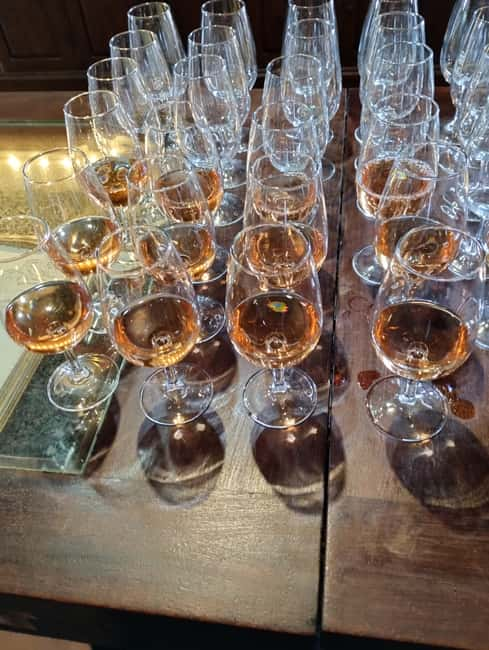
The final stretch returns through vineyards to the heart of the La Geria valley. The timing works well: after the climb and descent, you arrive at Bodegas Rubicón for a tasting of local wine inside the winery.
The tasting is included in the $48 price, along with the guide, the circular route, and civil liability and accident insurance. Additional food and drinks are not included, so do not expect a full meal. If you need more than the tasting, plan accordingly.
Ending at the winery gives the walk a clear purpose. You have seen the growing method, stood among the vines, viewed the volcanoes from above, and then tasted the finished product. The wine feels connected to the ground you have just crossed.
The tasting is also a practical advantage for anyone comparing this with a standard hiking tour. Here you get both outdoor activity and wine tourism in one 210-minute outing. The tradeoff is that you spend less time at the winery than you would on a tour built only around cellars and tastings.
What the $48 price includes
At $48 per person, the cost is reasonable if you want a guided hike and a winery visit in the same booking. You are paying for more than admission to a tasting. The price includes:
- A qualified local guide
- A circular route through La Geria
- Explanations of the area’s history and wine-making tradition
- The Guardilama section and crater visit
- A tasting at Bodegas Rubicón
- Civil liability and accident insurance
Transportation to the chapel is not included. Neither are personal items such as shoes, water, sunscreen, or a jacket. Food and drinks outside the tasting cost extra.
The small group improves the value. With up to 10 people, the guide can give explanations while walking instead of delivering everything as a fixed speech. It also makes the outing feel less like a large coach excursion.
Free cancellation is available up to 24 hours before the activity for a full refund, and you can reserve now and pay later. Those terms help if your Lanzarote plans may shift, but the physical requirements should be your first concern.
Who will enjoy this walk most
I would choose this tour if you want to understand Lanzarote through its vineyards and volcanoes rather than visit a winery in isolation. It suits people who enjoy walking, outdoor scenery, local food and drink, and explanations from a local guide.
It is especially useful for you if:
- You want a small group rather than a large organized outing.
- You like a clear physical goal, with a climb to Guardilama.
- You are curious about how vines grow in volcanic ash.
- You want views of both the Timanfaya area and the coast.
- You prefer an activity that ends with a local tasting.
- You can comfortably manage a gradual uphill walk and a descent.
I would skip it if you want an easy, short vineyard stop. The route takes three and a half hours, includes a climb, and requires proper preparation. It is also not suitable for children under 10 or for people with the health and mobility limits listed for the activity.
The tour is offered in English, Italian, French, and Spanish. Since some content may be presented in its original language, it is sensible to confirm your preferred language when checking available times.
Practical preparation for the 210-minute route
Bring more water than you think you need, since the tour takes place in an exposed volcanic setting. Sunscreen is essential, and a jacket helps with wind and changing conditions.
Closed-toe shoes are required. I would not choose open sandals for a route that includes volcanic paths, an ascent, and a descent.
There is no mention of food being included, so eat beforehand if you need a proper meal before walking. The winery tasting comes at the end, not as a substitute for lunch.
The meeting point is directly in front of the chapel in La Geria. Since you arrange transportation yourself, check your route before the day of the activity. The provider can help organize transportation if needed, but it is not part of the listed price.
Should you book La Geria?
Book this tour if you want the full La Geria story in one outing: vineyards planted in black ash, a guided climb, crater cultivation, wide volcanic and coastal views, and a local wine tasting at Bodegas Rubicón.
The best parts are the unusual farming method, the changing views, and the small group. Maria has led a particularly well-organized version of the experience, with clear information throughout the walk and a well-timed tasting at the end.
Skip it if your fitness is low or if you need an accessible route. For the right walker, though, $48 buys a thoughtful look at one of Lanzarote’s most distinctive places, not just a glass of wine and a quick photo stop.
FAQ
Where does the tour meet?
The guide meets you in front of the chapel in La Geria.
How long does the activity last?
The tour lasts 210 minutes, or three and a half hours.
How much does the tour cost?
The listed price is $48 per person.
What is included in the price?
The price includes a qualified local guide, the circular hiking route through La Geria, a visit to Bodegas Rubicón with a local wine tasting, and civil liability and accident insurance.
Is transportation included?
No. Transportation to the meeting point is not included, though help organizing it is available if needed.
Which languages are available?
Tours are offered in English, Italian, French, and Spanish. Some content may be presented in its original language.
How large is the group?
The activity is limited to 10 participants.
What should I bring?
Bring sunscreen, water, a jacket, and closed-toe shoes. Personal equipment is not provided.
Can I cancel the booking?
You can cancel up to 24 hours in advance for a full refund. You can also reserve now and pay later.
Just added around Spain
- Tour Lanzarote South with Winery Visit★ 5.0 · 4 reviews
- Taste Tradition 4 Wineries and Tapas Bar★ 5.0 · 21 reviews
- Vineyards of La Geria hiking tour★ 5.0 · 69 reviews
- Lanzarote E-Bike Tour: Volcano Craters & Scenic Vineyards★ 5.0 · 28 reviews
- Visit Bodegas Teneguía winery in La Palma with wine Tasting★ 4.5 · 43 reviews
- Canarian Wine Experience at Bodega los Lirios★ 5.0 · 67 reviews
- Winery Tour, Wine Museum, and Tasting in Gran Canaria★ 5.0 · 35 reviews
- Gran Canaria Premium Tour: Volcanoes and Wine for cruisers★ 5.0 · 16 reviews
Spain Vineyard Tours, compared.
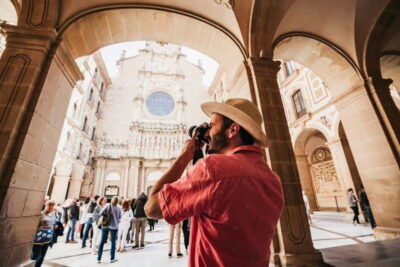
Montserrat, Cogwheel, Black Madonna & Winery Tour
Read our review →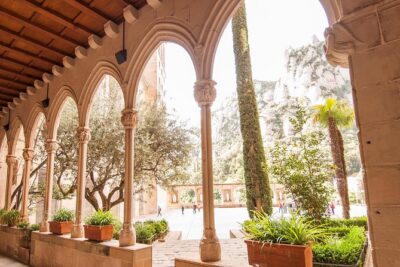
Montserrat with Black Madonna & Medieval Winery with Tapas/Lunch
Read our review →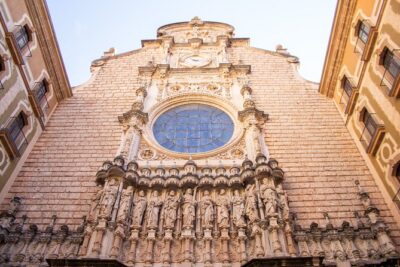
Montserrat Full Day Tour with Farmhouse Lunch and Winery Visit
Read our review →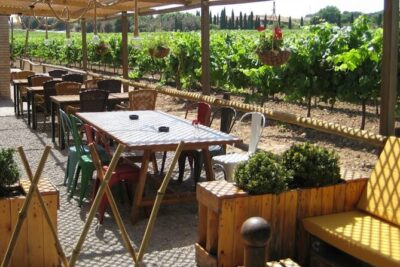
Montserrat & Winery Visit Tour with Traditional Farmhouse Lunch
Read our review →
Madrid Countryside Wineries Guided Tour with Wine Tasting
Read our review →
Bodegas Fundador Guided Tour with Tasting Session
Read our review →
Browse the lists this tour appears in