
REVIEW · FRANCE
Wine Gaming at Chateau Lamothe
The best part of Wine Gaming at Château Lamothe is the twist: you are not trying to escape a room, you are trying to free a bottle of wine. Your team of three to six players works through five puzzles, with tasting tests woven into the challenge. It is part escape game, part introduction to Bordeaux wine.
I like the way the activity makes wine less formal and less intimidating. I also like the private format, since your group can puzzle, taste, and laugh without being mixed with strangers. The main consideration is that 75 minutes is brief, so this works better as a lively introduction than as a full winery visit or serious tasting course.
Key points at a glance
- Five puzzles lead to a final cryptex: The last challenge releases the bottle.
- Tasting is part of the game: You learn about wine by testing your senses and making choices.
- Private teams of 3 to 6: The format suits friends, families, and workplace groups.
- Bordeaux geography and flavors enter the story: The game connects the Domaine Fabre family to the region.
- A bottle is the victory prize: Your team receives one of the estate’s wines to share.
- The visit lasts about 1 hour 15 minutes: It begins and ends at Château Lamothe at 9:30 am.
Why Wine Gaming works better than a standard tasting
A classic wine tasting asks you to listen, smell, sip, and remember. That can be enjoyable, but it can also feel like a test if you do not know the vocabulary. Wine Gaming changes the mood. You and your teammates have a job to do, and the wine knowledge arrives as part of the puzzle.
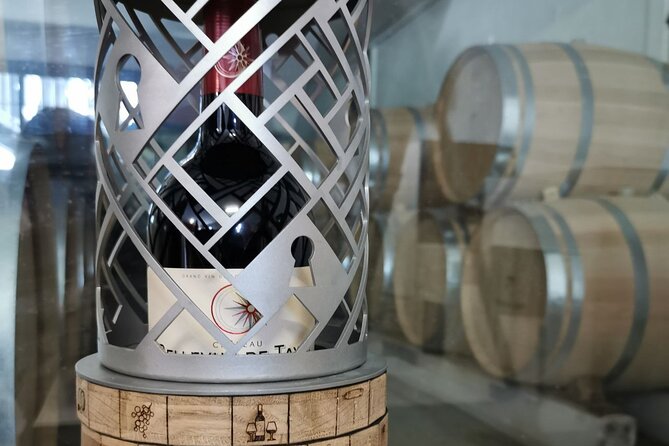
The central idea is simple. A bottle is secured inside a cryptex, and your team must pass through five stages to open it. Each puzzle brings you closer to the answer. The tasting tests are not an extra lesson tacked onto the game. They are part of the route to the prize.
I like this setup for people who are curious about wine but do not want a formal lecture. You may not remember every term used during the session, but you will have a practical reason to pay attention to aroma, flavor, place, and clues. That makes the information easier to use later at a restaurant or another Bordeaux estate.
The activity also has a clear social purpose. Communication matters because one person may notice a clue while another handles the tasting task. Cooperation matters because the group must agree on what to do next. For a company outing, this gives the hour more structure than simply standing around with glasses in hand.
Other vineyards people visit around France:
- Medoc or Saint Emilion Wine Tasting and Chateau from Bordeaux
★ 5.0 · 1,415 reviews - Saint-Émilion: Grand Cru Classé Winery Visit and Tasting
★ 4.6 · 1,118 reviews - Saint Emilion Half-Day Trip with Wine Tasting & Winery Visit from Bordeaux
★ 4.5 · 1,034 reviews
Arriving at Château Lamothe in Cissac-Médoc
The meeting point is Château Lamothe, at 211 Le Moulin de la Motte, 33250 Cissac-Médoc, France. The experience starts at 9:30 am and finishes back at the same place. Since there is no separate end point, you can plan the activity as a compact stop in your Médoc day.
The setting matters because this is not an abstract wine game in a city entertainment center. The story is tied to Domaines Fabre and the Bordeaux area. The game uses the family and its wines as the setting for the challenge, giving the puzzles a stronger sense of place.
You should arrive ready to take part rather than simply observe. The format depends on discussion, tasting, and shared problem-solving. If one person tries to solve every puzzle alone, the group misses much of the point.
The early start is worth noting. A 9:30 am booking may suit a full day in the Médoc, but it may feel early if your group prefers a slow morning. The advantage is that you finish after roughly 75 minutes with plenty of time left for other plans.
Building your team of three to six
The recommended team size is one of the most useful details here. Three people gives you enough voices for discussion without making the group unwieldy. Six people allows a larger work team, though you may need to make sure everyone gets a chance to handle clues and tasting decisions.
Because the activity is private, only your own group participates. That is helpful for friends who want a relaxed challenge, and it makes sense for a workplace team focused on communication. It also avoids the awkwardness of solving a puzzle with people you have just met.
The private format does not mean the activity is only for wine experts. The stated purpose includes introducing less experienced participants to oenology. You can come with strong wine knowledge, basic knowledge, or almost none at all. The game is built around experimentation, so curiosity matters more than a polished vocabulary.
I would choose this for a group that enjoys talking things through. If your companions dislike puzzles, tasting, or group decisions, the format may feel forced. It is not a passive sightseeing stop. You need to be willing to make guesses, compare impressions, and keep moving.
The first puzzles: learning through play
The five-puzzle structure gives the session a natural rhythm. Rather than receiving all the information at once, you encounter wine ideas as you work toward the next clue. This is a useful approach for beginners because you have a reason to connect each observation with the larger challenge.
The early puzzles introduce the rules of the game and begin the story of Domaines Fabre. You might find yourself thinking about details in a new way, since a small observation can help the team move ahead. The exact puzzle answers are not provided in advance, which is part of the fun and keeps the challenge intact.
The game is designed to promote communication and cooperation. One person may be quick with logic, while another may be better at identifying a flavor or connecting the clue to Bordeaux geography. A good team will use those different strengths instead of expecting everyone to do the same job.
This is also where the activity differs from a simple tasting workshop. You are not only hearing about wine. You are using your senses and your reasoning together. That makes the session feel active, although anyone hoping for a long sit-down discussion about winemaking may find the game format a little light.
Same wine country, a different day out:
- Champagne Day Trip with 6 Tastings, Reims and Winery from Paris
★ 5.0 · 902 reviews - From Reims: Champagne and Family-Run Wineries Tour
★ 4.8 · 671 reviews - Saint-Emilion Afternoon Wine Tour – 2 Wineries & delicacies
★ 5.0 · 614 reviews - Saint-Émilion: Bordeaux Vineyard Tour and Wine Tasting
★ 4.8 · 578 reviews
Tasting tests and Bordeaux flavors
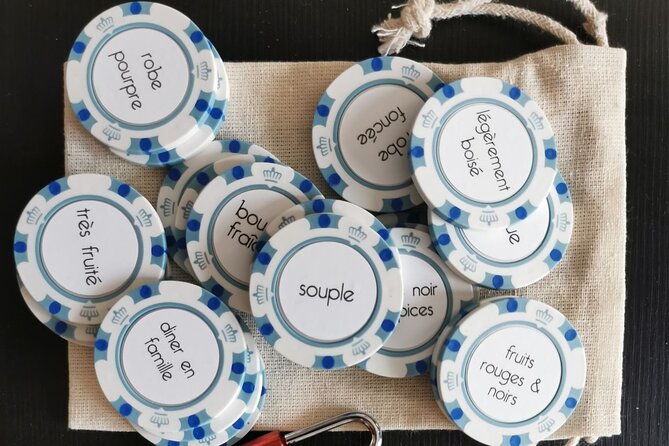
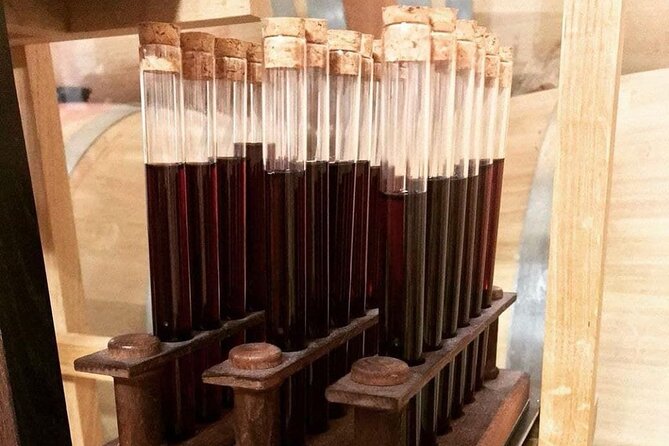
The tasting portion is the heart of the oenology lesson. The supplied description does not list the individual wines or explain each test, so you should not expect a published tasting flight with detailed notes in advance. What you can expect is that tasting decisions help your team solve the puzzles.
That design is friendly to beginners. You do not need to arrive knowing how to identify every grape or describe a wine in expert terms. You are there to compare, notice, discuss, and test your logic. The activity turns tasting into a useful tool rather than a performance.
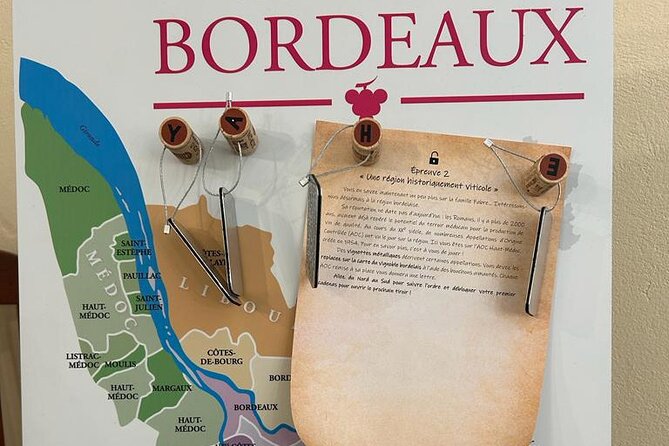
The game also connects the flavors to the geography of Bordeaux. This gives the hour more depth than a set of unrelated riddles. You begin to see how a place can be part of the story behind a wine, even within a short activity.
I especially like this for people who want a first taste of Bordeaux wine culture without committing to a full day of estates. It offers a playful starting point. You will not leave with a complete education in Médoc wine, but you should leave with a clearer sense of how tasting and place can fit together.
The final cryptex and the bottle prize
The fifth puzzle lets your team open the cryptex and release the bottle. That final mechanism gives the experience a satisfying finish. You are not just collecting information or waiting for the host to reveal the answer. Your group has to earn the result by completing the challenge.
The prize is a bottle from the Fabre family’s wines, intended to enjoy with family or friends. At $28.94 per person, the bottle adds real value, especially for a private group that already wants a shared souvenir from the Médoc.
Still, I would not book this only for the bottle. The value comes from the combination of a private activity, a guided introduction to wine, and a prize at the end. If you only want to buy wine, a shop or estate visit may be more direct. If you want an experience that gives your group something to talk about, the price is easier to justify.
The bottle also makes the activity work well as a celebration or team event. It gives everyone a shared result rather than leaving the group with only a few photographs and tasting notes.
What the 75-minute schedule means for your day
The listed duration is approximately one hour and 15 minutes. That is long enough for five puzzles and tasting tests, but short enough to fit into a busy day around Cissac-Médoc.
You should think of it as one focused activity, not a full-day château program. The experience begins and ends at Château Lamothe, so you do not need to arrange a separate transfer between the start and finish. The mobile ticket also makes booking simple when you are organizing several stops.
The compact timing has two sides. I like that it does not consume an entire morning, particularly if you want to visit other parts of Bordeaux or the Médoc. On the other hand, the pace may feel quick if your group likes to linger over wine or ask extended questions.
The game’s energy is part of the appeal. A time-based puzzle works best when the team has a goal and keeps moving. If you want a slow, technical tasting, look for an activity described as an oenological workshop rather than choosing Wine Gaming alone.
Who should book this experience
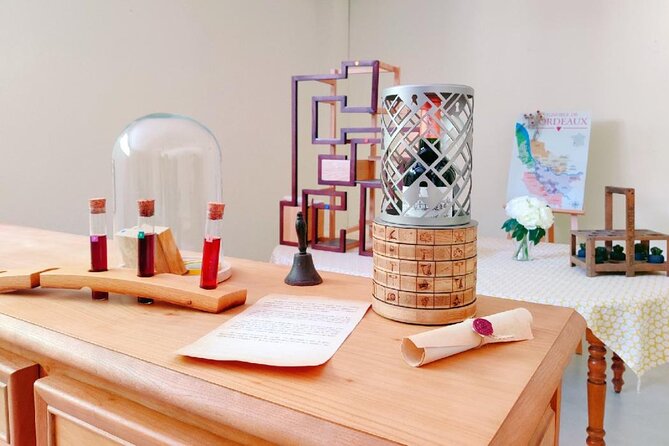
I would recommend Wine Gaming for:
- Friends who enjoy escape-style puzzles and want wine included
- Couples traveling with another couple, since the ideal size is three to six
- Families with participants who can take part in the tasting and group tasks
- Workplace teams seeking a private activity built around cooperation
- Wine beginners who want an approachable introduction to oenology
- Bordeaux visitors looking for a short activity with a regional connection
The activity is also suitable for most people to participate, according to the supplied details. However, the experience depends on tasting and solving puzzles, so the best fit is someone comfortable joining a group activity rather than watching from the side.
I would be more cautious if your group has no interest in wine or dislikes timed challenges. The game may still be attractive for its setting, but its main ingredients are tasting, logic, and teamwork. Those are not minor extras.
Price, value, and practical planning
At $28.94 per person, the cost is reasonable for a private, 75-minute activity that includes a bottle as the victory gift. The price becomes especially fair when split across a group that wants a shared experience rather than a standard tasting.
The private booking is important to the value calculation. You are paying for an activity designed for your own group of three to six, not a large public session. That gives you more control over the mood and team dynamic.
The 9:30 am start should shape your schedule. Plan to be at Château Lamothe before then, and allow the full 75 minutes rather than assuming you will be finished immediately. Since the end point is the starting point, you can continue with your day from there.
Booking confirmation is normally sent at the time of booking. If you book within one day of the visit, confirmation arrives as soon as possible and depends on availability. Free cancellation is available if you cancel at least 24 hours before the local start time. Inside that window, the payment is not refunded and changes are not accepted.
Should you book Wine Gaming at Château Lamothe?
Book it if you want a short, private, playful introduction to Bordeaux wine and your group enjoys solving problems together. The five-puzzle format, tasting tests, Bordeaux setting, and bottle prize give the experience a clear shape and a satisfying finish.
Skip it if you want a long estate tour, a highly technical wine lesson, or an unhurried tasting. Wine Gaming is best understood as a social challenge with oenology built into it. For the right group, that is exactly its strength.
FAQ
Where does Wine Gaming take place?
The activity takes place at Château Lamothe, 211 Le Moulin de la Motte, 33250 Cissac-Médoc, France.
What time does the experience start?
The stated start time is 9:30 am.
How long does Wine Gaming last?
The experience lasts approximately 1 hour and 15 minutes.
Where does the activity finish?
It finishes back at Château Lamothe, the meeting point.
How many people can join one team?
The recommended team size is three to six players.
Is this a private activity?
Yes. Only your group participates in the activity.
How many puzzles are included?
The game includes five puzzles. The fifth puzzle allows you to open the cryptex and release the bottle.
Is wine tasting part of the experience?
Yes. Tasting tests are part of the challenge and help introduce you to oenology.
What is the victory prize?
The Fabre family provides a bottle of one of its wines for your team to enjoy with family or friends.
What is the cancellation policy?
You can cancel for a full refund up to 24 hours before the experience start time. Cancellations or changes made within 24 hours are not accepted, and the amount paid is not refunded.
Just added around France
- 3-Hour Private Painting tuition in a beautiful Cognac vineyard★ 3.5 · 2 reviews
- 4×4 tour in a winery followed by a tasting★ 5.0 · 46 reviews
- Winery Visit with Food and Wine in Carcassonne★ 5.0 · 59 reviews
- Walk in the vineyards of Chablis Grands Crus★ 4.5 · 7 reviews
- Wine Getaway with Tasting in the Chablis Vineyard★ 5.0 · 3 reviews
- Winery Tour & Wine Tasting – Deli Plate & 3 Wines★ 5.0 · 72 reviews
- Visit to the Faugères Vineyards with Picnic from Béziers★ 5.0 · 7 reviews
- Languedoc Vineyard Tours★ 5.0 · 25 reviews
France Vineyard Tours, compared.
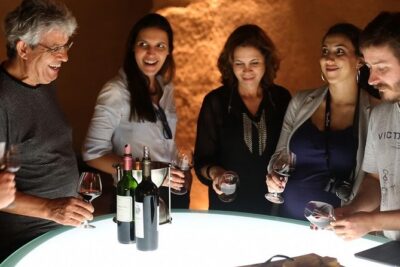
Medoc or Saint Emilion Wine Tasting and Chateau from Bordeaux
Read our review →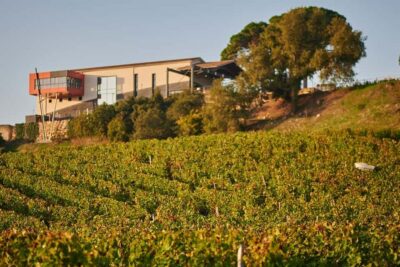
Saint-Émilion: Grand Cru Classé Winery Visit and Tasting
Read our review →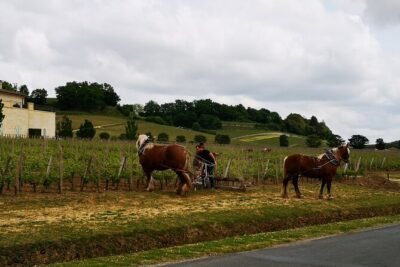
Saint Emilion Half-Day Trip with Wine Tasting & Winery Visit from Bordeaux
Read our review →
Champagne Day Trip with 6 Tastings, Reims and Winery from Paris
Read our review →
Saint-Emilion Afternoon Wine Tour – 2 Wineries & delicacies
Read our review →
Saint-Émilion: Bordeaux Vineyard Tour and Wine Tasting
Read our review →
Browse the lists this tour appears in