
REVIEW · SANTORINI
Santorini: Wine Tasting Tour to 3 Wineries with Transfer
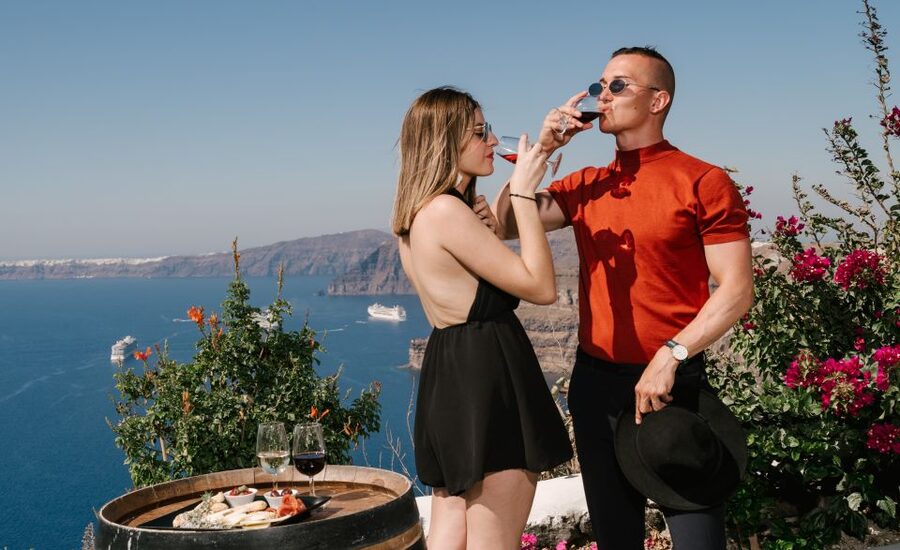
Santorini’s wine story is far more interesting than a quick tasting beside a pretty view. This tour takes you to three different wineries, from historic Canava Roussos to the underground Koutsoyannopoulos Wine Museum and family-run Venetsanos, where the caldera steals the show. I especially like the variety of settings and the chance to taste wines made from grapes shaped by Santorini’s dry, volcanic conditions.
I also like the way the tour mixes wine with island history. Guides such as Chrisa, Nikitas, Maria, Georgia, and Eleni have been praised for making the ride informative and lively. The main caution is the wine selection: tastings often lean toward white, rosé, and sweet wines, so serious red-wine drinkers may find the lineup less satisfying. At $174 per person, transport and three guided tastings make the price reasonable for visitors who want an organized introduction, but it is not a bargain tasting stop.
Key points to know before booking
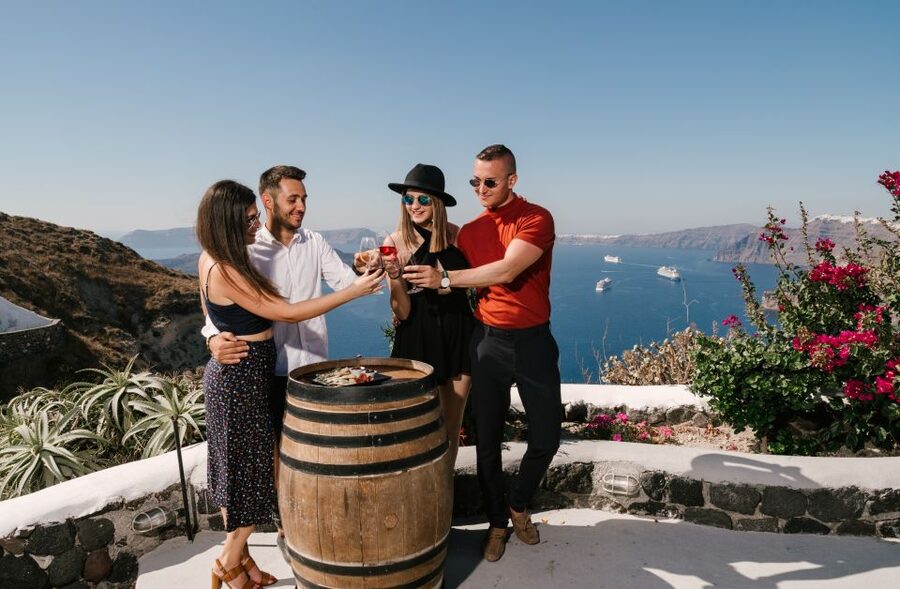
- Three wineries in about three hours: Each stop receives roughly 45 minutes for a tour and tasting.
- Two different routes: The 11:40 morning departure visits Roussos, Koutsoyannopoulos, and Venetsanos. The 15:40 afternoon departure visits Venetsanos, Roussos, and Aroma Avlis.
- A strong mix of settings: Expect a garden-like outdoor tasting area, an underground cave museum, and a caldera-facing winery.
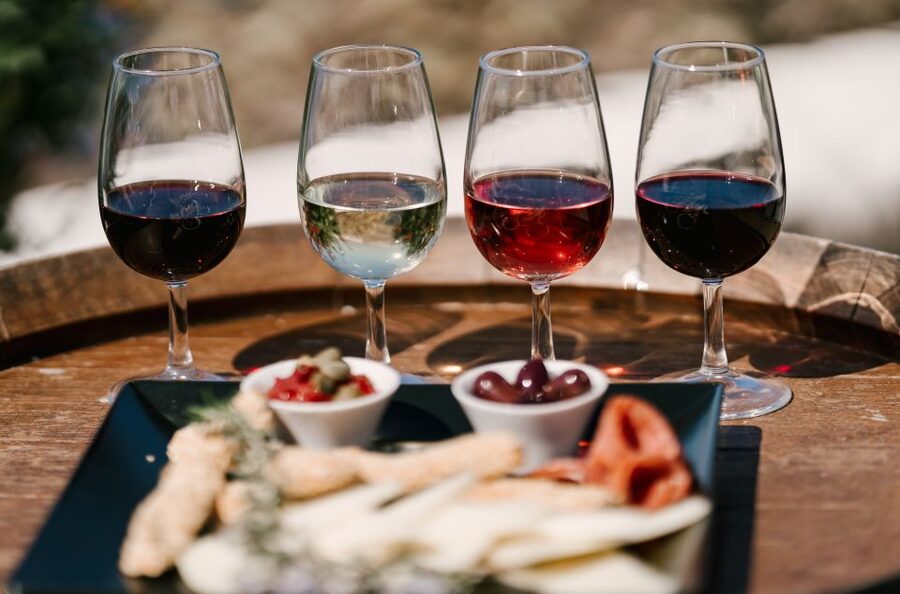
- Small pours with food: Tastings commonly include a white, a red or rosé, and a dessert wine, with small snacks at each stop.
- Comfortable transport matters: Pickup and transfers are included, and several parties describe the minibus as comfortable and air-conditioned.
- Best for wine beginners and curious drinkers: You get a short tasting lesson, local history, and a broad look at Santorini’s wine culture rather than a long technical seminar.
Why Santorini wine deserves a closer look

Santorini is famous for dramatic cliffs and whitewashed villages, but its wine is one of the island’s most distinctive products. The dry climate, strong winds, and volcanic ground make grape growing difficult. Instead of training vines high on poles or trellises, local growers traditionally shape them into low baskets close to the earth.
You will not simply drink wine and move on. The guides explain how the island’s conditions affect the grapes, why Santorini’s winemaking methods developed differently, and how older family cellars compare with newer production spaces. That context gives the tastings a purpose. A crisp white or sweet wine makes more sense when you understand the soil, weather, and local methods behind it.
The tour is also useful for seeing parts of Santorini beyond the main village viewpoints. You remain in a vehicle between stops, but the route gives you a practical look at the island and its wine-producing areas without the trouble of arranging taxis or a rental car after several tastings.
A few more vineyard days around Santorini worth a look
- Santiago: Concha y Toro Vineyard Tour w/ Transfer & Tasting
★ 4.2 · 455 reviews - Malaga Organic Vineyard and Winery Six Wines Tapas and Transfer
★ 5.0 · 356 reviews - Malaga: Organic Vineyard Tour with 6 Wines, Tapas & Transfer
★ 4.8 · 334 reviews
Canava Roussos and the old cellar atmosphere
Canava Roussos is one of the most memorable stops for travelers who care about tradition. It is described as the oldest winery on Santorini, and the visit focuses strongly on its past, cellar, and family connection to winemaking.
The outdoor tasting space has a garden-like feel, which gives this stop a relaxed change of pace. You may also see parts of the cellar and hear how the winery has preserved older ways of working. The setting is less about polished modern design and more about the character of an old island wine house.
The presentation here can be especially useful for first-time tasters. The host explains the grapes, the wine-making process, and the challenges facing Santorini’s small wine industry. One of the most warmly praised hosts at Roussos has been singled out for her passion and clear explanations, so this is often the stop where the island’s wine story becomes personal rather than simply historical.
The tasting commonly includes a white, a red or rosé, and a dessert wine. Small snacks help clear the palate, though portions are designed for sampling, not lunch. If you find a bottle you like, purchases are possible, but you will need to handle transport and packing yourself.
The Koutsoyannopoulos Wine Museum below ground
The morning tour includes the Koutsoyannopoulos Wine Museum, one of the more unusual parts of the experience. The museum is located below ground in a cave, and its underground setting gives the visit a strong sense of place.
The museum presents Santorini’s winemaking story through a tunnel-like route beneath the surface. The focus is on the tools, working methods, and family history connected with local production. You get a better idea of the labor involved before modern equipment, as well as the ways Santorini families adapted to a harsh growing environment.
For me, this stop adds more value than a standard tasting room because it gives you something to see and study between glasses. It also helps explain why older wineries on the island can feel tucked into the ground rather than spread across broad vineyards.
The morning itinerary gives you Roussos first, then the museum, followed by Venetsanos. That order works well if you want to build from traditional cellar culture toward the panoramic finale. Keep in mind that the museum is part of the morning route listed for the tour, not the afternoon route.
Venetsanos Winery and the caldera finale

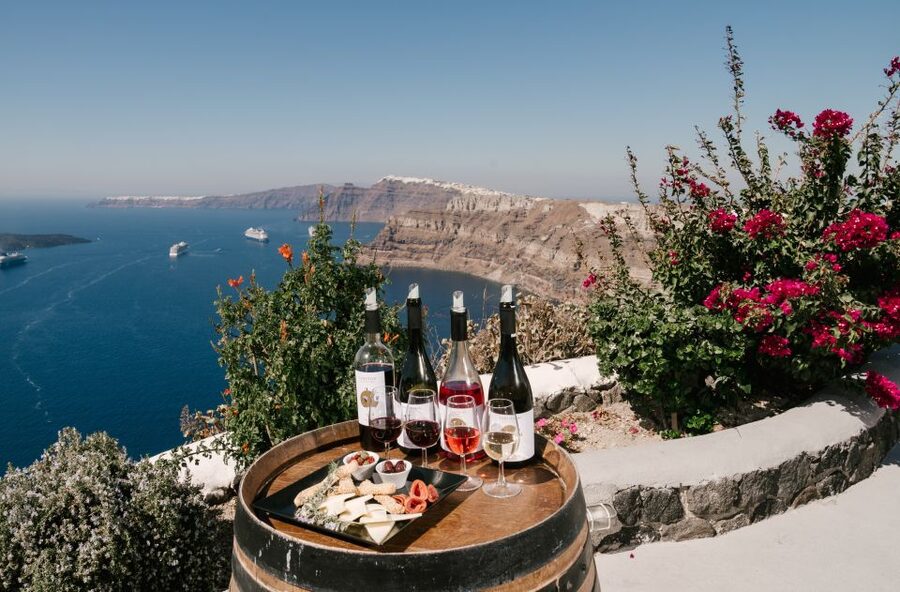
Venetsanos Winery is the visual high point of the experience. The family-run winery looks across the Santorini caldera, and the setting gives you the classic island views that many visitors hope to see.
The view is not the only reason to stop here. Venetsanos also shows a different side of Santorini wine production, with a setting that feels more open and modern than an old cellar. You can compare the winery’s approach with what you saw at Roussos and the cave museum.
The tasting usually follows the same broad pattern: local white wine, a red or rosé, and a sweet wine, accompanied by small bites. Several wines are offered across the tour, with some people tasting around ten in total, depending on the exact selection. The pours are intentionally modest, which helps you reach the final stop without becoming uncomfortable, but it can feel a little stingy if you hoped to drink full glasses.
The afternoon tour begins at Venetsanos, then moves to Roussos and Aroma Avlis. That timing places the most scenic stop first, which may suit you if the caldera is your top priority. The morning tour saves Venetsanos for last, giving the outing a natural finish.
More Food and Drink Experiences in Santorini:
- Santorini: Tour of Wineries with Wine Tasting & Food
★ 5.0 · 279 reviews - Santorini: Through the Grapevine Tour Winery Tasting Tour
★ 5.0 · 11 reviews - Florence: Chianti Wineries Tour with Wine Tasting
★ 4.5 · 10,071 reviews - Porto: Cálem Cellar Tour, Interactive Museum & Wine Tasting
★ 4.5 · 4,113 reviews
Aroma Avlis and the afternoon route
The afternoon departure at 15:40 visits Venetsanos, Canava Roussos, and Aroma Avlis. This route does not include the underground Koutsoyannopoulos Wine Museum, so choose the morning departure if the museum is important to you.
Aroma Avlis provides another point of comparison between Santorini wineries. The tour is designed around contrasts, so the value of this stop is less about one famous sight and more about seeing how another producer presents local wines and hospitality.
The precise wines served can change. You might receive a white, a rosé or red, and a sweet wine, but the balance is not guaranteed. The tastings have often included several dessert wines, sometimes more than visitors expect. If you prefer dry reds, tell your guide early and ask what to expect. The guide can explain the selection, though the official tasting lineup remains set by the wineries.
What the wine tasting is really like
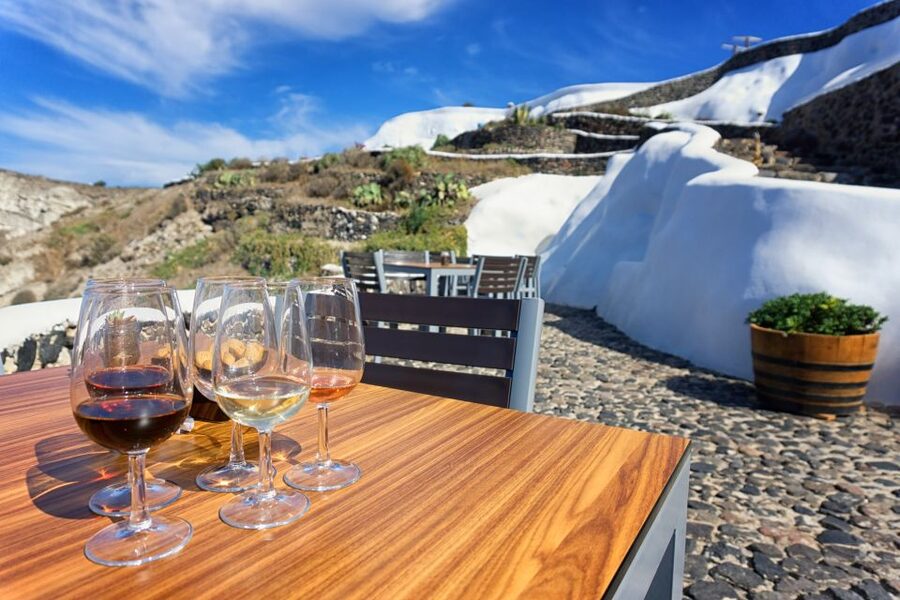
This is an introduction to Santorini wine, not a formal certification class. You receive a short tasting tutorial, then sample wines at each winery while local staff explain what is in the glass.
The format is friendly and manageable. You are not expected to identify obscure aromas or use technical wine language. Instead, you learn how to look at the color, smell the wine, take a small sip, and notice the difference between styles.
Expect small appetizers rather than a full meal. The food gives you something to nibble while tasting, but you should eat beforehand if you need a substantial lunch. With multiple pours in a short period, food and water are practical, not optional extras.
The strongest pattern in the tasting selection is variety. You may try several whites, rosés, reds, and dessert wines, but the tour appears particularly friendly to those who enjoy sweet or late-harvest styles. One tasting included one red, two whites, two rosés, and three dessert wines. That is a good sample of the island, but it may disappoint someone looking for a red-focused experience.
Guides, group size, and the ride between wineries
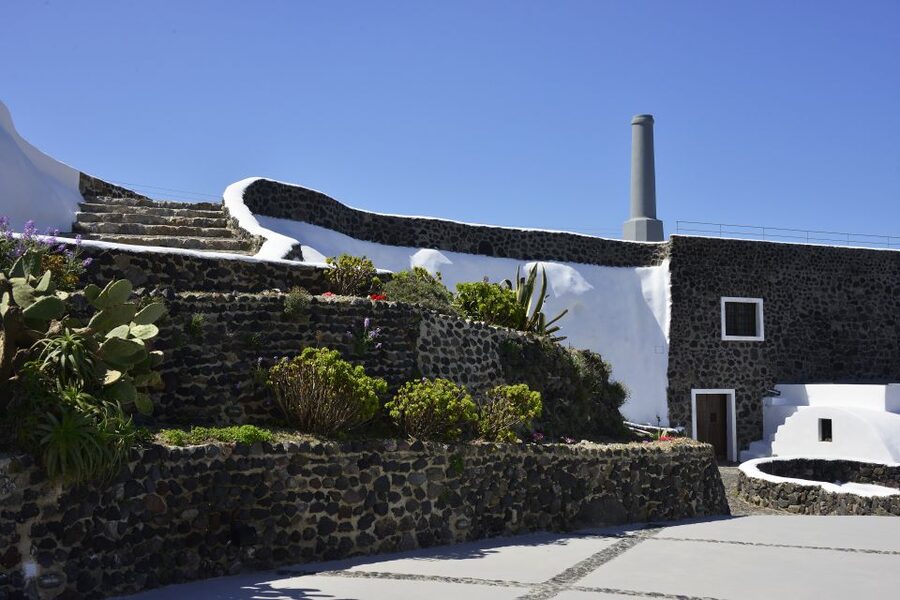
The guide can shape the day as much as the wine. Guides named in feedback include Chrisa, Nikitas, Maria, Georgia, Eleni, Tony, and others. Their approach varies, but the best descriptions point to clear explanations, humor, practical island tips, and a willingness to keep the group involved.
Chrisa has been praised for combining wine instruction with local recommendations. Nikitas has been described as funny and energetic, with one group even requesting a song at the final stop. Maria and Georgia have also been praised for making the history easy to follow. These details matter because three wineries in three hours could otherwise feel rushed or repetitive.
Transportation is included, usually in a comfortable minibus. The pickup arrangements can involve collecting some people and gathering the full group in Fira before continuing. Air conditioning is a useful feature during Santorini’s warmer months, especially after walking around outdoor winery spaces.
Group size can vary. One party described a group of six guests plus the guide and driver, while another ended up with a private experience at the same price when no other bookings joined. Do not count on a private tour, but the format can feel personal when the group is small.
The schedule may run slightly over. That is not always a problem, since extra tasting time is better than being hurried out of a cellar, but leave some flexibility after the tour. Do not book a tight dinner reservation immediately afterward unless you are comfortable with a possible delay.
Is $174 a fair price?
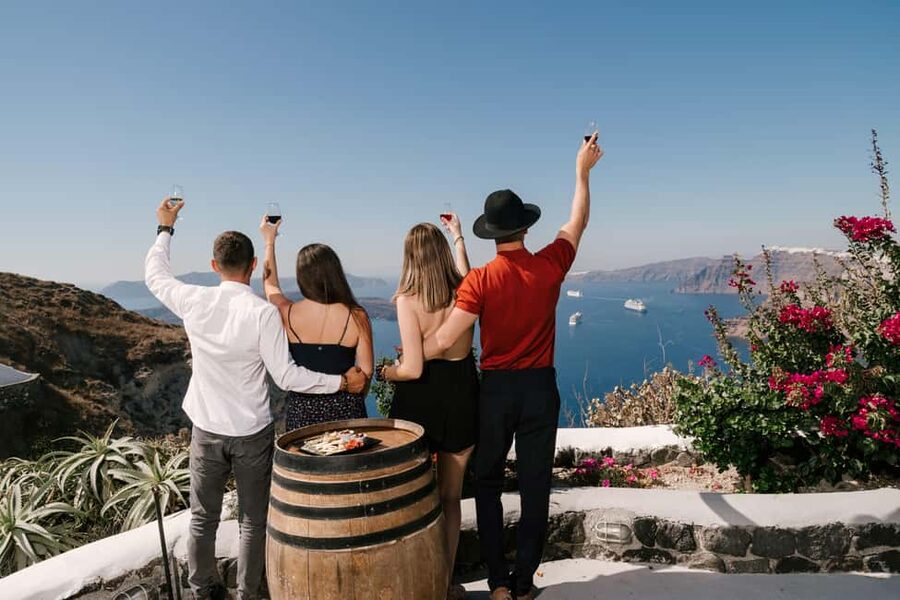
At $174 per person, this is a premium half-day outing for a three-hour duration. You are paying for more than wine: transport, a guide, three winery visits, tastings, small snacks, and the convenience of moving around Santorini without arranging separate rides.
The value is strongest if you do not have a car, want to taste responsibly, or prefer context with your wine. A private taxi between three wineries could become costly, and driving after several samples is a poor plan. The tour also saves you from researching which wineries accept visitors and how to fit them together.
The value is weaker if you only want a single glass with a view. Santorini has other tasting options, and the pours here are light. You may also find the cost high if you do not care about the history, cellar visits, or guide’s explanations.
I would compare the price to the time and convenience, not just the volume of wine. This is a compact cultural outing with tastings attached. If you treat it as a moving wine lesson and island visit, the cost is easier to justify.
Who should book this Santorini wine tour?
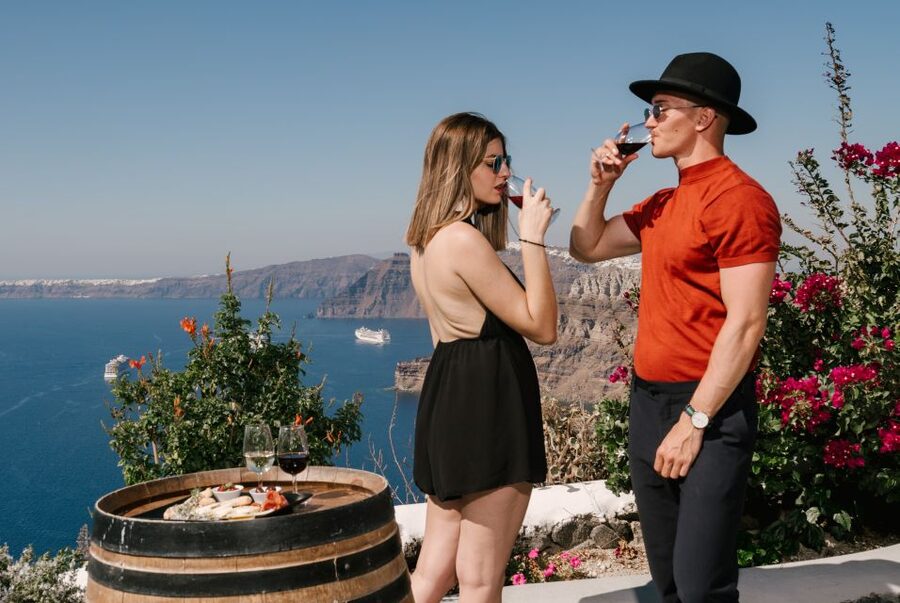
I would recommend it to first-time visitors who want an organized introduction to Greek wine. It suits couples, small groups, solo visitors, and anyone who wants to meet other people during a relaxed afternoon.
It is also a good choice for people who enjoy learning how local food and drink connect to place. You see old and newer winery styles, hear about the island’s challenges, and taste wines that are not simply familiar international varieties.
You may want another option if you are a serious red-wine specialist, dislike sweet wines, or expect a full meal with generous pours. You should also check the route before reserving. The morning itinerary is the one to choose if the Koutsoyannopoulos Wine Museum matters most. The afternoon route gives you Venetsanos first and replaces the museum with Aroma Avlis.
Children under four can join free, but they do not receive a bus seat. That detail is important for families, especially if you are counting on a dedicated place for a small child.
Free cancellation is available up to 24 hours before departure, and the reserve-now, pay-later option helps if your Santorini plans are still shifting. The tour is offered in Greek and English.
Should you book it?
Book this tour if you want three distinct winery settings, practical transport, local wine instruction, and a strong dose of Santorini history in one short outing. The combination of Canava Roussos, the underground museum on the morning route, and Venetsanos’s caldera view gives the tour more substance than a basic tasting.
Skip it if you want generous pours, a long vineyard walk, or a red-wine-heavy program. For most curious visitors, though, this is a well-paced way to understand why Santorini wine is so unusual, with enough scenery and personality to make the $174 price easier to accept.
FAQ
How long does the Santorini wine tasting tour last?
The activity lasts about three hours. Each winery receives roughly 45 minutes for a tour and tasting, with the remaining time used for transportation between locations.
What wineries are included on the morning tour?
The 11:40 morning route visits Canava Roussos Winery, Koutsoyannopoulos Winery and Wine Museum, and Venetsanos Winery.
What wineries are included on the afternoon tour?
The 15:40 afternoon route visits Venetsanos Winery, Canava Roussos Winery, and Aroma Avlis Winery.
Does the tour include the Koutsoyannopoulos Wine Museum?
Yes, the Koutsoyannopoulos Wine Museum is included on the morning route. It is located below ground in a cave. The listed afternoon route does not include it.
How many wines will I taste?
The exact selection can change, but tastings take place at all three wineries. The selection commonly includes white wine, red or rosé wine, and dessert wine at each stop, with some groups tasting about ten wines overall.
Is food included with the wine tastings?
Yes. Small appetizers or snacks are included at the wineries. They are tasting accompaniments rather than a full meal.
Is transportation included?
Yes. Transportation between the wineries and tour transfers are included. The vehicle is generally a comfortable minibus, and air conditioning has been available.
Can children join the tour?
Children under four years old can join free, but they do not reserve a seat on the bus. The tour is offered with Greek and English-speaking guides.
Just added around Santorini
- Santorini Wine Roads: Tour of 3 Wineries with a Sommelier★ 4.8 · 79 reviews
- Santorini: Pyrgos, Winery & Oia★ 4.6 · 4 reviews
- Santorini: Catamaran Cruise, Winery, & Oia Sunset Combo Tour★ 4.7 · 28 reviews
- Santorini: Vineyard and Winery Tour with Cooking Class★ 4.9 · 5 reviews
- Santorini: Guided Wineries Private Tour with Wine Tastings★ 5.0 · 39 reviews
- Santorini: Through the Grapevine Tour Winery Tasting Tour★ 5.0 · 11 reviews
- Private Group Visit to Akrotiri & 3 Wineries with Tastings★ 4.2 · 42 reviews
- Private Full-Day Tour with winery visit★ 5.0 · 3 reviews
Santorini Vineyard Tours, compared.

Small-Group Sunset Wine Tour with Santo Winery
Read our review →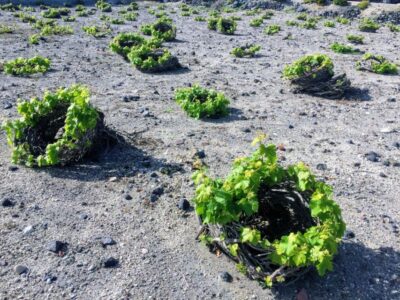

Santorini Sunset Wine Tour with Santo Winery Views
Read our review →

Three Wineries and One Brewery Tour with Tastings
Read our review →
Santorini 3-Winery Tour with 12 Wine Tastings and Oia Sunset
Read our review →
Santorini Wine Roads: Tour of 3 Wineries with a Sommelier
Read our review →
Private Santorini Sunset Wine Tour with Tastings and Tapas
Read our review →Browse the lists this tour appears in