
REVIEW · FRANCE
Saint-Émilion: 2 hours – Visit of the vineyard, the cellar and tasting
The best part of this Saint-Émilion wine tour is its close look at the work behind the label. You walk through the vineyard, see the machinery and fermentation tanks, visit the barrel cellar, then taste four Château wines. Florent, or his mother Marie-Anne, leads the visit with a family story that reaches back four generations.
I like the small maximum of 15 people, which should make it easier to ask questions, and I like that the tour covers the full route from vine to bottle rather than stopping at a tasting room. The main thing to consider is location: Château Haute-Nauve is in Saint-Laurent-des-Combes, so you need to arrange your own way to the meeting point.
Key points at a glance
- A fourth-generation family estate: Learn how the Haute-Nauve family has worked its vineyards across four generations.
- More than a tasting: The visit includes vineyard plots, production equipment, fermentation tanks, the barrel cellar, and four wines.
- A practical look at modern winegrowing: See the estate’s wind turbine and six-meter wine bottle, and hear how the family responds to freezes and other farming challenges.
- Four wines in the glass: Taste a rosé, one Saint-Émilion, and two Saint-Émilion Grand Cru wines.
- English available: Florent leads English-language visits, while Florent and Marie-Anne guide the estate experience.
- Good value for wine beginners: At $30.04 per person for about two hours, the tour gives you both instruction and a tasting without taking up half your day.
A family vineyard outside Saint-Émilion
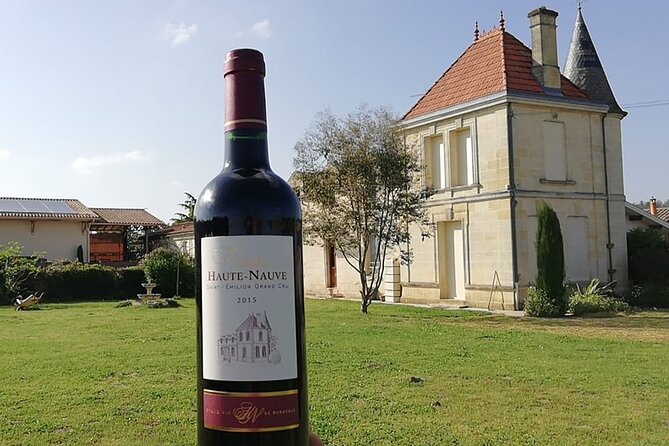
Château Haute-Nauve sits at 1 Haute Nauve in Saint-Laurent-des-Combes, in the Saint-Émilion wine area. That detail matters. This is not simply a quick tasting counter in the center of town. You are visiting a working family estate, where the land, equipment, harvest and cellar all form part of the experience.
The estate is run by Florent and his mother, Marie-Anne. You learn about their fourth-generation connection to the property and hear how the family’s work has changed over time. That personal scale gives the visit a useful focus. Instead of hearing only broad facts about Bordeaux wine, you can connect those ideas to one producer and its own plots of vines.
I especially like the way the tour begins outdoors. Wine can seem mysterious when you meet it only in a glass. Seeing the vines first gives you a clearer sense of how much work comes before fermentation, aging and bottling.
The setting also gives you a chance to ask basic questions without feeling out of place. If you know little about Saint-Émilion, you can follow the process from the beginning. If you already understand wine production, the family’s approach to frost, sustainability and new wines gives you more specific topics to explore.
More Wine Cellar Visits in France
- Epernay: Guided Tour of Champagne Cellar with Tastings
★ 4.7 · 507 reviews - Paris Art of Pairing Cheese and Wine Tasting in a Cheese Cellar
★ 5.0 · 386 reviews - Paris – Guided Visit & Tasting in a Royal Wine Cellar
★ 4.5 · 221 reviews
Walking through the vineyard plots
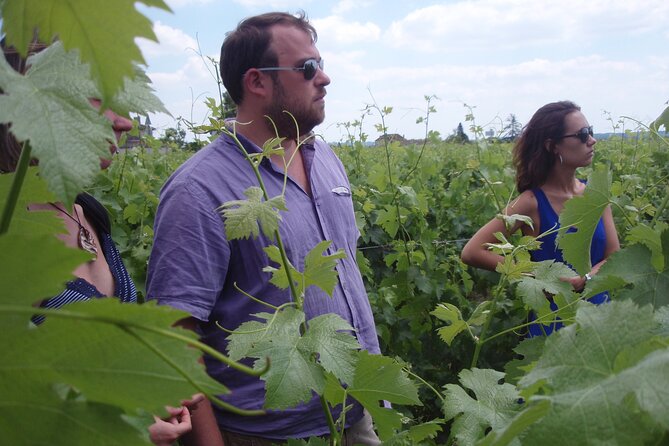
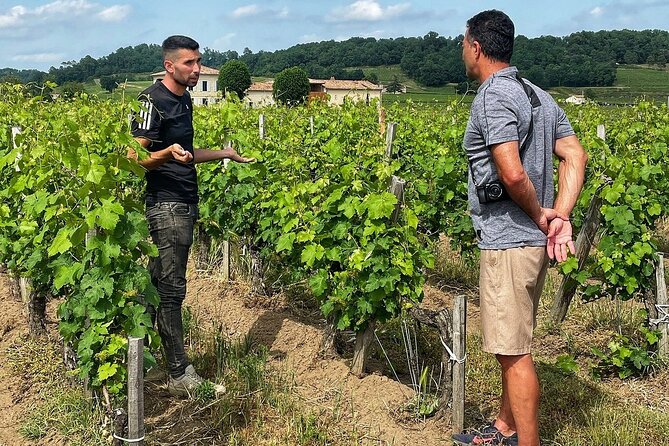
The first part of the visit takes you among the vines. You learn about the characteristics of the Saint-Émilion appellation and see different plots across the estate. The guide explains how vineyard work changes during the year, rather than presenting farming as one single task carried out only at harvest.
That seasonal view is one of the most useful parts for me. You can begin to understand why the final wine depends on decisions made long before grapes reach the winery. Pruning, growing, protecting the crop and preparing for harvest all require attention at different points in the year.
The tour also deals with the less romantic side of winegrowing. Crop freezes can threaten the vines, and the estate is working on ways to manage those risks. You hear about sustainability, diversification and the development of new wines, so the visit is not limited to old traditions.
A wind turbine is one of the unusual sights on the property. You will also see a wine bottle that rises six meters high. These features add some personality to the walk, but they also point to a wider idea: this is a family business trying to adapt, not a frozen picture of the past.
The vineyard portion may be less appealing if you want to spend the entire visit tasting wine. You are outside to learn, and the focus is on how the estate works. For most people, that makes the later tasting more meaningful, but it is worth knowing that this is an educational walk before it becomes a wine sampling.
From grapes to tanks and fermentation
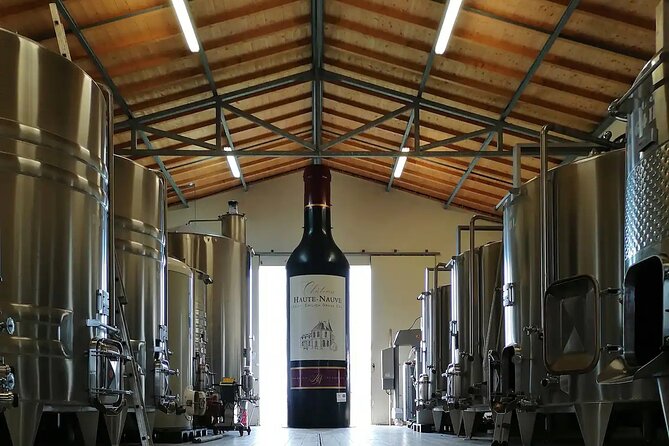
After the vines, you move into the winery. Here, Florent or Marie-Anne explains the production process, including fermentation, pumping and pressing. These terms can sound technical, but seeing the machinery and large tanks gives them a physical meaning.
I value this middle section because it fills in the gap between agriculture and the finished bottle. You can see the equipment required after the harvest and understand that wine production is not simply a matter of picking grapes and waiting.
The explanations cover the full production route in a practical way. You learn what happens as the grapes are handled, how the wine moves through the winery, and how the estate manages the stages before aging. The information is designed for a general audience, so you do not need a background in winemaking to follow along.
The family also discusses the marketing of its wines. That is a helpful addition. A bottle represents not just vineyard work and cellar methods, but also the challenge of presenting and selling a small producer’s wine. This gives the experience a business side that many short vineyard visits leave out.
Because the group can reach 15 people, your position in the group may affect how easily you see every piece of equipment. The small maximum is still a good sign for conversation, and you can ask the guide to clarify anything that moves too quickly.
The barrel cellar and the wait for maturity
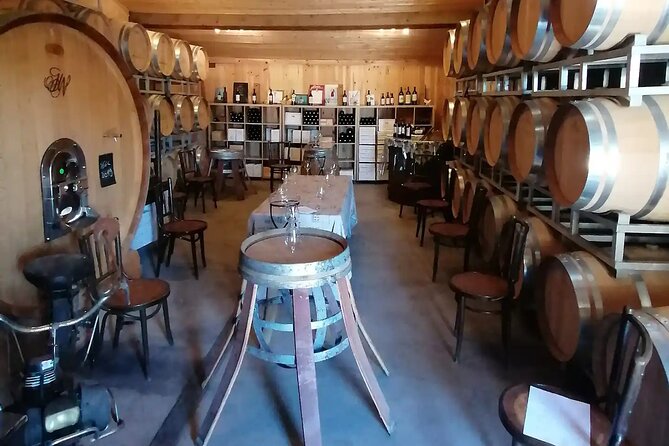
The final production stop is the barrel cellar. Here you see how the Château ages its wines and learn why this stage matters before the bottle reaches your table.
The cellar helps explain why two wines made in the same region can taste different. Aging methods affect the final character, and the cellar gives you a chance to connect those choices with the wines you will taste shortly afterward.
This part can be especially useful if you are deciding what kinds of Bordeaux wine you enjoy. You do not need to memorize technical terms. Pay attention to how the guide explains the relationship between the wine’s production and its time in the barrel, then use the tasting to see how those ideas appear in the glass.
The cellar is also a calmer contrast to the machinery in the winery. The tour moves from outdoor farming, to active production, to the quieter period of aging. That sequence gives the two-hour visit a clear shape and keeps it from feeling like a string of disconnected stops.
Same wine country, a different day out:
- Medoc or Saint Emilion Wine Tasting and Chateau from Bordeaux
★ 5.0 · 1,415 reviews - Saint-Émilion: Grand Cru Classé Winery Visit and Tasting
★ 4.6 · 1,118 reviews - Saint Emilion Half-Day Trip with Wine Tasting & Winery Visit from Bordeaux
★ 4.5 · 1,034 reviews - Champagne Day Trip with 6 Tastings, Reims and Winery from Paris
★ 5.0 · 902 reviews
Four wines, including two Grand Cru pours
The tour finishes with four Château wines:
- A rosé
- A Saint-Émilion wine
- Two Saint-Émilion Grand Cru wines
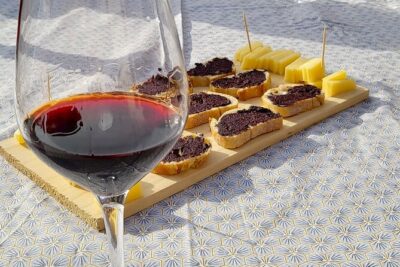
The tasting is guided, so you are not simply handed four glasses and left to guess what you are drinking. The guide can connect the wines to the vineyard plots, the production methods and the aging process you have just seen.
Including two Saint-Émilion Grand Cru wines is a strong feature for the price. It gives you a chance to compare the Grand Cru designation with the estate’s other Saint-Émilion wine, while the rosé provides a different style and an easy starting point.
I would approach the tasting as a comparison rather than a search for one perfect bottle. Notice how the wines differ in color, aroma, weight and finish. Ask which plot or production choice helps explain the difference. Since the tasting comes after the tour, you have useful context for those questions.
The amount of wine is not specified, so you should not book this expecting a large drinking session. The value is in the guided explanation and range of four samples. If you want to buy wine afterward, the information provided does not promise a shop or a purchase option, so ask the Château directly if that matters to you.
Florent’s style and the English visit
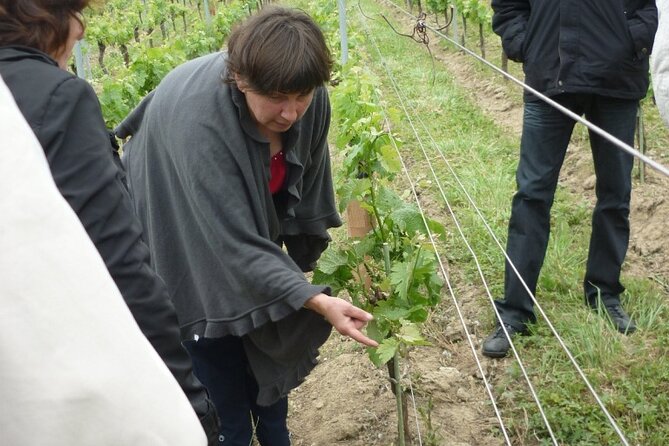
Florent leads English-language tours, and his approach appears to be relaxed, humorous and easy to follow. That matters in a wine setting, where overly formal explanations can make beginners feel awkward. His tone lets the visit remain informative without becoming stiff.
Florent’s role also gives the tour a personal connection. You are not receiving a generic lecture about Bordeaux. You are meeting someone tied directly to the estate and its daily work.
Marie-Anne may lead the visit as well, since the experience is presented as a tour with the mother and son who run the property. If you have a strong preference for a particular guide, confirm that before booking, since the available guide may depend on the date.
English is offered, but the estate also welcomes French-speaking visitors. The tour is therefore suitable for mixed groups if the scheduled language works for everyone in your party. Confirmation is sent within 48 hours, subject to availability, so check that your booking is confirmed before building a tight schedule around it.
Is $30.04 good value?
At $30.04 per person, this is a sensible price for a two-hour visit that includes four wine tastings. You are paying for more than the alcohol. The fee covers access to the working estate, the vineyard explanation, the winery, the barrel cellar and the guided tasting.
The value is strongest if you want to understand wine production. A shorter tasting-only stop might cost less, but it would not give you the same view of the vineyards and equipment. On the other hand, if you already know the Saint-Émilion region well and want only a polished tasting, the vineyard and production explanations may feel slower than necessary.
The two Grand Cru wines help justify the cost. So does the small group limit, which is capped at 15 people. You should get more opportunity for questions than at a large commercial attraction, though the exact feel will depend on how many people are booked for your time.
The tour lasts about two hours, a useful length for a day of exploring Saint-Émilion. It is long enough to cover the full process but short enough to combine with other plans. Remember to allow time to reach Saint-Laurent-des-Combes, since the meeting point is at the Château rather than a central town location.
Who should book this Château Haute-Nauve visit?
I would recommend it to first-time wine visitors who want a plain explanation of how a bottle is made. The route from vines to tanks to barrels makes the subject easier to understand, and the four-wine tasting lets you put the lessons into practice.
It also suits couples, families with adult children, and small groups who prefer a personal visit to a large bus tour. The family story and direct contact with the growers give the experience a human scale.
Wine enthusiasts should find enough detail in the discussion of plots, fermentation, pressing, aging, frost protection and new wines. The tour does not promise a specialist master class, so experts looking for rare vintages, extensive technical data or a long tasting flight may want something more advanced.
I would be more cautious about booking if you do not enjoy walking outside or if your main goal is a long, leisurely drinking session. The tasting is the finale, not the whole activity. You also need to handle your own transport to the Château.
The experience is suitable for most people, and service animals are allowed. Free cancellation is available if you cancel at least 24 hours before the start time. A minimum number of participants is required, so an operator cancellation could lead to another date, a different experience or a full refund.
My call: a worthwhile two-hour wine lesson
I would book this tour if I wanted a well-rounded Saint-Émilion introduction rather than a quick glass of wine. The strongest features are the family connection, the full vine-to-bottle route, Florent’s friendly English explanations, and the chance to taste two Grand Cru wines alongside a rosé and a Saint-Émilion.
Before you reserve, check how you will reach 1 Haute Nauve in Saint-Laurent-des-Combes and make sure the confirmed language suits your group. If those details work, $30.04 buys a useful, focused visit with real production context and a generous tasting finish.
FAQ
How long does the Château Haute-Nauve tour last?
The experience lasts approximately two hours, including the vineyard walk, winery and barrel cellar visits, and tasting of four wines.
Where does the tour begin and end?
It begins at Château Haute Nauve, 1 Haute Nauve, 33330 Saint-Laurent-des-Combes, France. The activity ends back at the meeting point.
Which wines are included in the tasting?
The tasting includes four Château wines: one rosé, one Saint-Émilion, and two Saint-Émilion Grand Cru wines.
Is the tour available in English?
Yes. The experience is offered in English, and Florent leads English-language visits. The tour may also be conducted in French.
How many people can join the tour?
The activity has a maximum of 15 participants.
Can I cancel for a full refund?
Yes, if you cancel at least 24 hours before the experience start time. Cancellations or changes made less than 24 hours before the start are not refunded or accepted.
More 2-Hour Experiences in France
- 2-hour walk – Castles and vineyards
★ 4.5 · 11 reviews - Champagne vineyards: 2-hour guided tour of the vineyards in a Buggy
★ 5.0 · 3 reviews - Lausanne: 2-Hour Lake Geneva Cruise Along Lavaux Vineyards
★ 4.2 · 171 reviews - 2 Hour Vineyard Trail Ride
★ 5.0 · 31 reviews
More Food and Drink Experiences in France
- Medoc or Saint Emilion Wine Tasting and Chateau from Bordeaux
★ 5.0 · 1,415 reviews - Saint-Émilion: Grand Cru Classé Winery Visit and Tasting
★ 4.6 · 1,118 reviews - Saint Emilion Half-Day Trip with Wine Tasting & Winery Visit from Bordeaux
★ 4.5 · 1,034 reviews - Saint-Émilion: Bordeaux Vineyard Tour and Wine Tasting
★ 4.8 · 578 reviews
Just added around France
- 3-Hour Private Painting tuition in a beautiful Cognac vineyard★ 3.5 · 2 reviews
- 4×4 tour in a winery followed by a tasting★ 5.0 · 46 reviews
- Winery Visit with Food and Wine in Carcassonne★ 5.0 · 59 reviews
- Winery Tour & Wine Tasting – Deli Plate & 3 Wines★ 5.0 · 72 reviews
- Walk in the vineyards of Chablis Grands Crus★ 4.5 · 7 reviews
- Wine Getaway with Tasting in the Chablis Vineyard★ 5.0 · 3 reviews
- Visit to the Faugères Vineyards with Picnic from Béziers★ 5.0 · 7 reviews
- Languedoc Vineyard Tours★ 5.0 · 25 reviews
France Vineyard Tours, compared.
Medoc or Saint Emilion Wine Tasting and Chateau from Bordeaux
Read our review →
Saint-Émilion: Grand Cru Classé Winery Visit and Tasting
Read our review →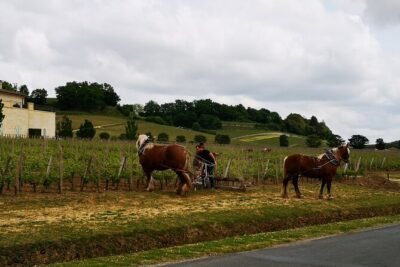
Saint Emilion Half-Day Trip with Wine Tasting & Winery Visit from Bordeaux
Read our review →
Champagne Day Trip with 6 Tastings, Reims and Winery from Paris
Read our review →
Saint-Emilion Afternoon Wine Tour – 2 Wineries & delicacies
Read our review →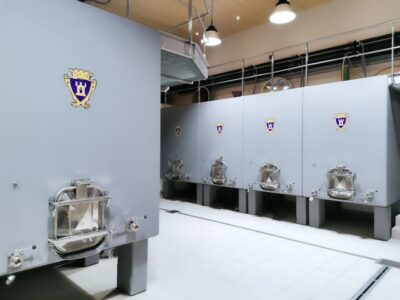
Saint-Émilion: Bordeaux Vineyard Tour and Wine Tasting
Read our review →
Browse the lists this tour appears in