
REVIEW · CRETE
Guided Tasting of 3 Extra Virgin Olive Oils at Douloufakis Winery
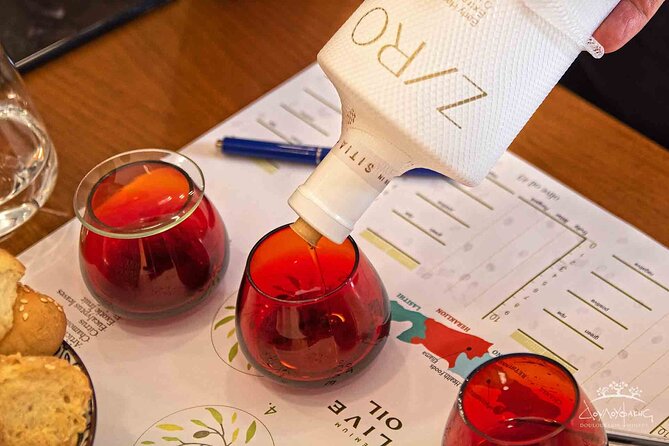
The most interesting part of this one-hour visit is the side-by-side comparison of three Koroneiki olive oils from different parts of Crete. Instead of treating olive oil as a simple dip for bread, the tasting shows how place can affect aroma, fruitiness, and the peppery finish.
I like the practical tasting lesson, including how to smell and swirl the oil before tasting it. I also like the small group limit of nine, plus the chance to meet Katerina, whose clear explanations cover traditional production methods and useful ways to recognize quality.
The main drawback is its narrow focus. You receive water and Cretan rusks, but no broader food pairing or extra drinks, and hotel transport is not included. You need to reach Douloufakis Winery in Dafnes yourself.
Key points at a glance
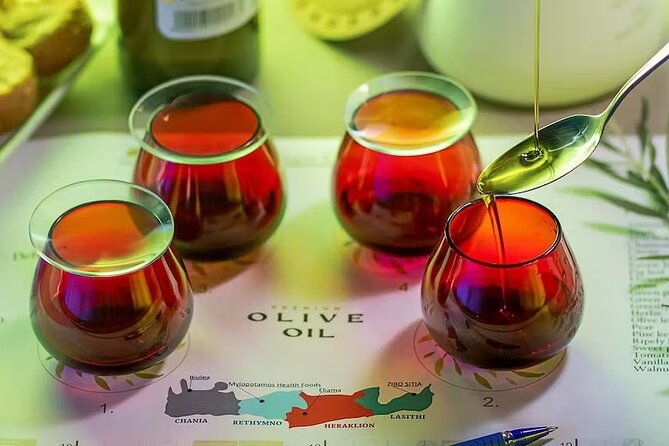
- Three oils, one grape-sized olive variety: Compare Koroneiki oils from Shteia and Agia Varvara and notice how their aromas and finishes differ.
- A real tasting lesson: Learn the basic method of smelling, swirling, and identifying flavor notes rather than simply sampling oil.
- Katerina adds production insight: Her presentation includes traditional methods and tips for recognizing good olive oil.
- A compact one-hour format: The visit fits neatly into a day of winery stops or a short Crete outing.
- Small group setting: The maximum group size is nine, which should allow room for questions.
- Simple refreshments included: Water and Cretan rusks are provided, while additional food and drinks cost extra.
Three Koroneiki oils tell three different Crete stories
Olive oil tasting works best when you can compare oils immediately. At Douloufakis Winery, the focus is on three extra virgin oils made from the Koroneiki olive, a variety closely associated with Greek olive oil.
The point is not to decide that one oil is simply good and another bad. You are looking for differences. One may seem more fruity, while another may finish with more pepper or a stronger sensation in the throat. Those changes can reflect growing conditions and the character of the area where the olives were produced.
The oils come from Shteia and Agia Varvara. The available details do not set out the exact order or number of oils from each place, so you should think of this as a regional comparison rather than a formal map-based tasting. The useful part is the contrast: the oils share a basic olive variety, yet they can express different aromas and flavors.
That makes this a better choice for curious eaters than for anyone expecting a large meal. You are here to pay attention to the oil itself. The Cretan rusks give you a traditional local food to eat alongside the tasting, but they are a support for the lesson, not a full lunch.
More Food and Drink Experiences in Crete:
- PRIVATE-Knossos Palace-Zeus Cave-Olive Oil Tasting-Old Villages
★ 5.0 · 81 reviews - “YAMAS” – Winery tour &wine tasting
★ 5.0 · 66 reviews - Rethymno: Private Winery & Olive Oil Tasting Tour with Lunch
★ 5.0 · 56 reviews
How the one-hour tasting is likely to unfold
The visit begins at Douloufakis Winery in Dafnes, at the listed address of Dafnes 700 11, Greece. The activity ends back at the same meeting point. Since hotel pick-up and drop-off are not included, plan your own way there and allow enough time to arrive without rushing the tasting.
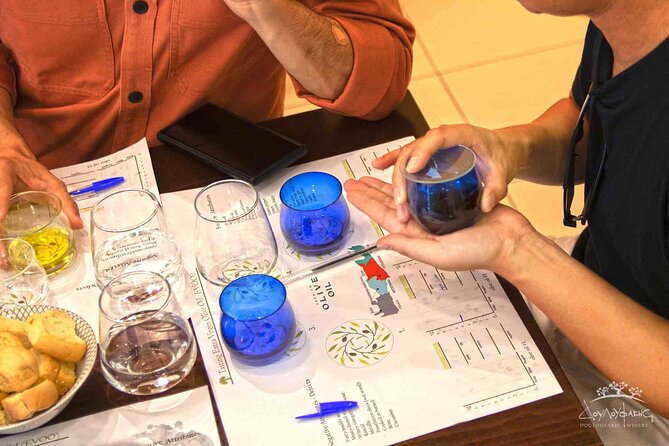
Once the session begins, the host provides the basic information needed to judge olive oil. You learn to smell the oil, swirl it, and pay attention to the way its character changes as you taste it. That instruction matters because many people approach olive oil as a condiment and swallow it quickly without noticing much beyond bitterness.
The tasting then gives you a chance to compare the three oils. You might find one more obviously fruity, while another may show a sharper peppery finish. The exact flavor balance can vary, but the purpose is clear: build a vocabulary for what you are tasting.
Katerina is named as one of the guides, and her portion of the presentation includes traditional production methods. She also shares practical tips for recognizing quality. That is one of the strongest reasons to choose this activity. You leave with a skill you can use when buying olive oil later, not just a pleasant memory of a sample.
The session is about an hour long. That is enough time for a focused introduction, but not enough for a sprawling farm visit, a full winery tour, or an extended meal. If you want a tightly planned stop, the length works well. If you prefer a slow afternoon built around several courses and many pours, this may feel brief.
Smell, swirl, and taste with a purpose
The tasting method is simple, but the details change the way you experience the oil. First, you use your nose. Aroma can suggest fresh fruit, herbs, or other plant-like notes before the oil even reaches your mouth.
Next comes the swirl. Moving the oil around helps release more aroma and gives you a moment to compare one sample with the next. The host’s role is to show you what to notice without turning the session into a technical exam.
Then you taste and consider the finish. A peppery sensation can be part of a fresh, well-made extra virgin olive oil rather than a flaw. You may also notice bitterness or a fruity quality. The lesson is not about pretending to detect every possible note. It is about slowing down and making a clear comparison.
I like this practical approach because you can repeat it at home. You do not need special equipment to smell, swirl, and taste olive oil. You only need a small amount of attention and a chance to compare oils under similar conditions.
The tasting also gives context to the phrase extra virgin. The session is not described as a technical certification course, so you should not expect laboratory testing or a formal lesson in every grading rule. You can expect an accessible introduction to flavor, aroma, and traditional production.
Why the regional comparison matters
Crete is known for its olive-growing tradition, but a short tasting cannot explain every farming area or production method on the island. What it can do is give you a direct example of how oils from different places may vary.
Shteia and Agia Varvara provide the geographic frame for the tasting. You are not simply trying three anonymous bottles. You are being asked to connect flavor with origin, even though the session does not promise a detailed agricultural tour.
This is useful for anyone who plans to buy olive oil in Crete. After tasting the oils, you can ask better questions about where the olives came from, how the oil was made, and what flavors you prefer. You may learn that you enjoy a softer, fruitier style, or that you want a stronger peppery finish for salads and bread.
The comparison also keeps the tasting honest. There is no need to claim that every oil suits every dish. Different oils can have different uses, and your own preference matters. A guide can explain what is distinctive, but you still make the final call with your palate.
A few more vineyard days around Crete worth a look
- Quinta da Regaleira: Skip-The-Booth E-Ticket and Audio Guide
★ 4.2 · 2,067 reviews - Private Self-Guided E-Bike Ride in Tuscany with Vineyard Visit
★ 5.0 · 775 reviews - Madrid Countryside Wineries Guided Tour with Wine Tasting
★ 5.0 · 740 reviews - Jerez: Bodegas Fundador Guided Tour with Tasting Session
★ 4.8 · 714 reviews
What the Cretan rusks add to the session
Cretan rusks are included with the tasting, along with water. These dry, crisp breads give you something traditional to eat as you sample the oils, and they provide a plain base for noticing flavor.
The rusks should not be mistaken for a full food pairing. Additional food and drinks are not included. If you are hungry, plan this as a tasting before or after a separate meal rather than relying on it for lunch.
That limitation is worth considering when you compare the price with other food experiences. At $24.08 per person, the cost covers a one-hour guided lesson, three olive oils, water, and rusks. It does not cover transport, a full meal, or a larger selection of beverages.
I consider the value strongest for people who want instruction. You are paying for the explanation and comparison, not just for a few tastes. If you already know olive oil well and want a large spread of regional products, the short format may offer less value.
A small group capped at nine
The maximum group size is nine people. That is small enough to make the session feel more personal than a large coach outing, at least in principle. A compact group also makes it easier to hear the guide and ask about a flavor or production detail that catches your attention.
The supplied information does not promise a private tasting, so you should expect to share the table or setting with other participants. Still, a nine-person cap is a useful middle ground. You get the social side of a group activity without the scale of a mass tour.
The small size also suits beginners. If you are unsure how to describe what you smell or taste, a guide can help you focus on simple comparisons. You do not need prior knowledge of olive oil to take part, and most people can participate.
Service animals are allowed, and the winery is near public transportation. Those details help, but the tour does not include hotel transfers. Check your own route to Dafnes before booking, especially if the winery is one stop in a busy day.
Who will get the most from this experience
I would choose this tasting if you want to understand what makes olive oils different, especially if you are visiting Crete and want a local food experience with a clear lesson.
It suits:
- First-time olive oil tasters who want a simple introduction
- People interested in Cretan food traditions
- Couples or small groups who prefer a short, focused activity
- Wine visitors looking to add an olive oil session at a winery
- Shoppers who want better tools for choosing olive oil
- Food-minded visitors who enjoy comparing aroma and texture
It may be less suitable if you are looking for a substantial meal, a long estate tour, or hotel transport. The activity is also not described as a full winery tasting, so do not book it expecting a broad wine program unless that has been arranged separately.
Families may find the one-hour length manageable, and most people can participate. Still, the session asks you to pay attention to subtle smells and flavors, so it will appeal most to anyone who enjoys a calm tasting rather than a high-energy attraction.
Timing, price, and planning advice
The published price is $24.08 per person. For that amount, you receive a guided tasting of three oils, instruction from an expert host, water, parking, and Cretan rusks. The strongest value comes from the teaching: you are learning a tasting method and hearing about traditional production.
The activity is usually booked about 48 days in advance. That does not guarantee that every date sells out, but it is a useful planning signal. If this is important to your Crete itinerary, I would reserve before your trip rather than leave it to the last day.
A mobile ticket makes entry simple. Confirmation is provided at booking, so keep the ticket available on your phone. The meeting point is Douloufakis Winery, and the activity returns there after the tasting.
Free cancellation is available if you cancel at least 24 hours before the start time. Inside that window, the amount paid is not refunded, and changes are not accepted. The cut-off follows local time, so use Crete time when you make a change.
The main strengths and limitations
The best feature is the comparison of three oils from different places. It gives the tasting a clear purpose and keeps the hour from becoming a generic sample session.
The second strong point is the instruction. Katerina’s presentation includes traditional production methods and practical tips for spotting quality. That kind of information stays useful after you leave the winery.
The small group limit is another plus. Nine people is not the same as a private appointment, but it should leave more room for questions than a large group would.
The limits are equally clear. You get no hotel transfer, no extra food or drinks, and no promise of a full winery tour. The tasting is also short. If you want a broad Cretan culinary outing, you will need to pair it with another activity or meal.
Should you book the Douloufakis olive oil tasting?
Book it if you want a compact, instructive food experience in Crete and like the idea of comparing oils instead of simply sampling one. The price is reasonable when you value the guidance, the regional contrast, and the chance to learn a method you can use at home.
Skip it if your priority is a full meal, extensive winery touring, or door-to-door transport. For everyone else, the one-hour format, small group size, Cretan rusks, and focused lesson make this a sensible addition to a day around Dafnes. Arrive ready to smell, swirl, taste, and pay attention to the finish.
FAQ
Where does the olive oil tasting take place?
The tasting takes place at Douloufakis Winery, Dafnes 700 11, Greece.
How long does the activity last?
The guided tasting lasts approximately one hour.
How many olive oils are included?
You taste three extra virgin olive oils.
Which olive variety is featured?
The oils are Koroneiki oils.
Where do the oils come from?
The tasting includes oils sourced from Shteia and Agia Varvara.
Who leads the tasting?
Katerina is named as a guide for the session. The winery team provides the tasting information.
What do I learn during the tasting?
You learn how to smell and swirl olive oil, identify flavor profiles, and understand traditional production methods. The guide also provides tips for recognizing quality.
Is food included?
Cretan rusks and water are included. Additional food and drinks are not included.
Is parking available?
Yes. Parking is included.
Is hotel pick-up and drop-off provided?
No. Hotel pick-up and drop-off are not included. The activity starts and ends at Douloufakis Winery.
How large is the group?
The activity has a maximum of nine participants.
Can I cancel for a full refund?
Yes, if you cancel at least 24 hours before the experience start time. Cancellations made less than 24 hours before the start time are not refunded.
Just added around Crete
- Semi Private Wine Tour of 2 wineries with Transfer and Lunch★ 4.0 · 15 reviews
- Heraklion Private Half-Day Wine Tasting Tour in Lyrarakis Winery★ 5.0 · 7 reviews
- Semi-Private Wine Tour of 2 wineries with wine Tastings★ 5.0 · 2 reviews
- Crete in a Day: Knossos, Soap Workshops, Olive Oil & Wine Tasting★ 5.0 · 5 reviews
- “ARISMARI” – Vineyard Tour & Wine Tasting★ 5.0 · 20 reviews
- Private Tour: Soap, Olive Oil & Lyrarakis Winery with Lunch★ 4.5 · 15 reviews
- Chania Shore Excursion Off Road Vineyard and Winery Tour Half Day★ 5.0 · 11 reviews
- Digenakis winery – Wine tasting experience★ 4.5 · 3 reviews
Crete Vineyard Tours, compared.

PRIVATE-Knossos Palace-Zeus Cave-Olive Oil Tasting-Old Villages
Read our review →
PRIVATE-Zeus Cave-Knossos-Olive oil Factory-Traditional Villages.
Read our review →
Rethymno: Private Winery & Olive Oil Tasting Tour with Lunch
Read our review →
Crete: Knossos Palace, Winery & Olive Oil Tour with Lunch
Read our review →

Private Tour: Soap, Olive Oil & Lyrarakis Winery with Lunch
Read our review →Browse the lists this tour appears in