
REVIEW · FRANCE
Escapade and tasting in the Chablis vineyards
The best part of this Chablis outing is that the wine tasting happens among the vines, not just at a cellar counter. You ride by van to several plots, pause to learn how each Climat shapes the wine, then taste five Chablis wines with warm, savory gougères.
I like the small group, capped at seven people, and the way the tasting follows the route through the vineyards. I also like the range of wines, from Petit Chablis and Chablis to Premier Cru from the left or right bank. The main consideration is the short two-hour format: you get a clear introduction, not a full-day look at every corner of the region.
- Five vineyard tastings: Taste the wines in the same setting where the grapes grow.
- Several Chablis Climats: See how nearby plots can differ in position, soil, and wine style.
- Van transport between plots: You can focus on the explanation instead of arranging your own route.
- Gougères with the wine: These small cheese pastries make the tasting feel local and substantial.
- A group of no more than seven: The guide has room to answer questions.
- French and English guidance: The tour works for both French-speaking and English-speaking visitors.
Why This Chablis Tour Feels Different
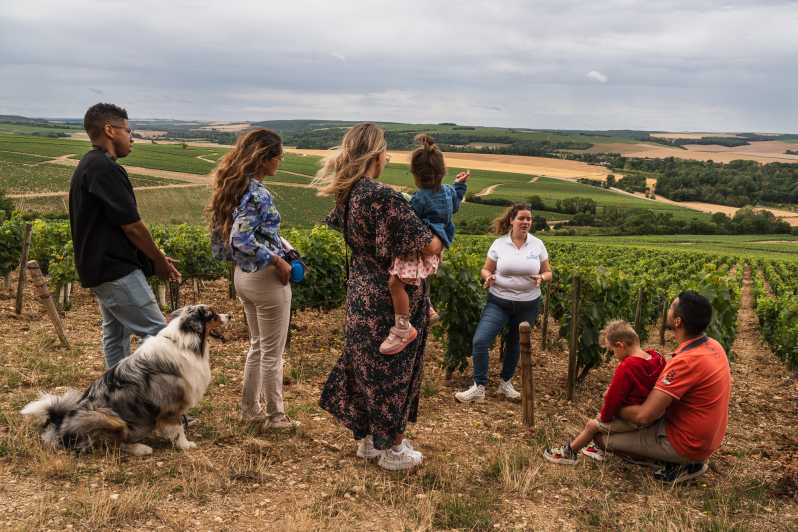
Many vineyard visits begin and end in a tasting room. This one takes you out into the growing area first, where the connection between place and bottle is easier to understand. You see actual plots, hear about the work done across the year, and taste as the visit moves along.
That order matters. Chablis labels can feel confusing at first, with Petit Chablis, Chablis, Premier Cru, and different Climats all appearing on bottles from the same wider area. Here, the guide can point to the setting before asking you to compare the wines in your glass.
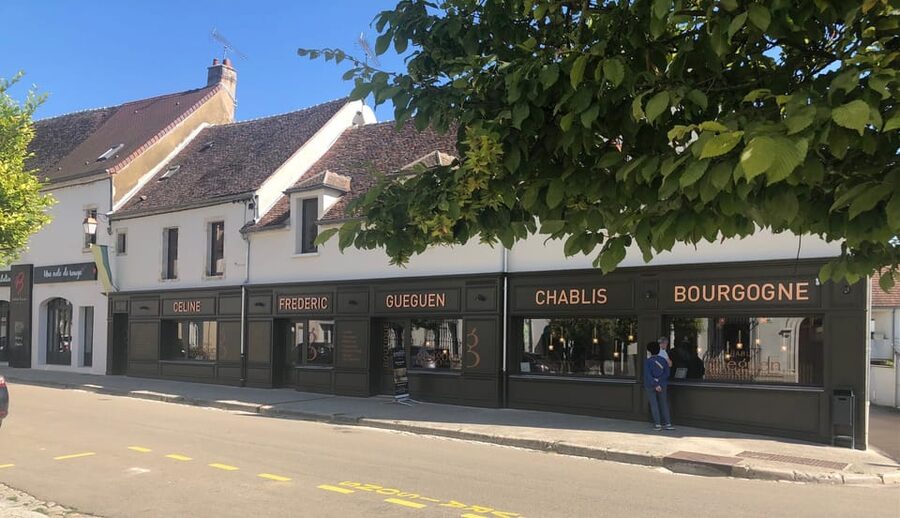
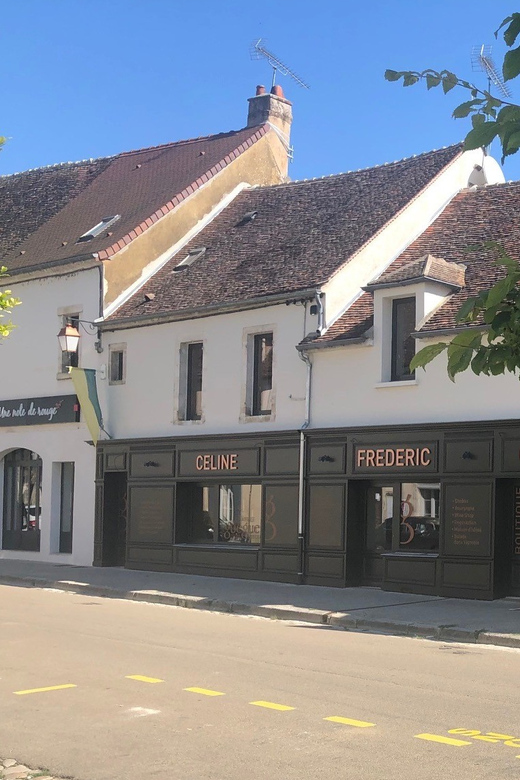
The experience is run by Domaine Céline et Frédéric Gueguen, a local wine house that also hosts the tasting cellar pickup. The tour is not presented as a formal lecture. The guide explains the vineyard in plain language, answers questions, and links the work in the plots to what you taste.
Past participants gave the experience a 4.8 rating from 10 reviews, with particular praise for the clear explanations, lovely views, and friendly approach. That fits the format: it is designed for curious drinkers who want more than a quick pour but do not want a technical wine seminar.
From the Gueguen Cellar to the First Plot
You meet at the tasting cellar, where the van pickup begins. The supplied details do not name the individual guide, so you should not expect to request a particular host. You can expect live guidance in French or English.
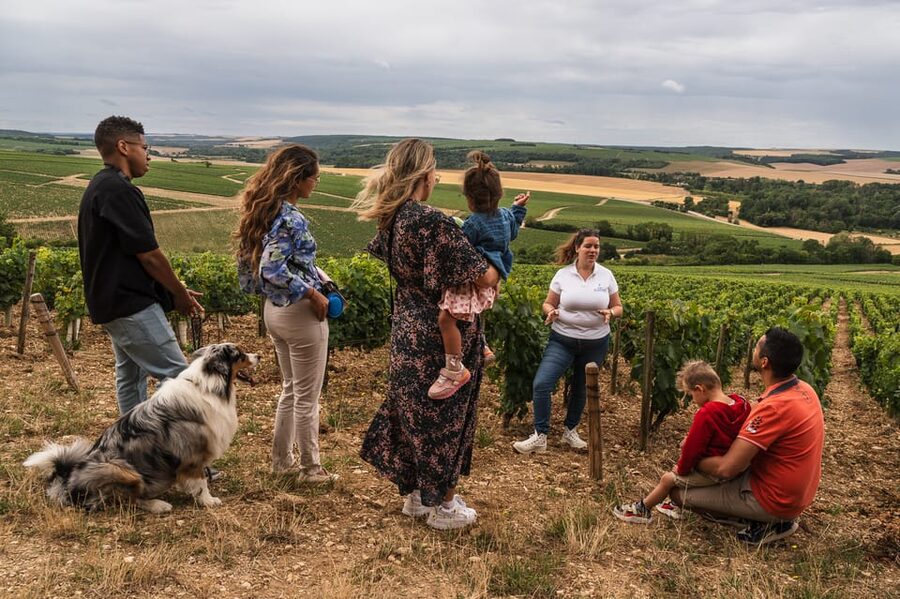
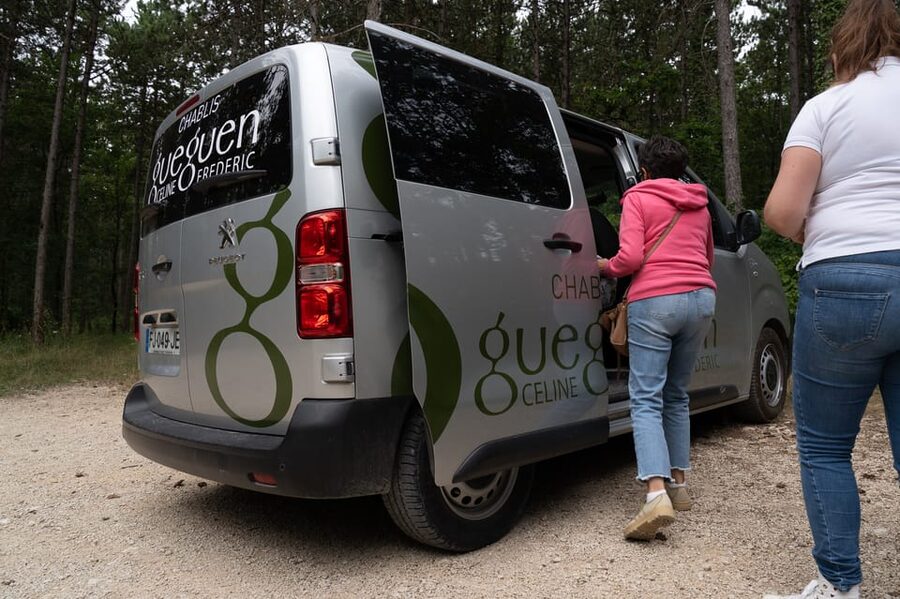
The van ride is useful for a simple reason: the plots are spread through the Chablis vineyard area, and you do not need to work out the driving route yourself. It also lets everyone focus on the countryside and the explanation. Since the group is limited to seven, the vehicle should feel more personal than a large coach, although the available information does not specify the van’s exact size or seating layout.
The first part of the visit sets up the basics. You learn about the Chablis terroir, vine cultivation, and the winemaker’s work throughout the year. The guide also explains the origins and distinctions of the local wines, giving you a framework for the tasting ahead.
If you are new to Burgundy wine, this introduction is especially helpful. Chablis belongs to the white Burgundy family, but the labels do not all mean the same thing. The visit gives you a way to connect the name on the bottle with the plot, the level of the wine, and the decisions made in the vineyard.
More Food and Drink Experiences in France:
- Medoc or Saint Emilion Wine Tasting and Chateau from Bordeaux
★ 5.0 · 1,415 reviews - Saint-Émilion: Grand Cru Classé Winery Visit and Tasting
★ 4.6 · 1,118 reviews - Saint Emilion Half-Day Trip with Wine Tasting & Winery Visit from Bordeaux
★ 4.5 · 1,034 reviews
Visiting Several Chablis Climats
The heart of the tour is the trip through several Chablis Climats. A Climat is a named vineyard site, and the point of visiting more than one is to notice that the vineyard is not one uniform stretch of vines. Location matters.
You will hear how the different plots affect the vines and the winemaking process. The guide may compare the left bank and right bank Premier Cru areas, as well as the broader categories of Petit Chablis and Chablis. The exact order of stops can vary, and no fixed plot names are provided, but the tour is built around these contrasts.
This is where the experience earns its keep. A bottle label can tell you the classification, but standing in the plot gives you a clearer sense of the physical setting behind the name. You can look across the rows, ask why one site is treated differently from another, and then taste the result.
One person described the visit as a close look at real vineyard work, with simple explanations of the area’s wine history and a response to every question. That is useful guidance for anyone worried about wine jargon. You do not need to arrive knowing Burgundy terminology.
The views are another part of the appeal, particularly in good weather. The vineyards around Chablis offer an attractive setting for a moving tasting, though weather can change the mood. Light rain and gray conditions did not prevent one outing from being enjoyable, but you should bring suitable clothing rather than assume the whole experience takes place indoors.
Five Wines, From Petit Chablis to Premier Cru
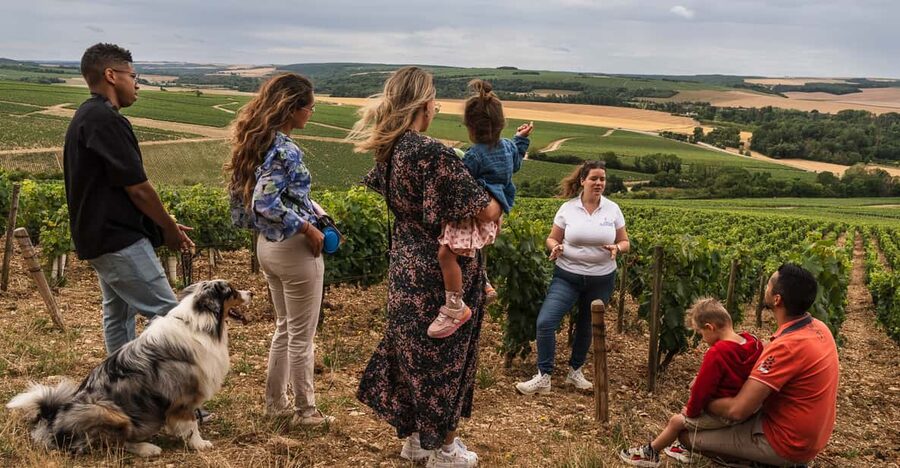
The tasting includes five Chablis wines in the vineyards. The range can include white Burgundy, Petit Chablis, Chablis, and Chablis Premier Cru from the left or right bank. The exact wines are not listed in advance, so you should treat the selection as a guided comparison rather than a fixed flight you can study beforehand.
Starting with a broader category and moving toward Premier Cru gives you a useful progression. Petit Chablis offers a point of entry, while Chablis shows the central identity of the region. Premier Cru lets you compare a more highly classified wine and consider how the vineyard location and production choices affect the glass.
The guide does not simply pour five unrelated samples. The tasting is connected to the plots you visit. That makes it easier to ask practical questions: What changes between these sites? How does the guide describe the soil and exposure? Which details of cultivation matter most to the final wine?
You may also hear references to different grape varieties or local vineyard distinctions during the explanations. The main purpose is not to memorize every term. It is to leave able to read a Chablis list with more confidence and to understand why two bottles from the same region may taste or cost differently.
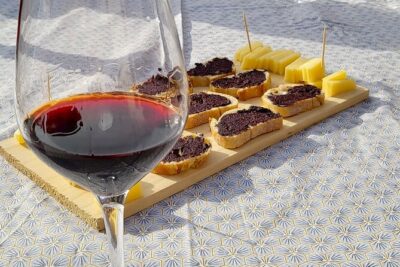
The tasting is accompanied by gougères, the Burgundian specialty made with cheese and choux pastry. This is a small but important touch. Cheese pastries suit white wine, give you something to eat between samples, and make the outing feel tied to Burgundy rather than like a generic wine stop.
Why the Small Group Matters
Seven people is a useful limit for a vineyard explanation. You can hear the guide more easily, ask a question without holding up a busload of people, and stay connected as the van moves between plots.
The group size also affects the tone. This is not the right choice if you want to wander alone or receive a private, highly customized tour. It is a shared activity, and the timing of the stops needs to work for the whole group. Still, the cap keeps it from feeling crowded.
The guide’s role is central. The strongest praise for the experience focuses on clear teaching, regional knowledge, patience, and an ability to communicate with different kinds of wine drinkers. One participant also appreciated learning about the Chablis community, its traditions, and the Gueguen wine house that hosts the visit.
That local context gives the tour more depth. You are not only learning what is in the bottle. You are hearing how a wine area functions, how a producer presents its work, and why the local community matters to the identity of the wines.
A few more vineyard days around France worth a look
- Champagne Day Trip with 6 Tastings, Reims and Winery from Paris
★ 5.0 · 902 reviews - From Reims: Champagne and Family-Run Wineries Tour
★ 4.8 · 671 reviews - Saint-Emilion Afternoon Wine Tour – 2 Wineries & delicacies
★ 5.0 · 614 reviews - Saint-Émilion: Bordeaux Vineyard Tour and Wine Tasting
★ 4.8 · 578 reviews
What the Two-Hour Schedule Really Gives You
Two hours is enough for a focused introduction to Chablis, but it places a natural limit on the amount of ground and detail you can cover. The van travel, several vineyard breaks, explanations, and five tastings all need to fit into the same window.
I like this length for a travel day when you want a serious wine experience without giving up the rest of your afternoon. It is also a good fit if you are passing through the area and want something more connected to the region than a single tasting at a counter.
The tradeoff is depth. You will not explore every Premier Cru, examine every stage of the annual vineyard cycle, or spend an hour comparing one bottle. The guide has to keep the pace moving, especially if the weather is poor or the group has many questions.
For a first visit to Chablis, that is usually a fair exchange. You get a clear introduction to the categories, a look at several plots, and a five-wine tasting in the setting that gives the wines their identity. If you already know the region well, you may prefer a longer or more specialized visit, but the outdoor format can still make a short stop worthwhile.
Price and Value at $88
At $88 per person, this is not a casual tasting-room purchase. The price pays for more than five samples. It includes the cellar pickup, van transport to different vineyard plots, a live guide in French or English, the vineyard explanations, and gougères alongside the tasting.
The value is strongest if you want transportation and interpretation bundled together. You do not have to drive between plots, and you get help understanding what you are seeing and drinking. That can save time and prevent the visit from becoming a series of disconnected photo stops.
The price may feel high if your main goal is simply to sample Chablis. A basic cellar tasting could be less expensive, though the supplied information does not give a comparison price. Here, you are paying for the setting, the route, and the guide’s explanations as much as for the wine itself.
A useful benefit is the reserve-now-and-pay-later option, which lets you hold a place without paying at the time of booking. You can also cancel up to 24 hours before the activity for a full refund. Those terms reduce some of the risk when your Burgundy plans are still changing.
Who Will Enjoy This Best
I would recommend this outing to wine drinkers who want an approachable introduction to Chablis. You will get the most from it if you enjoy asking why wines differ and want to connect the bottle with the soil, vines, and work behind it.
It also suits couples, friends, and small groups who prefer an active tasting to a long indoor session. The van ride keeps the outing moving, while the stops provide time to look around and ask questions.
The tour can work well for beginners because the explanations are designed to make the region understandable rather than show off technical vocabulary. More experienced wine drinkers may appreciate the comparison between several Climats and the left bank and right bank Premier Cru references, though the short duration limits the level of detailed analysis.
I would think twice if you dislike wine tasting, have difficulty spending time outdoors, or want a private itinerary built around your own interests. The exact wines and vineyard stops are not specified, and the activity takes place in a shared small group.
Practical Details Before You Book
The activity lasts two hours and begins with pickup at the tasting cellar. The van then carries the group to different plots, with several breaks for explanations and tastings.
French and English are available, which makes the experience accessible to a wider range of visitors. The guide is live rather than prerecorded, so you can ask questions as the tour develops.
The tour runs in the vineyards, so check the forecast and dress for changing conditions. The experience can still be enjoyable in light rain, but the views and outdoor stops will be more pleasant in dry weather.
The five wines are included, as are the gougères. You should not assume that a specific vintage, producer bottle, or Grand Cru is guaranteed. One person chose to buy a Grand Cru bottle from the Gueguen wine house after the tour, but purchasing wine is not listed as part of the included experience.
My Verdict on the Chablis Vineyard Escape
Book this tour if you want to understand Chablis through both place and glass. The strongest reasons are the small seven-person group, the visit to several Climats, the five-wine comparison, and the chance to taste gougères among the vines.
Skip it if you want a long technical masterclass, a private guide, or a guaranteed list of particular wines. For most first-time visitors, though, two hours offers a sensible balance of scenery, explanation, transport, and tasting at a producer connected to the area.
At $88, it is a considered purchase, not a throwaway stop. I think it earns that price for people who value the vineyard setting and need help making sense of Chablis labels. You should leave with a better grasp of Petit Chablis, Chablis, and Premier Cru, plus a clearer idea of how a named plot can shape what ends up in your glass.
FAQ
How long does the Chablis vineyard tour last?
The experience lasts two hours, including the van travel, vineyard stops, explanations, and tasting of five wines.
Where does the tour begin?
Pickup is provided at the tasting cellar. From there, the group travels by van to different Chablis vineyard plots.
How many wines are included?
The tasting includes five Chablis wines. The selection can include white Burgundy, Petit Chablis, Chablis, and Chablis Premier Cru from the left or right bank.
Is food included with the tasting?
Yes. The wines are accompanied by gougères, a Burgundian specialty made with cheese and choux pastry.
Is the tour available in English?
Yes. Live guidance is available in French and English.
How large is the group?
The experience is limited to seven participants, making it a small-group tour.
Just added around France
- Day Trip to the Sancerre and Pouilly Vineyards★ 5.0 · 20 reviews
- 3-Hour Private Painting tuition in a beautiful Cognac vineyard★ 3.5 · 2 reviews
- 4×4 tour in a winery followed by a tasting★ 5.0 · 46 reviews
- Winery Visit with Food and Wine in Carcassonne★ 5.0 · 59 reviews
- Walk in the vineyards of Chablis Grands Crus★ 4.5 · 7 reviews
- Wine Getaway with Tasting in the Chablis Vineyard★ 5.0 · 3 reviews
- Winery Tour & Wine Tasting – Deli Plate & 3 Wines★ 5.0 · 72 reviews
- Visit to the Faugères Vineyards with Picnic from Béziers★ 5.0 · 7 reviews
France Vineyard Tours, compared.
Medoc or Saint Emilion Wine Tasting and Chateau from Bordeaux
Read our review →
Saint-Émilion: Grand Cru Classé Winery Visit and Tasting
Read our review →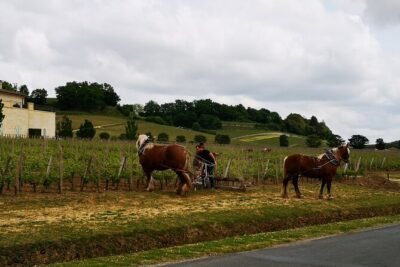
Saint Emilion Half-Day Trip with Wine Tasting & Winery Visit from Bordeaux
Read our review →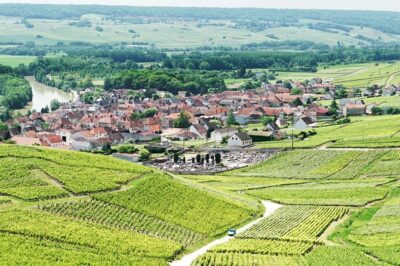
Champagne Day Trip with 6 Tastings, Reims and Winery from Paris
Read our review →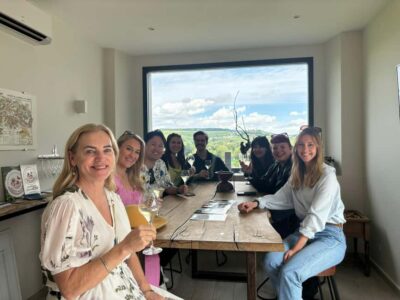
Saint-Emilion Afternoon Wine Tour – 2 Wineries & delicacies
Read our review →
Saint-Émilion: Bordeaux Vineyard Tour and Wine Tasting
Read our review →
Browse the lists this tour appears in