
REVIEW · MADRID
Ribera del Duero Wineries Guided Tour & Wine Tasting from Madrid
Ribera del Duero is wine country with a strong sense of place: cold winters, hot summers, high vineyards, and Tempranillo-based reds that are full, fruity, and built for time in oak. This long day from Madrid takes you to three very different wineries, from a modern producer to old underground caves, with at least three wines poured at each stop.
I like the variety and the guides. Ismael, Antonio, Cosmin, Muna, and other bilingual guides have led this outing, and the best of them add useful context without turning every mile into a lecture. I also like that the wineries serve cheese, crackers, salami, or similar snacks, so you are not tasting nine or more wines on an empty stomach.
The main drawback is the length. You leave Madrid at 9:15 a.m., spend roughly two hours reaching the region, and usually return around 8 p.m. The van ride can feel cramped when the group is full, and lunch is not included. Still, for a wine lover with one free day, this is a productive and flavorful way to get beyond Madrid.
What makes this Ribera del Duero tour worth your day
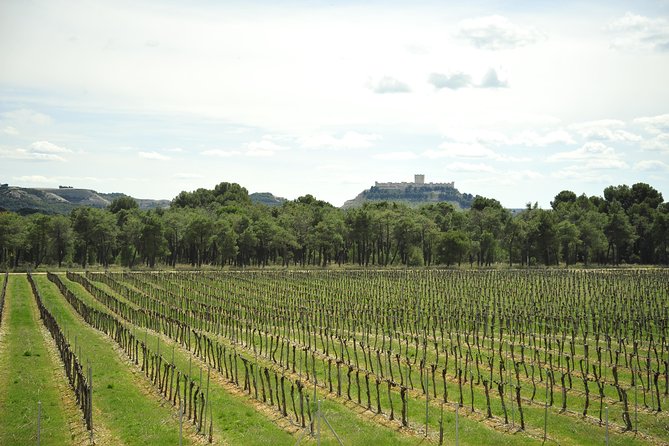
- Three contrasting wineries: Expect a mix of small producers, modern facilities, and historic cellars rather than three similar tasting rooms.
- At least nine wines: Each winery serves a minimum of three tastings, usually with food such as cheese, crackers, or cured meats.
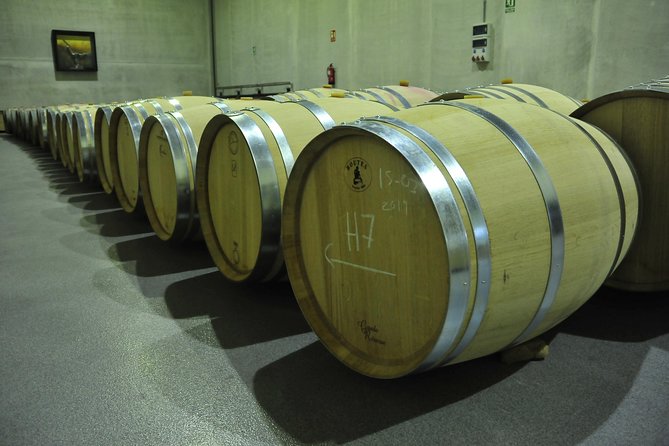
- The underground cellar visit: One stop features old tunnels cut deep below a town, where wine has been stored since the Middle Ages.
- A bilingual guide and driver: Guides including Ismael, Antonio, Cosmin, Muna, and others explain the wine region in English and Spanish.
- Free time for local food: Lunch is your choice, with tapas, shared plates, or a full Castilian meal available at your own expense.
- A small-group format: The maximum is 20 people, though some departures are much smaller and use a Mercedes Sprinter or similar vehicle.
Leaving Madrid for Spain’s red-wine country
The meeting point is at the front door of the cafeteria at Hotel Claridge, beside the hotel’s main entrance, at Plaza del Conde de Casal, 6. Conde de Casal metro station, on Line 6, is nearby. The pickup is at 9:15 a.m., and the vehicle leaves on time.
Plan this first step carefully. The meeting point is easy enough to reach by public transport, but you should allow an extra 10 to 20 minutes beyond the time shown on a map. The operator specifically recommends a regular taxi instead of Uber for this departure, and it is smart to check the route the night before.
Hotel pickup is not included. If you miss the vehicle, you can possibly join the group at a later stop, but any cost involved is yours. That is not a small risk on a regional day trip, so arrive early.
Once outside Madrid, the city gives way to open Castilian countryside. The drive to Ribera del Duero takes about two hours, sometimes a little less or more depending on traffic. A good guide uses part of this ride to explain Spain’s wine traditions, the Duero River, and Tempranillo, the grape that defines much of the region.
More Rioja and Ribera Wine Tours in Madrid:
- Ribera del Duero:4 Wineries, tasting & Lunch included from Madrid
★ 5.0 · 199 reviews - From Madrid: Ribera del Duero Tour of 3 Wineries w/ Tastings
★ 4.9 · 150 reviews - Ribera del Duero Winery Guided Tour and Wine Tasting from Madrid
★ 5.0 · 107 reviews
Why Ribera del Duero tastes different
Ribera del Duero sits along the Duero River, the same river that continues west toward Portugal. The region is known for red wines based on Tempranillo, often marked by dark fruit, body, and the effects of aging in wood.
The climate helps explain the character of the wine. The vineyards face sharp seasonal changes, and the stated focus of the tour includes vines grown in difficult weather conditions. That gives you more to consider than the simple question of whether you like a particular bottle. At the wineries, you can connect the wine to altitude, weather, soil, harvesting, and cellar work.
This is also a useful trip if you are new to Spanish wine. The guides and winery staff explain the process from grape to bottle, while the tastings let you compare producers within one appellation. If you already know Rioja, Ribera del Duero offers a useful contrast, with its own style and traditions.
First winery: from grape to bottle
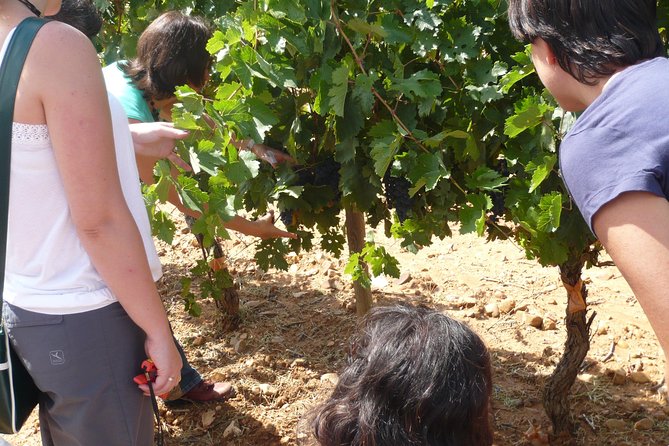
The first bodega is generally the most detailed visit. You learn how wine is made in Ribera del Duero, follow the path from harvest to finished bottle, and taste aged wines that show the region’s depth and fruit.
The exact bodega can change. Past departures have included a young boutique producer such as Territorio Luthier, a winery with a newer approach and small production. Other departures have used a more established or representative winery. This flexibility is important: you should not book expecting one fixed brand or one exact lineup.
What remains consistent is the purpose of the stop. You get a proper guided visit rather than simply walking into a shop for a quick pour. You may see production areas, learn about harvesting, and hear how the winemaker handles Tempranillo. The visit lasts about 90 minutes.
At least three wines are included, and the pours are described as generous. Food is provided at the wineries, often including cheese, crackers, and salami. That makes the tasting more comfortable and gives you a chance to notice how simple foods affect the wine.
Second winery: modern design beside the vines
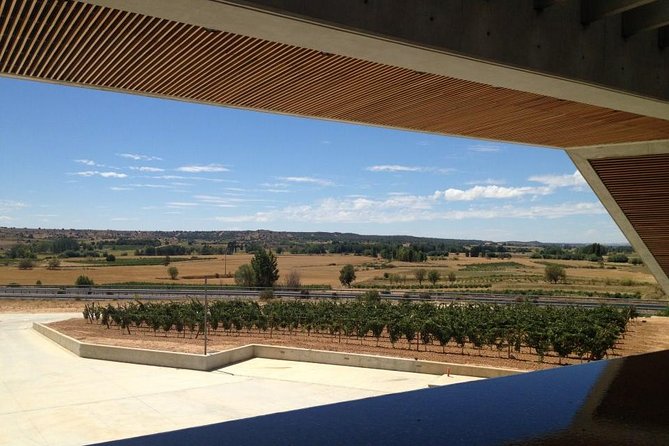
The second bodega is chosen to show a different side of Ribera del Duero. Its architecture is described as modern and open to the vineyards, with the building designed to connect interior workspaces to the surrounding land.
This stop helps break up the usual winery routine. You are not seeing three old stone cellars with the same barrels and dim lighting. Instead, you get a look at how newer wineries use design, function, and technology to make wine.
Past visits have included a large, state-of-the-art producer such as Bela, as well as other modern or limited-production wineries. The contrast between a large operation and a small family bodega can be one of the day’s best lessons. It shows that Ribera del Duero is not one single wine story.
Again, expect at least three tastings and food to accompany them. Some groups have spent extra time here and even ordered additional bottles instead of taking a full lunch break. That is possible only if the schedule and guide allow it, so do not count on it as part of the standard plan.
More Food and Drink Experiences in Madrid:
- Toledo Tour & Vineyard Walk with Wine Tasting from Madrid
★ 5.0 · 2,546 reviews - Madrid Countryside Wineries Guided Tour with Wine Tasting
★ 5.0 · 740 reviews - From Madrid: Toledo Guided Tour & Winery Visit with Tasting
★ 4.8 · 313 reviews - Madrid: Toledo Day Trip with Winery Visit and Wine Tasting
★ 4.4 · 177 reviews
Lunch in Roa or another regional town
Lunch is not included, which gives you freedom but also means you should budget for it. The stated guide is about €12 to €15 for tapas and roughly €30 for a full three-course meal.
Depending on the day, you may stop in Roa or another town along the route. The guide can direct you toward a traditional restaurant or tapas bar, and several departures have included a local tavern with shared Castilian dishes. You might choose a quick meal, a few plates with the group, or something more substantial.
This flexible setup is better than being locked into one fixed menu, especially if your appetite is affected by several tastings. It also means the final cost varies. At $223.82 per person, remember to add lunch, and possibly wine purchases if you find bottles you want to take home.
The lunch stop is also a useful pause. A full day of wine visits can become tiring, and sitting down for local food gives you time to talk with the group and reset before the final bodega.
Third winery: underground tunnels and old wine storage
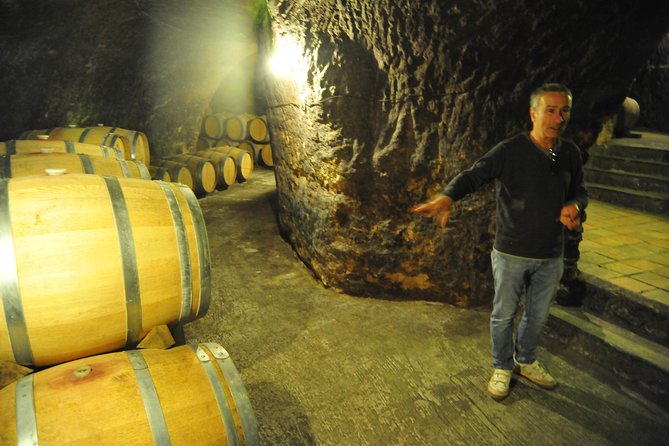
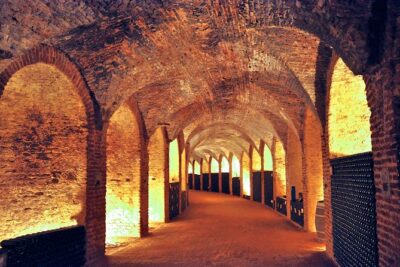
For many people, the last bodega is the most memorable. The stop features a medieval underground cellar, with a network of tunnels extending for about four miles and reaching around 40 feet below ground. These passages were excavated beneath the town and used to preserve wine over centuries.
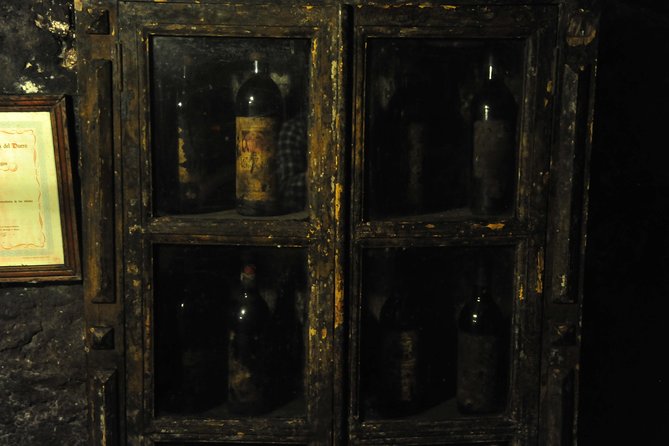
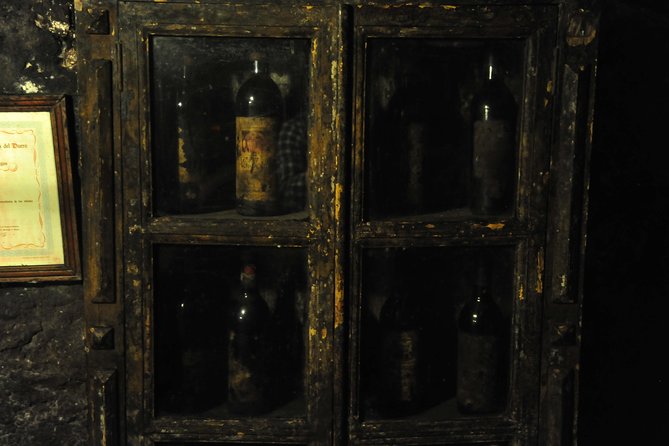
The exact location can change, but past visits have included ValSotillo and other multigenerational wineries. This is the stop that connects wine to local town life. The cellar is not simply an attractive backdrop. It shows how older producers stored wine before modern temperature control and large purpose-built facilities.
The cellars are cold, so bring a warm layer even if Madrid is sunny. Comfortable shoes are also sensible for an underground visit, though no special footwear requirement is given.
You should have another tasting here, with a minimum of three wines. The old cellar and the wine in your glass work together: you are tasting a product while standing inside part of the system that helped preserve it. For a visitor interested in Spanish history, architecture, or traditional foodways, this stop adds far more than another tasting room.
What the wine tasting is really like
The package includes three winery visits and a minimum of three wines at each winery. That means at least nine tastings, though the exact wines vary by producer and day.
The purpose is comparison. You can taste how a young producer handles Tempranillo, how a larger winery manages production, and how an old family cellar presents its wines. Some pours may be young and fruit-driven, while others show more oak or bottle age.
You do not need to be a wine expert. The winery staff explain the selections, and the tour guides fill in the regional context. Ismael has been particularly praised for explaining the wine process and making the schedule easy to follow. Antonio has led departures with a strong focus on production, tasting, and local history. Cosmin has been noted for safe driving, a good lunch stop, and clear information.
Since the tour is bilingual, the primary language is English, with Spanish used as needed. Confirm the language arrangement when booking if you require a fully English-only departure.
The guide can shape the entire day
A long day in a van depends heavily on the person leading it. The guide handles timing, winery coordination, driving, and the practical question of where to eat.
Ismael appears frequently among the strongest guide experiences. He is described as warm, organized, and easy to understand in English, with enough regional knowledge to make the drive useful without filling every quiet moment with talk. Muna, Antonio, Cosmin, and Alfonso have also led well-received departures.
You may not receive the guide you hoped for, and the operator does not promise one particular person. Still, the repeated pattern is clear: the guide is not just a driver. The best ones make introductions at the bodegas, answer questions, help with lunch, and keep the day moving.
The maximum group size is 20. Some departures have been much smaller, including groups of six or a few couples. A small group makes the winery visits feel more personal and gives you more room to ask questions, but a full vehicle will feel less spacious.
Price, time, and what you receive
At $223.82 per person, this is not a cheap excursion. It is also more than a basic bus ride to one nearby winery. The price includes round-trip transport from Madrid, a bilingual local guide, three winery visits, at least three tastings at each, and snacks at the bodegas.
You are paying for access and coordination. Ribera del Duero is about two hours from Madrid, and reaching three separate wineries without a car would be awkward. The guide also handles the route, reservations, translation, and timing.
The value is strongest if you want a broad introduction in one day. You see three styles of winery, taste at least nine wines, visit a historic cellar, and get some time in towns beyond Madrid. It is less attractive if you prefer a slow, single-estate visit or dislike long drives.
The tour lasts about 10 to 11 hours, with an expected return around 8 p.m. Traffic in Madrid can change that. Treat it as a full day, not a casual half-day outing.
Who should book this day trip
I would recommend it to wine drinkers who want to compare producers rather than visit only one famous estate. It also suits people who enjoy architecture, old cellars, local food, and countryside views along with the tasting itself.
It is a good choice if you are staying in Madrid without a rental car. The route would be difficult to reproduce independently in one day, especially if you want three scheduled winery visits and a bilingual guide.
You should think twice if you want a relaxed pace. The transfers are long, the itinerary is full, and the vehicle may feel tight at maximum capacity. You should also be comfortable with wine tasting, as the day includes at least nine wines. Participants must be at least 18 for the tastings, and children under 12 cannot join the tour unless a private arrangement is made.
Free cancellation is available up to 24 hours before the start time. The tour needs at least four participants, so an unusual cancellation for low numbers can occur, with an alternative or full refund offered.
Should you book the Ribera del Duero tour from Madrid?
Book it if you want a well-organized introduction to one of Spain’s major red-wine regions and you are willing to give it the whole day. The strongest reasons are the variety of wineries, the substantial tasting program, the local snacks, and the old underground cellar.
I would choose this over a single generic tasting if you want to understand how small, modern, and historic producers fit into the same region. I would skip it only if two hours each way sounds exhausting or if you prefer to control every stop yourself.
For most wine lovers, the price is fair for the distance, access, transport, and three-bodega schedule. Arrive early, bring a warm layer, keep lunch money handy, and expect the return to Madrid to come late. Do that, and this makes a strong use of one open day in the capital.
FAQ
Where does the Ribera del Duero wine tour start?
The tour starts at the front door of the cafeteria at Hotel Claridge, next to the main hotel entrance, at Plaza del Conde de Casal, 6, in Madrid.
What time does the tour depart?
Departure is at 9:15 a.m. You should arrive early because the vehicle leaves on time.
How long does the tour last?
The experience lasts about 10 to 11 hours. Return to the original meeting point is expected around 8 p.m., depending on traffic in Madrid.
How many wineries do you visit?
The tour includes three winery visits. The order and exact wineries can change depending on the day.
How many wines are included?
Each winery provides a minimum of three tastings, so you should expect at least nine wines during the day.
Is lunch included?
No. Lunch is not included, but you receive free time to choose your own meal. Suggested budgets are about €12 to €15 for tapas or around €30 for a full three-course lunch.
Can children join the tour?
Children under 12 cannot take part unless you arrange a private tour. Anyone tasting wine must be at least 18, and children must be accompanied by an adult.
What should I bring for the winery visits?
Bring a warm layer because the underground cellars can be cold. You should also allow extra time to reach the meeting point and plan your route before the morning of departure.
Just added around Madrid
- From Madrid: Ribera del Duero Winery and Segovia Tour★ 5.0 · 7 reviews
- Ribera del Duero wine region private tour★ 4.5 · 4 reviews
- Ribera del Duero Tour From Madrid: 2 Wineries with Transport★ 4.9 · 18 reviews
- Madrid: Luxury Winery Emilio Moro Tour★ 5.0 · 2 reviews
- Madrid: half day wine region tour★ 4.7 · 7 reviews
- Half-Day Trip from Madrid: Alcalá de Henares & Winery Visit★ 4.1 · 16 reviews
- From Madrid: Ribera del Duero 3 Wineries + Traditional Lunch★ 4.8 · 2 reviews
- From Madrid: Traditional Villages, Winery Tour & Tapas Lunch★ 4.6 · 30 reviews
Madrid Vineyard Tours, compared.
Madrid Countryside Wineries Guided Tour with Wine Tasting
Read our review →
Toledo Guided Tour & Winery Visit with Tasting
Read our review →
Madrid Region Wineries Guided Tour with Wine Tastings
Read our review →
Ribera del Duero:4 Wineries, tasting & Lunch included from Madrid
Read our review →
Toledo Day Trip with Winery Visit and Wine Tasting
Read our review →
Spanish Villages & Winery Visit with Wine Tasting and Tapas Lunch
Read our review →
Ribera del Duero Tour of 3 Wineries w/ Tastings
Read our review →
Toledo Full Day with Winery Visit, Tapas and Wine Tasting
Read our review →Browse the lists this tour appears in