
REVIEW · FRANCE
Champagne Vineyard Experience: Delve into the terroir
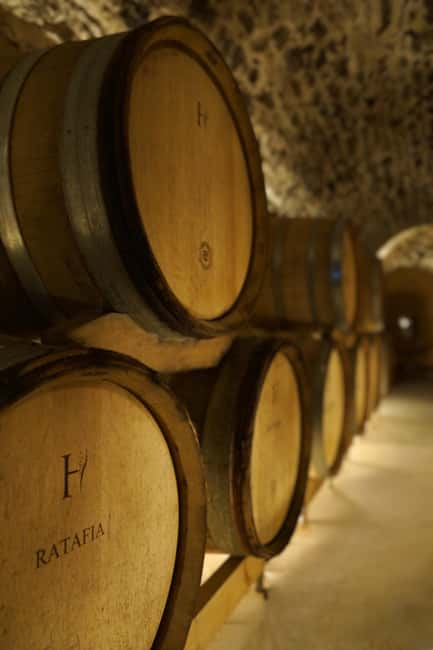
Champagne Harlin Père & Fils puts the terroir before the toast. You begin in the family garden and oldest vines, walk through the vineyards, descend into a historic cellar, and finish by tasting Champagne and Ratafia Champenois. It is a useful way to connect what grows above ground with what ends up in your glass.
I like the family-run setting and the clear focus on organic, sustainable vineyard work. I also like that the tour covers more than bottle production, showing how soils and places such as Mareuil-le-Port, Épernay, and Tours-sur-Marne shape different cuvées. The main caution is that the walk includes stairs and a small stretch through the vines, while the tasting may feel modest if you expect a large flight or a full meal.
Key points
- Old vines and family roots: Begin where the family’s grandfather planted vines, then see the estate from garden to cellar.
- A working view of Champagne: Learn how organic and sustainable methods protect biodiversity and affect the grapes.
- Historic cellar visit: Go below ground to hear how Champagne is made, rather than stopping at a simple tasting room.
- Two types of tasting: Sample Champagne and the estate’s Ratafia Champenois, a local fortified wine.
- English and French guiding: Sarah and Chloé have led particularly clear, engaging visits, according to the available tour feedback.
- Practical format: The whole visit lasts about 90 minutes and begins and ends at 8 Rue de la Fontaine.
Starting at 8 Rue de la Fontaine
Your visit starts in the courtyard of Champagne Harlin Père & Fils at 8 Rue de la Fontaine. Step into the courtyard and look for your guide. If the guide is not waiting there at first, the meeting instructions say someone will greet you shortly.
This simple start suits the character of the experience. You are not being collected in a large coach and whisked between several famous houses. You arrive at one producer, meet the people connected with the estate, and follow a short route through the places where the work actually happens.
The tour is offered in English and French. If you want the fullest explanation of winemaking terms, it is worth checking your preferred language when you choose a time. Sarah and Chloé are named in the available feedback as guides who gave especially clear explanations and added warmth to the visit, though your guide may be someone else.
The total duration is 90 minutes. That makes this a good fit for a day in the Champagne region when you want one focused stop without giving up half a day. It also means the visit moves at a steady pace. You will get an introduction to the estate, a vineyard walk, a cellar visit, and a tasting, but not an exhaustive study of every wine the producer makes.
More Champagne House Tours in France:
- Champagne Day Trip with 6 Tastings, Reims and Winery from Paris
★ 5.0 · 902 reviews - From Reims: Champagne and Family-Run Wineries Tour
★ 4.8 · 671 reviews - Epernay: Guided Tour of Champagne Cellar with Tastings
★ 4.7 · 507 reviews
Seeing the family garden and oldest vines
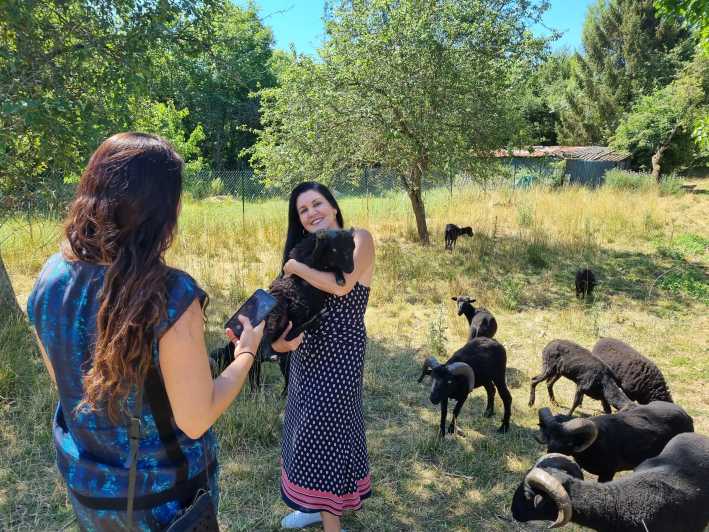
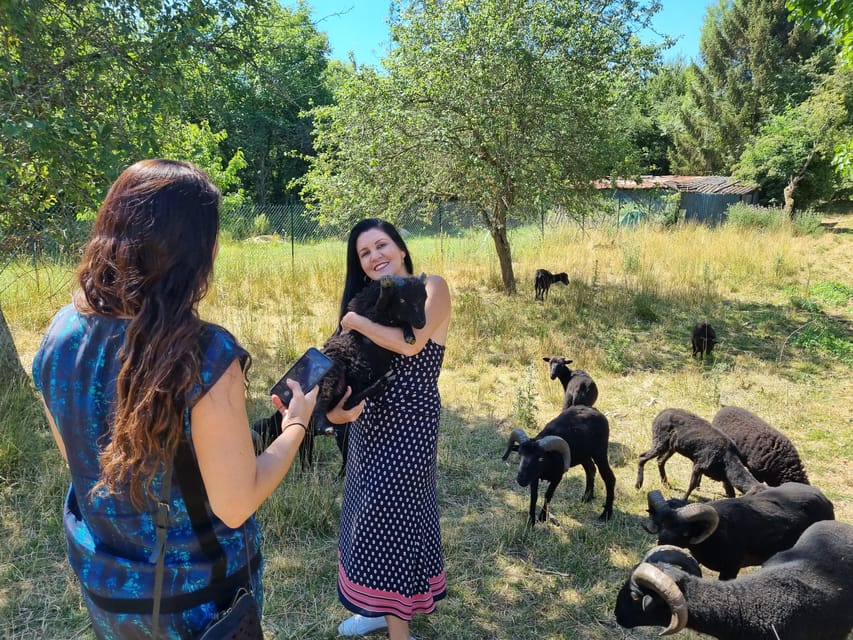
The first part takes you into the garden where the grandfather’s vines grow. This detail gives the visit a personal anchor. Instead of treating Champagne as a luxury label alone, the tour presents it as a family business shaped by land, work, and several generations.
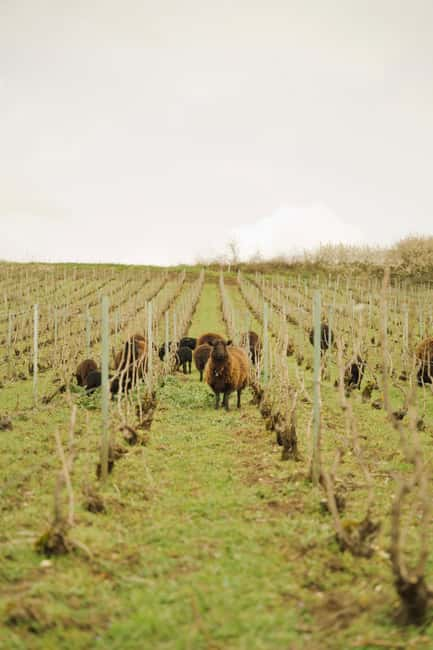
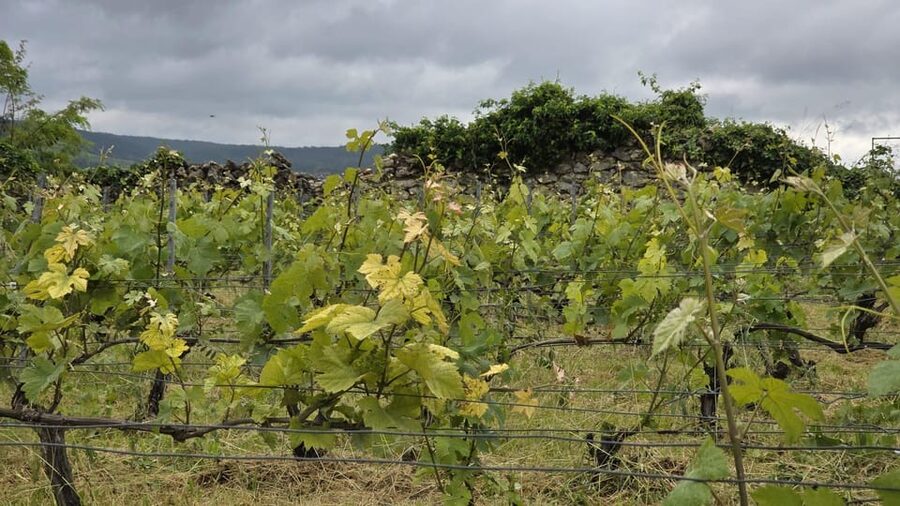
From there, you continue toward the oldest vines and vineyards. The short outdoor section matters because it gives you something concrete to look at while learning about soil, vines, and biodiversity. Terms such as organic and sustainable farming can sound vague in a tasting room. They make more sense when you are standing among the vines and hearing how the producer tries to protect the living environment around them.
The estate connects its wines with terroirs in Mareuil-le-Port, Épernay, and Tours-sur-Marne. You should not expect a long regional tour to all three places during this visit. Instead, the point is to understand that Champagne is not one uniform growing area. Differences in soil and site help explain why separate cuvées can have their own character.
The vineyard walk is not a demanding hike, but it is still an outdoor section. Wear shoes you can use on uneven ground, especially if the weather has been wet. One useful detail from the available feedback is that the visit includes a small walk through the vines, so you should not book it expecting to stay indoors from start to finish.
Learning how biodiversity fits the bottle
A strong part of the tour is its attention to biodiversity preservation. Champagne production is often presented through grand cellars, elegant labels, and the familiar sound of a cork. Here, you also hear about the less glamorous work of caring for soil and vines.
That focus adds value for anyone who wants to understand how a producer works, not just taste the finished wine. You can ask how organic and sustainable methods affect vineyard care and how the estate thinks about the relationship between soil and each cuvée.
The tour does not promise a technical class in agricultural science, so expect an accessible explanation rather than a detailed lecture. That is probably the right balance for a 90-minute visit. You get enough context to make the tasting more meaningful without being buried under specialist language.
I especially like this part for first-time Champagne visitors. If you only visit large commercial houses, it can be easy to remember the polished cellar but forget where the grapes began. Here, the garden and vines come first, so production is explained as part of a chain that starts in the ground.
Going below ground into the historic cellar
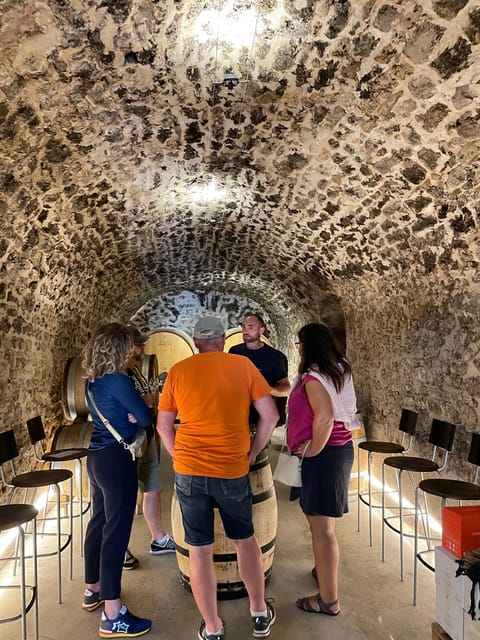
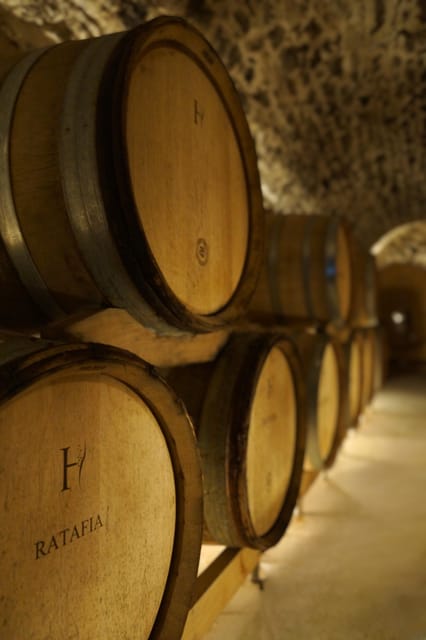
After the outdoor portion, the route leads into the historic cellar. The cellar supplies the cool, enclosed contrast to the garden and vineyard. Above ground, you have been looking at growing conditions. Below ground, you turn to the steps that make sparkling wine.
The tour explains Champagne production and the secrets of the cellar in straightforward terms. You should expect an overview of how the wine is made, stored, and prepared, rather than a full technical demonstration. The cellar visit is especially useful if you know the drink mainly as a finished bottle and want to understand what happens before it reaches the table.
There are stairs involved. That is important to know before booking, particularly if you prefer a visit without changes in level. The available information does not describe the cellar as step-free, and a specific account notes stairs both for the cellar and for reaching the tasting room.
The setting is likely to be one of the most memorable parts because it feels connected to the producer’s working history. A historic cellar also gives the guide a natural place to explain why time, temperature, and patience matter in Champagne production. You are not simply hearing about a bottle. You are following its path through the estate.
A few more vineyard days around France worth a look
- Medoc or Saint Emilion Wine Tasting and Chateau from Bordeaux
★ 5.0 · 1,415 reviews - Saint-Émilion: Grand Cru Classé Winery Visit and Tasting
★ 4.6 · 1,118 reviews - Saint Emilion Half-Day Trip with Wine Tasting & Winery Visit from Bordeaux
★ 4.5 · 1,034 reviews - Saint-Emilion Afternoon Wine Tour – 2 Wineries & delicacies
★ 5.0 · 614 reviews
Tasting Champagne and Ratafia Champenois
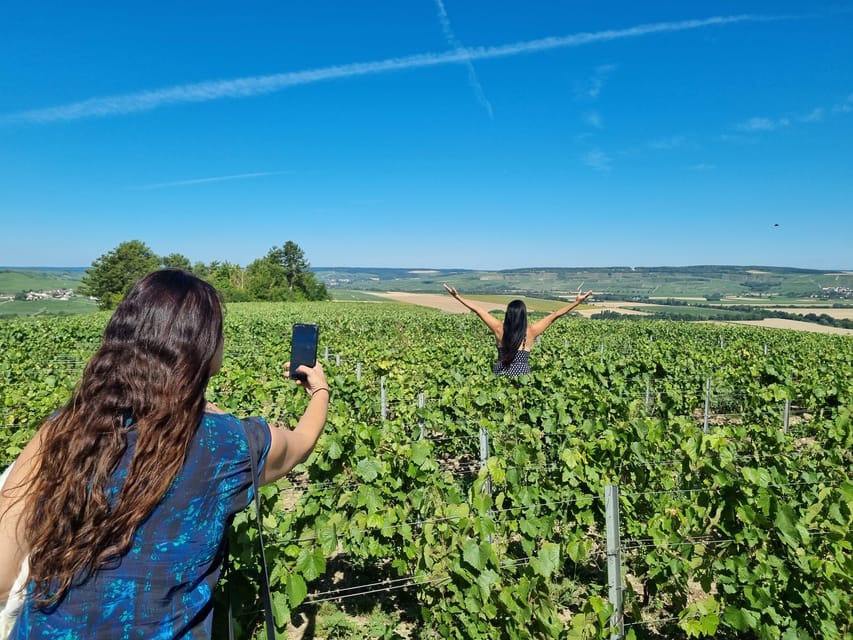
The final half hour is devoted to wine, Champagne, and tasting. The tasting is not just a reward at the end. It is where the earlier discussion about soil, grape growing, and production becomes easier to grasp.
You taste Champagne from the estate and its emblematic Ratafia Champenois. Ratafia is a regional specialty, and including it makes the tasting broader than a standard Champagne flight. It also gives you a chance to compare the sparkling wines with a different style from the same regional tradition.
Your guide introduces the art of tasting, so listen for practical cues about aroma, texture, balance, and finish. You do not need advanced wine knowledge. The point is to pay attention and see if you can connect what is in the glass with the places and methods discussed earlier.
The value here depends partly on what you expect. At $28 per person, the price is reasonable for a guided 90-minute visit that includes the vineyard, cellar, guide, and tasting. It becomes particularly good value if you want personal contact with a smaller family producer and care about farming methods.
It may feel less generous if you are expecting many wines, large pours, or food. One piece of negative feedback focused on price and the amount offered at the tasting. That does not make the tour poor value for everyone, but it is a useful warning: book this for the complete vineyard-to-cellar story, not as a bargain drinking session.
You can ask questions during the tasting. The guides described in the available feedback were praised for being attentive and willing to explain. Sarah and Chloé, in particular, were singled out for clear explanations and a friendly manner. A later visit even benefited from two guides, Chloé and Sarah, though that should not be treated as the standard arrangement.
What the 90-minute format really gives you
The structure is compact:
- About 45 minutes is set aside for the guided estate and vineyard portion.
- About 1 hour is listed for the visit, though the overall advertised duration is 90 minutes.
- About 30 minutes is used for the wine and Champagne tasting.
The timing information is not perfectly consistent in the supplied schedule, but the clear practical figure is 90 minutes from start to finish. Plan around that total rather than assuming you will spend several hours at the estate.
The route returns you to 8 Rue de la Fontaine, so there is no separate end point to arrange. That makes it easy to fit before or after another activity in the Champagne region.
A short tour also has limits. You will not explore every vineyard connected with the producer, and you will not receive a full professional certification in tasting. But the pace works well if you want a clear introduction with enough variety to keep it interesting: family story, vines, farming, cellar, and wine.
Who will enjoy Champagne Harlin Père & Fils
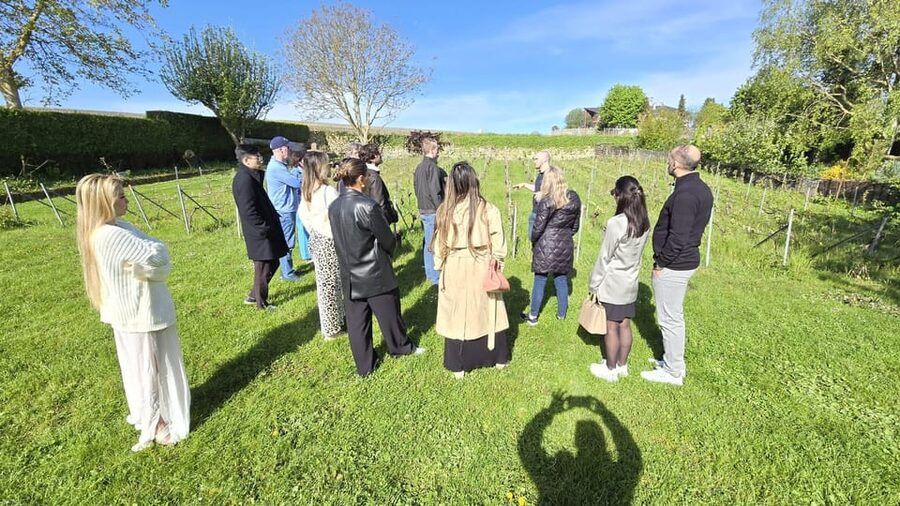
I would choose this visit if you want to meet a producer and understand the setting behind the label. It suits first-time Champagne visitors, couples, wine-minded families, and anyone interested in organic or sustainable vineyard care.
It is also a good choice if you prefer a smaller-scale visit to a famous-house tour. The family connection and the focus on old vines make the experience feel more personal than a presentation built only around brand history.
Families can attend with children under 18. Children do not need a ticket, cannot drink alcohol under French law, and can be given fruit juice. That makes the visit more flexible for parents, although the cellar stairs and the tasting format may not hold the attention of very young children for long.
You should think twice if you want a grand, highly polished Champagne attraction or a long tasting with extensive food pairings. The experience is centered on the estate and its production story. The tasting is part of that story, not the entire purpose of the visit.
Small details that make the visit easier
Wear comfortable shoes for the vineyard walk and the cellar stairs. The outdoor part is short, but the ground may not feel like a smooth town pavement.
Alcohol and drugs are not allowed as part of the activity. Children are welcome, but only adults may drink the Champagne and Ratafia.
The tour is led live in English or French. The guide is included in the ticket, as is the tasting. You can cancel up to 24 hours before the start for a full refund, and the reserve-now, pay-later option lets you hold a place without paying at once. Check the available starting times before you commit, since the visit runs at set times.
The score of 4.4 from 52 ratings suggests a generally strong experience, but the mixed feedback is worth taking seriously. Most of the positive detail centers on clear explanations, enthusiastic guides, and the complete path from vineyard to tasting. The main criticism concerns value at the tasting and expectations about what the visit includes.
Should you book this Champagne visit?
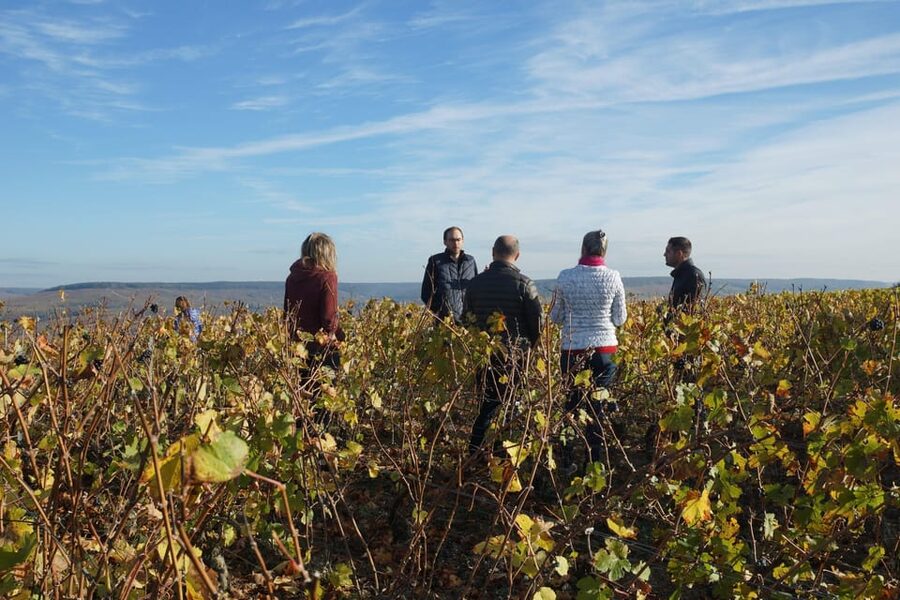
Book it if you want a grounded introduction to Champagne production with a real vineyard, a historic cellar, and a local specialty beyond sparkling wine. At $28, the price is fair when you value the guide, the family setting, and the chance to learn how soil and farming influence the bottle.
Skip it if your priority is a large tasting, a full meal, or a grand house with elaborate visitor facilities. For everyone else, Champagne Harlin Père & Fils offers a compact and thoughtful way to meet a producer, see old vines, and taste the region with more context than a bar pour can provide.
FAQ
Where does the Champagne Harlin Père & Fils tour begin?
The meeting point is the courtyard of Champagne Harlin Père & Fils at 8 Rue de la Fontaine.
How long does the experience last?
The advertised duration is 90 minutes.
What languages are available?
The live tour guide can lead the experience in English or French.
What does the tour include?
The ticket includes the guided visit, the guide, and the tasting.
What will I see during the visit?
You will see the family garden with the grandfather’s vines, the oldest vines and vineyards, and the historic cellar. The visit ends with a tasting.
What will I taste?
The tasting includes Champagne and Ratafia Champenois.
Are children allowed to attend?
Yes. Children under 18 may accompany adults without needing a ticket.
Can children drink during the tasting?
No. Children are not permitted to drink alcohol under French law, but fruit juice can be provided.
Are there stairs?
Yes. The visit includes some stairs for the cellar and for reaching the tasting room.
Can I cancel my booking?
Yes. You can cancel up to 24 hours in advance for a full refund.
Just added around France
- 3-Hour Private Painting tuition in a beautiful Cognac vineyard★ 3.5 · 2 reviews
- 4×4 tour in a winery followed by a tasting★ 5.0 · 46 reviews
- Winery Visit with Food and Wine in Carcassonne★ 5.0 · 59 reviews
- Walk in the vineyards of Chablis Grands Crus★ 4.5 · 7 reviews
- Wine Getaway with Tasting in the Chablis Vineyard★ 5.0 · 3 reviews
- Winery Tour & Wine Tasting – Deli Plate & 3 Wines★ 5.0 · 72 reviews
- Visit to the Faugères Vineyards with Picnic from Béziers★ 5.0 · 7 reviews
- Languedoc Vineyard Tours★ 5.0 · 25 reviews
France Vineyard Tours, compared.
Medoc or Saint Emilion Wine Tasting and Chateau from Bordeaux
Read our review →
Saint-Émilion: Grand Cru Classé Winery Visit and Tasting
Read our review →
Saint Emilion Half-Day Trip with Wine Tasting & Winery Visit from Bordeaux
Read our review →
Champagne Day Trip with 6 Tastings, Reims and Winery from Paris
Read our review →
Saint-Emilion Afternoon Wine Tour – 2 Wineries & delicacies
Read our review →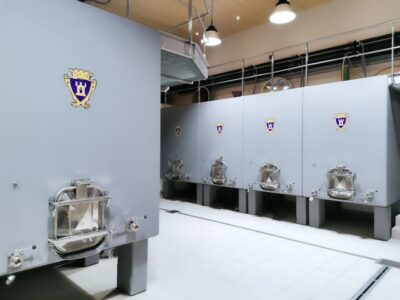
Saint-Émilion: Bordeaux Vineyard Tour and Wine Tasting
Read our review →
Browse the lists this tour appears in