
REVIEW · ITALY
Discover the best cellars of Salento
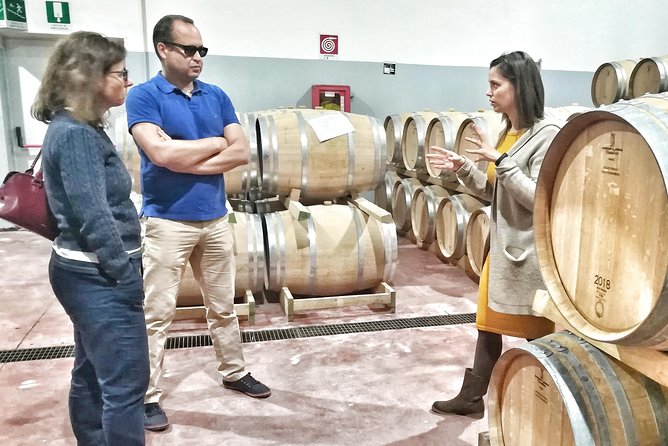
Salento’s wine country is best understood by seeing how the bottles are made, not just by sipping them at a bar. This full-day outing leaves Lecce with Stefano, a warm and highly informed guide, and visits three wineries where you taste several labels, tour production areas, and see the old alberello pugliese, or Apulian tree, vine-training system.
I like the small maximum group of five, which gives you room to ask questions and keeps the day personal. I also like the useful mix of producers: a family-style winery, a cooperative, and a larger operation. The main consideration is the length. At about eight hours, this is a full day, and the price of $204.24 per person makes the most sense if you want transport, serious wine instruction, and lunch rather than only a quick tasting.
Key points at a glance
- Three wineries, several styles: See different approaches to Salento wine production rather than visiting three nearly identical tasting rooms.
- Stefano leads the day: He explains grapes, production, local culture, and wine in clear, lively detail.
- At least three or four labels per winery: Expect a broad tasting rather than a single glass at each stop.
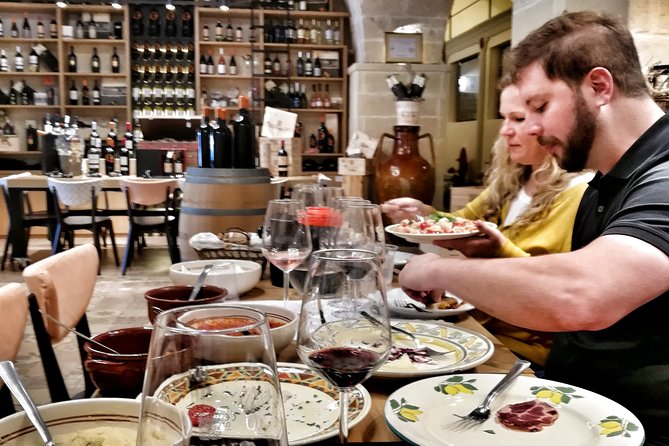
- An Apulian lunch is part of the experience: Local bread, olive oil, olives, cheeses, cold cuts, pucce, a Salento specialty, and pasticciotto may appear on the table.
- A very small group: The tour accepts no more than five people, a real advantage for conversation and questions.
- A full day from central Lecce: Meet at Piazzetta Arco di Trionfo at 9:30 a.m. and return to the same point.
Why Salento makes a strong wine day from Lecce
Lecce is an excellent base for exploring southern Puglia, but the vineyards and cellars lie beyond the city center. This outing handles the driving, so you can concentrate on the wines and the countryside instead of worrying about roads, directions, or who has to skip a glass.
Salento has a strong identity in the glass. The tour is built around local grapes and regional production, with Stefano explaining how the wines connect to the land, farming traditions, and food of the area. You are not simply handed a flight and left to guess what you are tasting.
The eight-hour schedule also gives the day a proper rhythm. You leave Lecce in the morning, visit several producers, stop for food, and return to the city by the end of the afternoon or early evening, depending on the pace of the visits. That makes this a good choice for a day when you want one major experience rather than several smaller activities.
More Wine Cellar Visits in Italy
- Montepulciano: Wine Tasting and Cellar Tour
★ 4.8 · 545 reviews - Modena: Balsamic Lunch with Vinegar Cellar Tour and Tasting
★ 5.0 · 395 reviews - Tasting Tour in One of The Most Beautiful Cellars in the World
★ 5.0 · 278 reviews
Meeting Stefano at 9:30 in Lecce
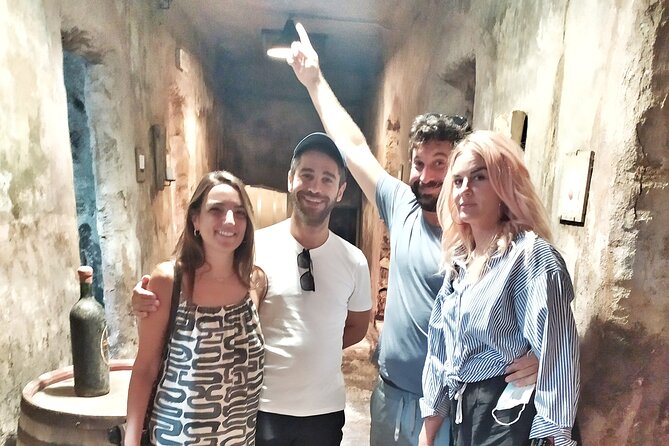
The tour begins at Piazzetta Arco di Trionfo in Lecce at 9:30 a.m. This central meeting point is practical if you are staying in or near the historic center. The activity ends back there, so you do not need to arrange a second pickup point or figure out your way home from the vineyards.
Stefano is a major part of the experience. His strength is not only knowing the wines, but also explaining them in a way that works for people with different levels of interest. If you already know wine, you can ask about grapes, production, and regional differences. If you are new to wine, you can expect the basics to be explained without making you feel out of place.
Several comments about the day point to Stefano’s ability to connect wine with Salento’s culture and past. That matters because a winery visit can otherwise become a parade of technical terms. Here, the guide helps you understand why a producer works in a certain way and what makes one bottle different from another.
The winery lineup: three ways to make Salento wine
The named stops connected with this experience include Feudi di Guagnano, Cantine Paololeo, Cantele, and Cantina San Donaci. The program is described as visiting three wineries, so the exact combination of named producers may vary. That small inconsistency is worth noting before you book, especially if one particular cellar is your main target.
The value comes from the range of production styles. The day includes a traditional wine maker, a cooperative, and a larger, more modern winery. This comparison gives you a much better sense of Salento than a visit to three similar estates.
Feudi di Guagnano and the family-scale view
Feudi di Guagnano is included among the possible stops and represents the kind of producer where the story of the wine can feel closely tied to the local area. At this sort of visit, you can expect attention to the vineyard, the cellar, and the choices made during production.
The appeal is personal scale. You get a chance to see how a smaller producer presents its wines and how traditional methods fit alongside current winemaking. It is a useful counterpoint to a larger facility later in the day.
Same wine country, a different day out:
- Tuscany Day Trip from Florence: Siena, San Gimignano, Pisa and Lunch at a Winery
★ 5.0 · 21,634 reviews - Florence: Chianti Wineries Tour with Wine Tasting
★ 4.5 · 10,071 reviews - From Florence: Siena, San Gimignano, Pisa & Lunch at Winery
★ 4.8 · 4,538 reviews - Half day Chianti Vineyard Escape from Florence with Wine Tastings
★ 4.5 · 2,196 reviews
Cantine Paololeo and the food pairing
Cantine Paololeo is another named stop, and the full Salento meal may take place at one of the three wineries. The supplied menu gives you a good idea of what to expect: Apulian bread with olive oil, olives, pucce, a selection of cheeses and cold cuts, a Salento dish, grappa, and pasticciotto Leccese.
The wording of the menu is not perfectly clear on every item, so you should treat it as a sample rather than a guaranteed course-by-course promise. Still, the meal is clearly built around local food rather than generic tourist fare. That is important. Wine makes more sense when you taste it beside the everyday foods of the region.
The lunch also gives the day a needed pause. Three winery visits with several labels at each one can become tiring if everything is standing, tasting, and listening. A proper meal lets you slow down, talk with the guide, and enjoy the flavors without rushing.
Cantele and modern production
Cantele is listed as one of the possible winery stops. The tour’s mix of traditional and modern producers means a visit here may help you compare scale, equipment, and presentation with the smaller operation.
You will see the productive side of the farm rather than spending the whole visit in a polished tasting room. That makes the stop more useful for anyone who wants to understand the work behind the bottle. Ask Stefano to point out how the production methods differ from those at the other wineries.
Cantina San Donaci and the cooperative model
Cantina San Donaci is also named in the program. The cooperative element is one of the more interesting parts of the day because it shows another way grapes and wine can move through the region.
A cooperative is not simply a larger tasting room. It can give you a view of how many growers contribute to a shared production system. Seeing that beside a family-run business and a modern winery gives you a practical comparison of three different models.
Because the program promises three wineries but names four possible stops, confirm the planned selection if you care about a specific producer. The strength of the experience is the contrast among styles, so the day can still work well even if the exact lineup changes.
What you actually taste during the day
At each cellar, you taste a minimum of three or four labels. Across three wineries, that can mean a substantial range of Salento wines. The exact bottles are not specified, and they may change with the producer, but the design of the tour favors variety.
Stefano explains the grape types and the differences between wines rather than treating each tasting as an isolated sample. You can use the visits to compare how the same broad regional identity appears in different hands.
The tour suits both serious wine drinkers and curious beginners. People with experience can focus on production choices and regional character. People who usually feel lost during tastings can pay attention to simple comparisons: aroma, body, freshness, sweetness, oak, and how each wine works with food.
Do not assume that a full day means nonstop drinking. The program also includes cellar visits, production explanations, vineyard time, transport, and lunch. The range of activities helps keep the day from becoming a blur of glasses.
The old Apulian tree vine system
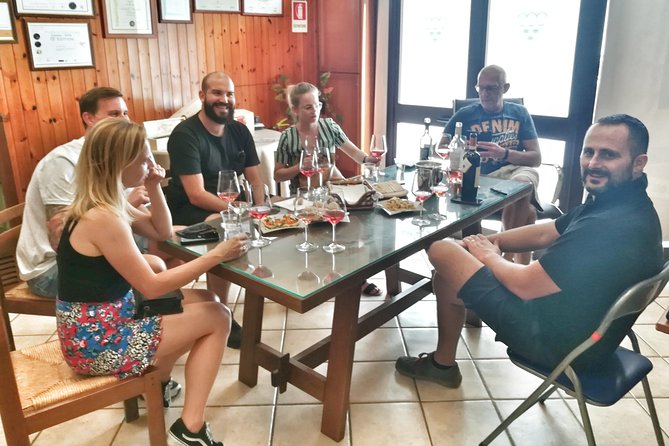
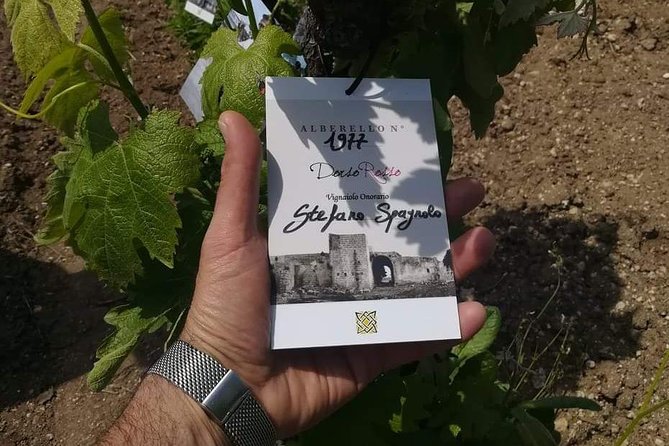
One of the most distinctive details is the visit to a traditional vineyard using the alberello pugliese, often translated as the Apulian tree. The vines are trained low and separately, creating a bush-like form rather than long rows on a trellis.
This is more than a photo stop. It gives you a visible example of how farming traditions shape the vineyard. Stefano can connect the vine form with cultivation and the character of the region, making the visit more concrete than a general talk about local wine.
You should also expect some walking around working agricultural areas. Comfortable shoes are sensible, especially if the ground is wet or uneven. The tour requires good weather, and poor conditions can lead to a change of date or a full refund.
A lunch built around Salento’s table
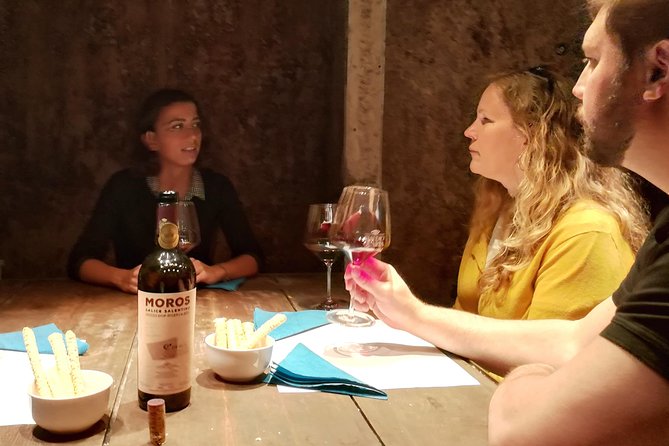
The meal is one of the strongest reasons to choose the full-day outing instead of a short tasting. The sample menu begins simply with local bread, olive oil, and olives, then moves into pucce, cheeses, cold cuts, and a Salento main dish. Dessert may include grappa and pasticciotto Leccese.
Pasticciotto is a small pastry associated with Lecce and Salento, usually filled with custard. Ending with this local sweet gives the meal a clear regional finish rather than a standard dessert added as an afterthought.
The menu is generous enough to function as lunch, not just a few snacks beside the wine. If you have dietary restrictions, the supplied information does not state how substitutions are handled, so ask before booking. The same applies to the exact menu, since it is presented as a sample.
Is $204.24 a fair price?
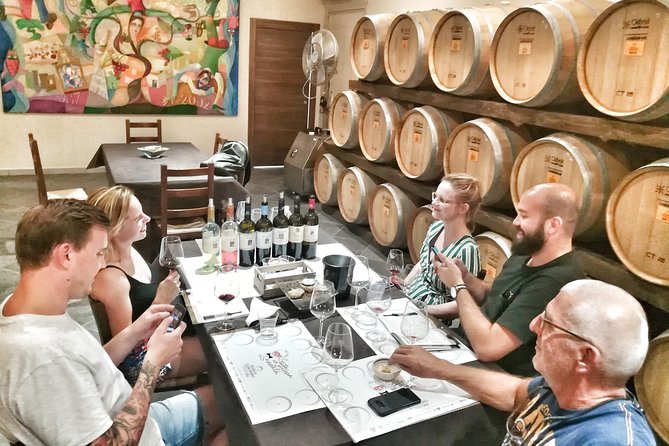
At $204.24 per person, this is not a budget tasting. The cost is easier to justify because it combines several services: round-trip transport from central Lecce, an eight-hour schedule, three winery visits, multiple labels at each cellar, guided instruction, vineyard and production tours, and a full local meal.
You are also paying for access to a small group. With a maximum of five people, the guide can answer questions and adjust the conversation to the group. That is a different product from a large coach excursion where the tasting may be faster and less personal.
The value is strongest if you would otherwise need to hire a car, plan a route, arrange several winery appointments, and find a safe way back after tasting. It is less compelling if you only want one glass of wine or prefer to explore independently.
The very high satisfaction record, with a 5.0 rating from 30 ratings and 100 percent recommendation, supports the price, but you should still match the tour to your habits. The day is built for people who want instruction, variety, food, and conversation. It is not designed as a quick stop between other Lecce activities.
Who should book this Salento wine tour?
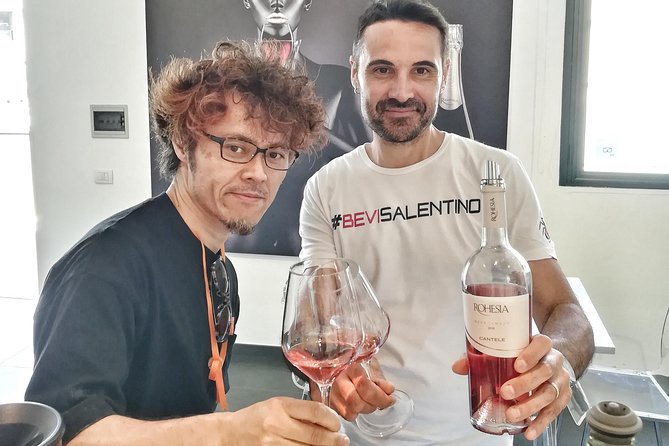
I would recommend it to you if wine is a main reason for visiting Puglia, especially if you want to understand how production works. It also suits couples, friends, and solo visitors who prefer a small group and like asking questions as they go.
You do not need to be a wine expert. The guide’s explanations work for beginners, and the food and vineyard elements give the day more shape than a technical tasting alone. Even if you are not usually passionate about wine, the production visits and local meal provide other reasons to go.
This is less suitable if you have only one free morning, dislike long outings, or want to choose every winery yourself. The exact three-stop lineup may vary among the named producers, so contact the operator if a particular cellar is essential to your plans.
Book well ahead if your dates are fixed. The experience is typically reserved about 93 days in advance, which suggests that popular travel periods can fill early.
Practical details before you book
Confirmation is provided at booking. The tour is offered in English, and service animals are allowed. It is near public transportation, although the central meeting point is especially convenient if you are already staying in Lecce’s historic center.
Most people can participate, but this is an active day with vineyard and production-area visits. Wear comfortable shoes and plan for changing conditions. Since the activity depends on good weather and a minimum number of participants, a cancellation may result in an alternate date or a full refund.
You can cancel for a full refund up to 24 hours before the 9:30 a.m. start time. Cancellations or changes made within 24 hours are not refunded or accepted under the stated policy.
Should you book it?
Book this tour if you want Salento wine explained by someone who knows the region, not just poured into a glass. Stefano’s teaching, the small group, the contrast between winery types, the Apulian tree vines, and the generous local lunch give the day real substance.
Skip it if you want a short tasting, a low price, or a fixed guarantee of one particular producer. For everyone else, this is one of the more useful full-day outings from Lecce, especially if you want to leave Puglia with a better sense of its grapes, food, and working wine country.
FAQ
Where does the Salento wine tour begin?
The tour begins at Piazzetta Arco di Trionfo, 73100 Lecce, Italy, at 9:30 a.m.
Where does the tour end?
The activity ends back at the starting meeting point in Lecce.
How long does the experience last?
The tour lasts approximately eight hours.
How many wineries will I visit?
You will visit three wineries. The named producers connected with the program include Feudi di Guagnano, Cantine Paololeo, Cantele, and Cantina San Donaci, so the exact three-stop combination may vary.
How many wines will I taste?
The program includes a minimum of three or four labels at each winery.
Is lunch included?
A full lunch at one of the wineries may be included, featuring typical Salento foods such as bread with olive oil, olives, pucce, cheeses, cold cuts, a Salento dish, grappa, and pasticciotto Leccese.
What is the cancellation policy?
You can cancel up to 24 hours before the start time for a full refund. Poor weather or failure to meet the minimum number of participants may result in a different date or a full refund.
Just added around Italy
- Primitivo and Negroamaro wine tour: a visit to two wineries and typical lunch. From Lecce★ 5.0 · 19 reviews
- Visit to a Winery in Salento with Wine tasting and light lunch. From Lecce★ 4.5 · 10 reviews
- Full Day Tour to Gallipoli, Galatina, Coast, Beaches and Winery★ 5.0 · 39 reviews
- “Between Langhe and Monferrato” – Wine Tasting and Cellar Visit★ 5.0 · 86 reviews
- Visit among vineyards and wine cellar with wine tasting in Nizza Monferrato★ 5.0 · 10 reviews
- Barolo Tasting and Vineyard Tour and Winery Visit★ 4.5 · 2 reviews
- Guided Walk and Lunch in the Vineyard in Alba★ 4.5 · 2 reviews
- Savor Ossola Wines & Local Treats in a Scenic Vineyard★ 5.0 · 29 reviews
Italy Vineyard Tours, compared.
Tuscany Day Trip from Florence: Siena, San Gimignano, Pisa and Lunch at a Winery
Read our review →

Half day Chianti Vineyard Escape from Florence with Wine Tastings
Read our review →
Tuscany Wine Tour: 2 Wineries & San Gimignano from Florence
Read our review →
Chianti Wineries Tour with Tuscan Lunch and San Gimignano
Read our review →
Private Self-Guided E-Bike Ride in Tuscany with Vineyard Visit
Read our review →
Browse the lists this tour appears in