
REVIEW · COLMAR
Taste Alsace: Tasting of our Alsace wines – No cellar tour
The best part of this small tasting is its focused lineup: you move from a dry Alsatian Crémant to classic white grapes, estate wines tied to the Ribeauvillé fracture field, and a sweet Gewurztraminer to finish. It is a quick, friendly stop near Colmar, not a long winery visit.
I like the private format, since only your group takes part, and I like the chance to taste several styles rather than one narrow flight. The warm welcome from Julita is another plus. The main drawback is clear: there is no cellar tour, and the listed Monday hours are limited.
Key points to know before you book
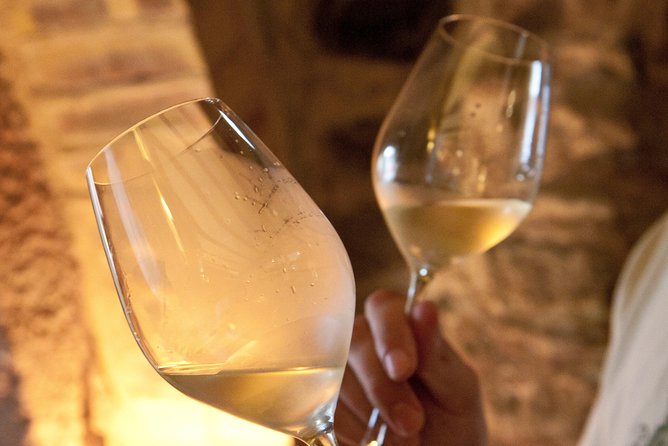
- A four-part tasting: Start with extra-brut Crémant, continue with Pinot Blanc or Riesling, sample wines from the estate’s best vines, and finish with sweet Gewurztraminer.
- No cellar visit: This is a commented wine tasting only, so book it for the glass, not for barrels, tanks, or production rooms.
- Private for your group: You are not placed in a large shared party.
- A short stop near Colmar: The tasting lasts about 45 minutes at 28 Route de Ribeauvillé in Hunawihr.
- English is offered: The activity is available in English, with alcoholic beverages included.
- Strong personal service: Julita has welcomed guests warmly, and the winery has accommodated a last-minute booking in at least one case.
A 45-minute introduction to Alsace in a glass
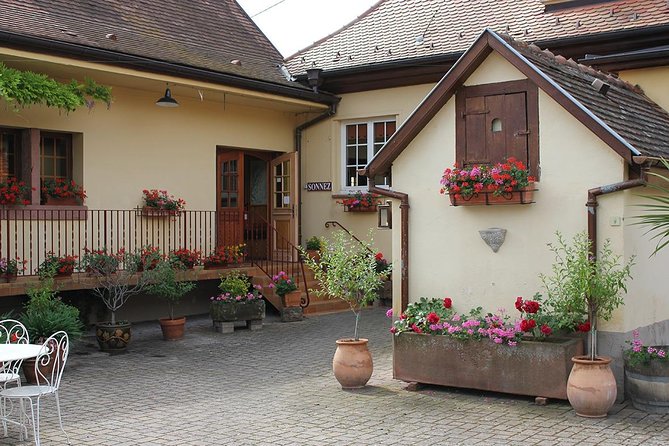
This experience gives you a tidy introduction to the wines of Alsace without asking half a day of your schedule. You meet at Domaine François Schwach, at 28 Route de Ribeauvillé in Hunawihr, and return to that same point when the tasting ends.
The format is simple. You sit down for a commented tasting, and the host guides you through sparkling, dry white, estate, and sweet wines. That order matters. It lets you notice how much range Alsace can offer, from a crisp aperitif wine to a dessert-style pour.
I would think of this as a useful stop between larger sightseeing plans in and around Colmar. At about 45 minutes, it is short enough to fit into a day, but long enough to give each wine a little attention. You are not signing up for a meal, a vineyard walk, or a technical production lesson.
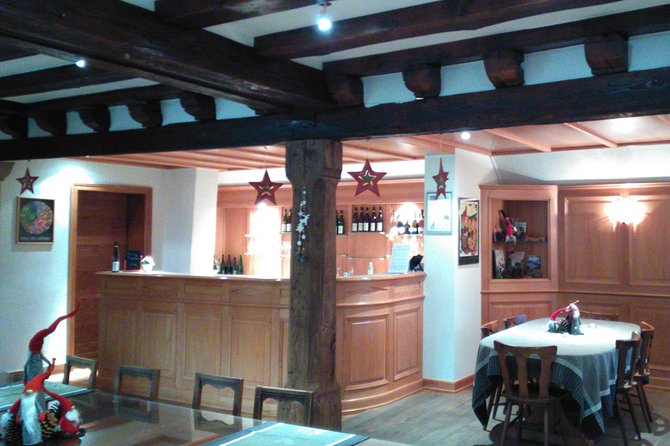
The private setup helps keep the visit personal. Only your own group participates, so you can ask questions at your own pace and avoid the feel of a crowded tasting room. The experience is offered in English, which makes it easier to follow the comments about grape varieties and the estate’s vineyards.
More Wine Cellar Visits in France
- Epernay: Guided Tour of Champagne Cellar with Tastings
★ 4.7 · 507 reviews - Paris Art of Pairing Cheese and Wine Tasting in a Cheese Cellar
★ 5.0 · 386 reviews - Paris – Guided Visit & Tasting in a Royal Wine Cellar
★ 4.5 · 221 reviews
The opening pour: Bulles de Fête Crémant
The tasting begins with Bulles de Fête, an extra-brut Crémant with fine bubbles and no added sulfites. This is a useful first glass because it is not presented as a sugary party drink. Extra-brut means a very dry style, making it a good way to wake up your palate.
Starting with sparkling wine also gives the tasting a clear sense of occasion. The estate calls it Bulles de Fête, or celebration bubbles, but the wine’s extra-brut character keeps it from becoming heavy. You can expect a lively opening before moving into still wines.
The no-added-sulfites detail may interest wine drinkers who pay close attention to winemaking choices. Still, I would not book this experience solely for that point. The real value is tasting the wine in context and comparing it with the still wines that follow.
This first pour works especially well if you are new to Alsace wine. Many people know the region mainly for white wines, yet Crémant is an important part of the local picture. Here, the sparkling wine gives you a quick reminder that the region offers more than Riesling and Gewurztraminer.
Pinot Blanc and Riesling: the classic Alsace middle
The next part of the tasting features the Aromatheque range, with Pinot Blanc or Riesling, along with other grape varieties. The exact pour may vary, so you should not assume that both Pinot Blanc and Riesling will always be served in the same way.
This is the point where you begin to compare the region’s white wine styles. Pinot Blanc is often a softer, gentler introduction, while Riesling can show a sharper, more focused character. The host’s comments help you understand the difference without turning the visit into a lecture.
The phrase and many other grape varieties as well signals a broad selection at the estate. The provided tasting details do not name every bottle, so the lineup may depend on what is being poured that day. That flexibility can be a benefit, but it also means you should not book expecting a fixed list beyond the named highlights.
I like this section because it gives you a basis for making sense of Alsace wine later in your trip. If you see Pinot Blanc, Riesling, or another local grape on a restaurant list, you will have a recent point of comparison. You can also ask the host which bottles suit an aperitif, a meal, or a sweeter finish.
Land of expressions and the Ribeauvillé fracture field
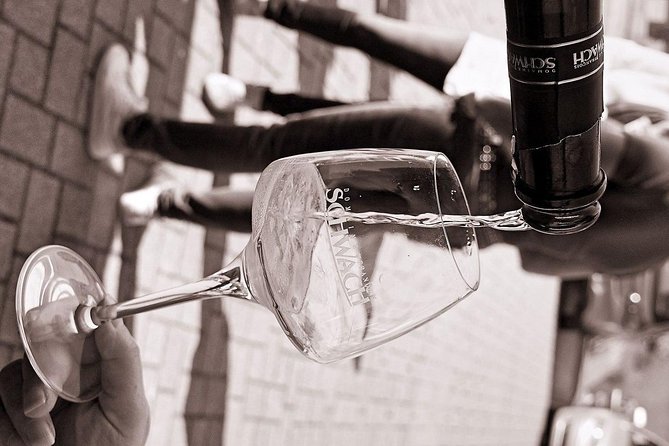
The tasting then moves to Land of expressions, wines made from the estate’s best vines. These vineyards sit on the Ribeauvillé fracture field, described as an exceptional geological mosaic.
That geological detail is more than decorative language. Alsace is known for the variety of its soils and vineyard sites, and the tasting gives you a way to connect place with flavor. You are not simply sampling a house white. You are being shown wines linked to particular vines and a specific geological setting.
The information available does not identify the exact grape or vintage for each Land of expressions wine. Keep that in mind. The strength of this part is the estate-level comparison, not a promise of one fixed bottle every time you visit.
For you, the practical benefit is a look at the winery’s more ambitious side. The earlier Aromatheque wines introduce familiar varieties. Land of expressions shifts attention toward the best vineyard parcels and the estate’s sense of place. It gives the tasting a little more depth without making the stop long or formal.
If you enjoy buying wine to take home, this is likely one of the bottles you will want to ask about. One visitor purchased a selection after tasting, and that makes sense here: a guided comparison is more useful than choosing a bottle from a shelf based only on its label.
Same wine country, a different day out:
- Medoc or Saint Emilion Wine Tasting and Chateau from Bordeaux
★ 5.0 · 1,415 reviews - Saint-Émilion: Grand Cru Classé Winery Visit and Tasting
★ 4.6 · 1,118 reviews - Saint Emilion Half-Day Trip with Wine Tasting & Winery Visit from Bordeaux
★ 4.5 · 1,034 reviews - Champagne Day Trip with 6 Tastings, Reims and Winery from Paris
★ 5.0 · 902 reviews
The final glass: sweet Gewurztraminer
The tasting ends with Gewurztraminer Cuvée Particulière, described as a sweet wine and a real nectar. Ending sweet is a smart move. It gives the flight a clear finish and shows a side of Alsace that dry-wine drinkers sometimes overlook.
Gewurztraminer is known for an aromatic style, and this Cuvée Particulière is presented as a dessert wine. You can expect the final pour to feel very different from the extra-brut Crémant at the start. That contrast is the point.
This is also where the tasting becomes especially useful for planning meals. A sweet wine can work with dessert, certain cheeses, or as a small after-dinner pour. The experience does not provide a food pairing menu, so you should not expect a full culinary workshop. Still, the sequence gives you a practical sense of how wine sweetness changes the close of a meal.
If you prefer only dry wines, this final glass may not be your favorite. You can still appreciate it as a comparison, and the host can help explain where it fits in the Alsace wine tradition.
The welcome and the feel of a private visit
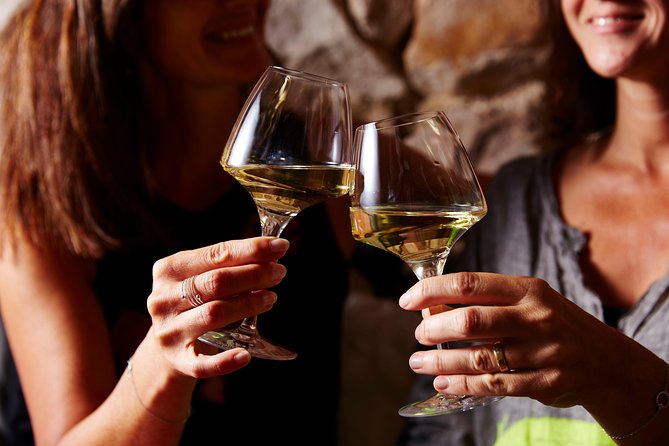
The experience includes a warm welcome and alcoholic beverages. That may sound basic, but the personal tone is an important part of this stop. Julita has been praised for making the visit memorable, and her friendly approach is one reason the tasting feels more like a host-led introduction than a quick commercial sample.
The private format adds to that feeling. Only your group participates, which means you are not trying to hear over a large crowd or waiting for several unrelated parties to finish their questions. If you are traveling as a couple, family, or small private party, this can be a comfortable way to taste.
The winery has also been willing to accommodate a last-minute booking in at least one instance. I would not treat that as a guarantee, since availability can change, but it suggests some useful flexibility. Still, confirmation is received at booking, so making a reservation remains the sensible plan.
Service animals are allowed, and most people can participate. The supplied details do not list special physical demands or mobility restrictions, so you should contact the provider if you need more specific accessibility information.
What you do not get: no cellar tour
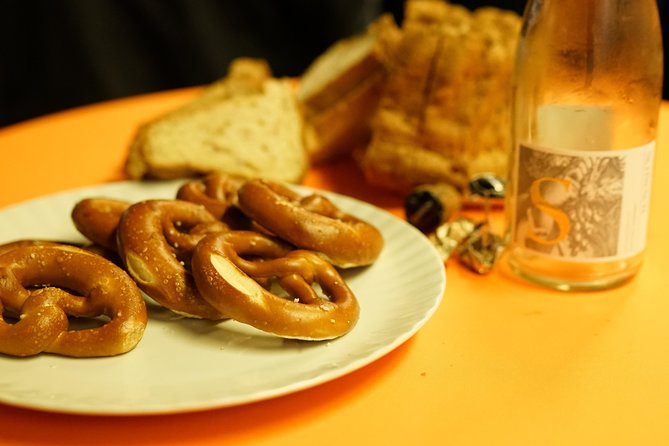
The most important limitation is also the easiest to miss. This experience does not include a cellar tour.
You will not be shown through the winery’s production spaces as part of the booking. There is no stated walk through barrels, tanks, bottling areas, or underground cellars. If you want to see how the wine is made, you should ask the provider before reserving, but you should not assume that a tasting ticket includes it.
That missing element is not necessarily a flaw. A cellar visit can add time and technical detail, but it can also make a short outing feel more structured than you want. Here, the focus stays on tasting and explanation.
I would choose this experience if you want a compact introduction to the estate’s wines. I would choose a different winery activity if your main interest is production, vineyard work, or a behind-the-scenes tour. The description is refreshingly direct, so you can make that choice before paying.
Price, timing, and the practical value
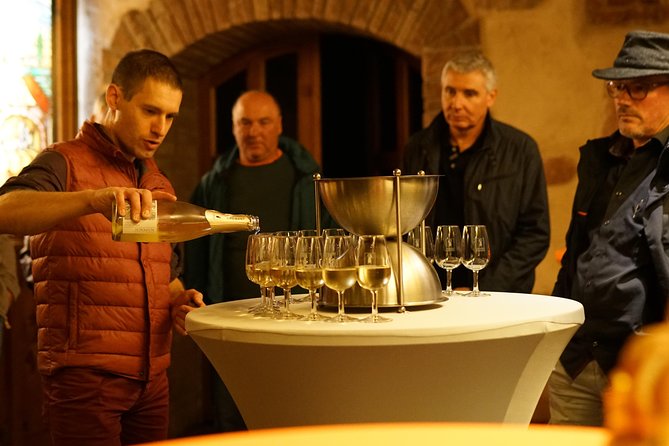
At $11.91 per person, the tasting is inexpensive by wine-tour standards. You receive alcoholic beverages, a guided presentation, and a private booking for your group. For that price, the experience offers good value if you plan to taste and possibly buy wine anyway.
The 45-minute length improves the value for a busy day. You can fit it between other stops rather than giving up a full afternoon. It is also long enough to move through several styles, from bubbles to sweet wine, instead of receiving one hurried sample.
The value is less clear if you are specifically paying for access to the winery itself. Since no cellar tour is included, you are paying for the tasting and the host’s comments, not a full estate visit. That distinction matters when comparing it with longer winery programs.
The meeting point is 28 Route de Ribeauvillé, 68150 Hunawihr, France. The activity ends there, so you need to arrange your own way to and from the property. No transportation is listed as part of the experience.
The published operating information lists Monday hours of 9:00 AM to 12:00 PM and 2:00 PM to 3:30 PM, for the period from January 23, 2020, through February 7, 2027. Notice the split schedule. If you want a Monday afternoon appointment, the window is short, and a booking confirmation is especially useful.
Who should book this Alsace tasting
I would recommend it to a couple or small private group that wants a relaxed wine stop near Colmar without a long tour. It suits you if you like comparing wine styles and want a friendly host rather than a large group presentation.
It also works well for someone who has little experience with Alsace wine. The tasting moves in an easy order, and the named bottles give you clear reference points: Crémant, Pinot Blanc or Riesling, estate wines, then Gewurztraminer.
Wine buyers may find it particularly useful. Tasting before purchasing gives you a better chance of choosing bottles you will actually enjoy, and the Land of expressions wines offer a chance to ask about the estate’s best vineyard sites.
I would be more cautious if you need a nonalcoholic activity, since alcoholic beverages are included and the experience is built around wine. I would also look elsewhere if you want a cellar tour, a vineyard walk, a full meal, or a long technical presentation.
The booking is non-refundable and cannot be changed for any reason. If your schedule is uncertain, that policy matters more than the low price. Confirm your Monday time and route to Hunawihr before committing.
Should you book Domaine François Schwach?
Book it if you want a short, private tasting that shows off several Alsace styles at a modest price. The four-part progression, the wines from the Ribeauvillé fracture field, and the warm welcome make this more useful than a single casual sample.
Skip it if a cellar tour is essential. You will spend about 45 minutes tasting and hearing comments, then return to the meeting point. For a focused introduction to Domaine François Schwach and its wines, that is a fair trade. Just know exactly what you are buying: a personal tasting, not a full winery tour.
FAQ
Where does the wine tasting take place?
It takes place at Domaine François Schwach, 28 Route de Ribeauvillé, 68150 Hunawihr, France.
How long does the tasting last?
The tasting lasts approximately 45 minutes.
Is a cellar tour included?
No. The experience specifically excludes a cellar tour.
Which wines are included?
The tasting includes Bulles de Fête Crémant, an extra-brut sparkling wine without added sulfites; Aromatheque Pinot Blanc or Riesling; wines from the estate’s best vines under Land of expressions; and Gewurztraminer Cuvée Particulière, a sweet wine. Other grape varieties may also be included.
Is the experience offered in English?
Yes. English is listed as an available language.
Is this a private activity?
Yes. Only your group participates.
What are the listed Monday opening hours?
The listed Monday hours are 9:00 AM to 12:00 PM and 2:00 PM to 3:30 PM. The published date range runs from January 23, 2020, through February 7, 2027.
More Food and Drink Experiences in France
- Medoc or Saint Emilion Wine Tasting and Chateau from Bordeaux
★ 5.0 · 1,415 reviews - Saint-Émilion: Grand Cru Classé Winery Visit and Tasting
★ 4.6 · 1,118 reviews - Saint Emilion Half-Day Trip with Wine Tasting & Winery Visit from Bordeaux
★ 4.5 · 1,034 reviews - Saint-Émilion: Bordeaux Vineyard Tour and Wine Tasting
★ 4.8 · 578 reviews
Just added around France
- 3-Hour Private Painting tuition in a beautiful Cognac vineyard★ 3.5 · 2 reviews
- 4×4 tour in a winery followed by a tasting★ 5.0 · 46 reviews
- Winery Visit with Food and Wine in Carcassonne★ 5.0 · 59 reviews
- Winery Tour & Wine Tasting – Deli Plate & 3 Wines★ 5.0 · 72 reviews
- Walk in the vineyards of Chablis Grands Crus★ 4.5 · 7 reviews
- Wine Getaway with Tasting in the Chablis Vineyard★ 5.0 · 3 reviews
- Visit to the Faugères Vineyards with Picnic from Béziers★ 5.0 · 7 reviews
- Languedoc Vineyard Tours★ 5.0 · 25 reviews
Colmar Vineyard Tours, compared.
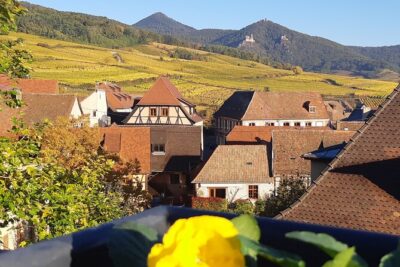
ICONICS Tour: 1/2 day on the Wine Route, visit of 2 Villages + Tasting.
Read our review →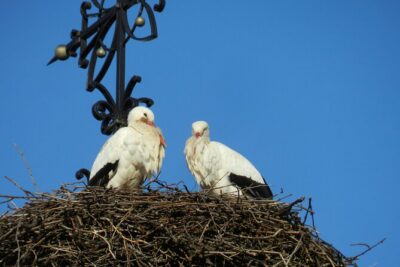
Safari-Tour Villages and vineyard, 1/2 day afternoon
Read our review →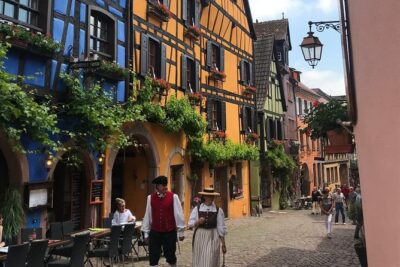
Private and customizable: Alsace Wine Route HIGHLIGHTS in 3 hours
Read our review →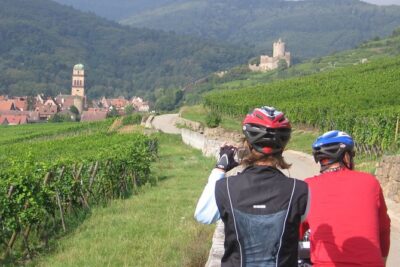
Through Alsace Vineyards and Wine Villages Private Bike Tour
Read our review →
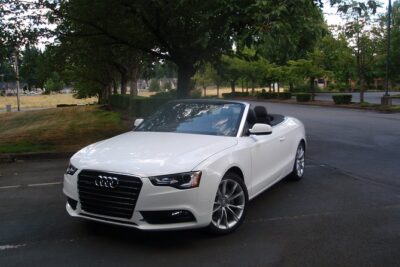
The most beautiful Alsatian villages in an Audi A5 Cabriolet by the Wine Route
Read our review →
Full Day Safari Tour Villages & Vineyards Wine tasting
Read our review →
Wine cellar visit & tasting of organic Alsace wines
Read our review →Browse the lists this tour appears in