REVIEW · PRIVATE
PRIVATE Tour of Baalbek Temples, Umayyad Anjar & Ksara Winery
Baalbek is the star of this private day trip, with Roman columns and temple ruins on a scale that can make even a seasoned sightseer stop and stare. You’ll also see the lesser-visited Umayyad city of Anjar and finish at Chateau Ksara, Lebanon’s oldest winery. Three major sights make this a useful way to spend one long day outside Beirut.
I like the door-to-door transport, since you avoid the strain of driving through unfamiliar roads and can enjoy wine tasting without worrying about the return trip. I also like the guide-led approach: Dave, also referred to as David, is praised for explaining Lebanon’s history, culture, and present-day life in clear English or French, with a good sense of humor.
The main drawback is the pace. Six to eight hours is enough for the three stops, but not for long, slow visits or a full meal. Lunch is not included, and alcoholic drinks are separate, so budget for those extras.
Key points to know before booking
- Baalbek gets two hours: See the temples of Jupiter, Bacchus, and Venus with admission included.
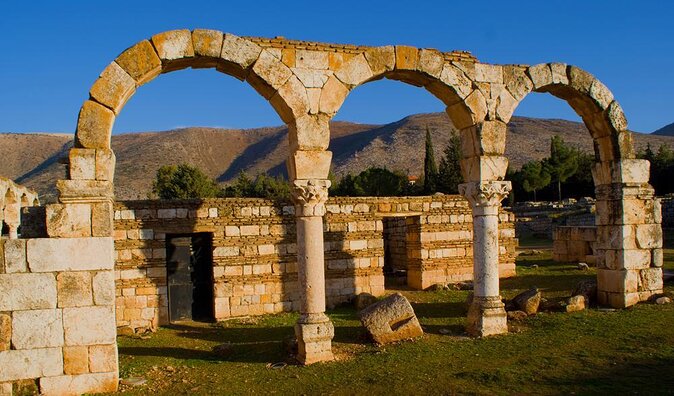
- Anjar adds a different chapter: Explore the only Umayyad ruins in Lebanon, with about one hour on site.
- Ksara is more than a tasting room: The visit includes the historic winery and its large natural cellars.
- Private transport saves time: Pickup and drop-off at your Beirut hotel are included, with no shared group to wait for.
- Dave is the guide to request: The experience can operate with a multilingual guide, and Dave is praised for his history knowledge, smooth driving, and easy conversation.
- Plan for a full day: The start time is 9 a.m., and the total outing usually runs six to eight hours.
Why this Beirut day trip works
Lebanon packs an unusual amount of history into a small area. On this outing, you move from the Roman world to the early Islamic period, then into the country’s long winemaking tradition. That variety is the real appeal.
Baalbek and Anjar are both UNESCO-listed sites, but they feel very different. Baalbek is monumental and theatrical. Anjar is more restrained, with the remains of a planned Umayyad city laid out in a way that helps you picture streets, public buildings, and daily life.
Chateau Ksara changes the mood again. After several hours among stone ruins, you get a chance to sit down, learn about Lebanese wine, and visit the winery’s natural underground cellars. The stops do not feel repetitive, which matters on a day trip with a fairly tight schedule.
The private format is another strong point. You are not waiting for a large coach group or following a guide who has to keep twenty or thirty people together. If your group wants more time at Baalbek and less time at Anjar, you can ask. The exact flexibility will depend on the day and the guide, but the private setup gives you a better chance to shape the rhythm.
More Private Wine Tours in the world:
- Private Self-Guided E-Bike Ride in Tuscany with Vineyard Visit
★ 5.0 · 775 reviews - Private Wine Tour with Wine Expert to Stellenbosch-Franschhoek Wine Regions
★ 5.0 · 693 reviews - Private Wine Tasting in the Setúbal Wine Region, from Lisbon
★ 5.0 · 611 reviews
Leaving Beirut at 9 a.m.
The tour begins with hotel pickup at 9 a.m. in Beirut. Round-trip transport, the driver-guide, taxes, and entrance fees are included, so the morning is simple: be ready in your hotel lobby and let the guide handle the route.
That convenience has real value in Lebanon. You do not need to arrange separate transfers to the Bekaa Valley, find parking at three different sights, or work out how to return after drinking wine. One published account describes a comfortable, air-conditioned car and a guide waiting in the hotel lobby, even for a one-person booking.
Because this is a private trip, your vehicle may be a car or minivan depending on your party. The experience is not described as a shared group tour. Only your own group participates, which is especially useful if you are traveling with family or friends and want to ask questions along the way.
The road time is part of the experience, too. Dave has been praised for talking about Lebanon’s culture and past during the drive, rather than treating the vehicle as dead time. If your guide is multilingual, English or French may be available, though you should confirm your preferred language when booking.
Baalbek and its enormous Roman temples
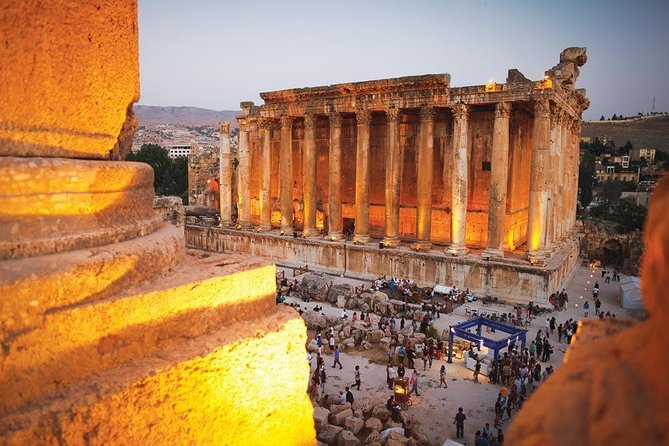
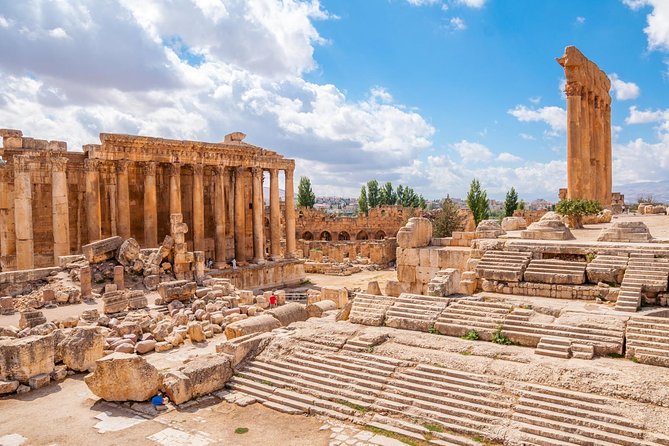
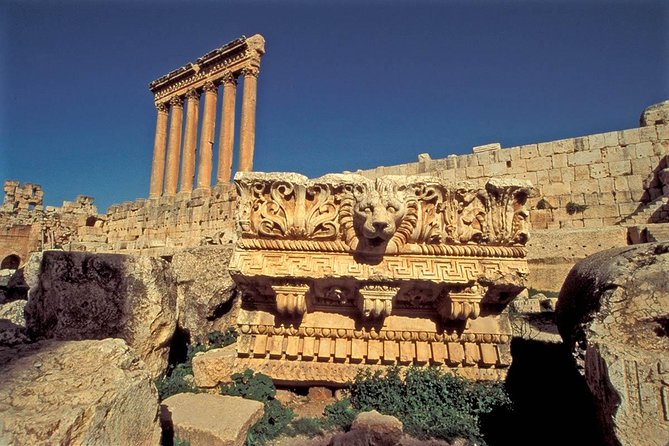
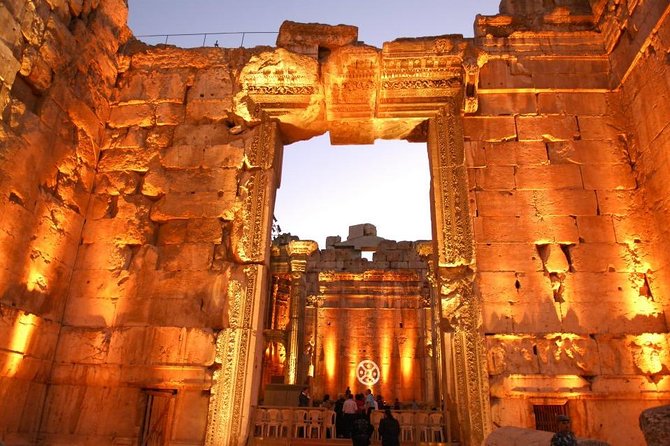
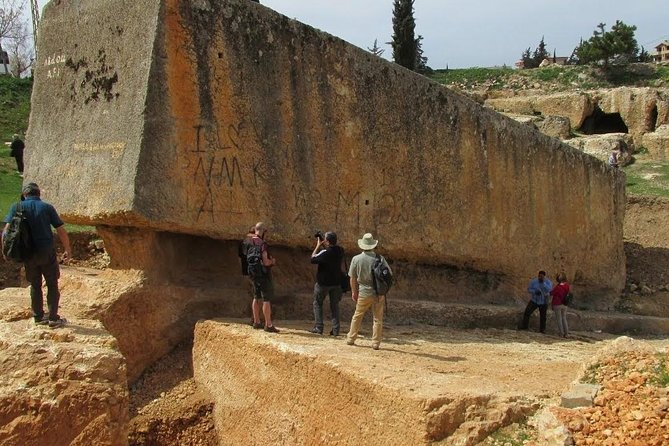
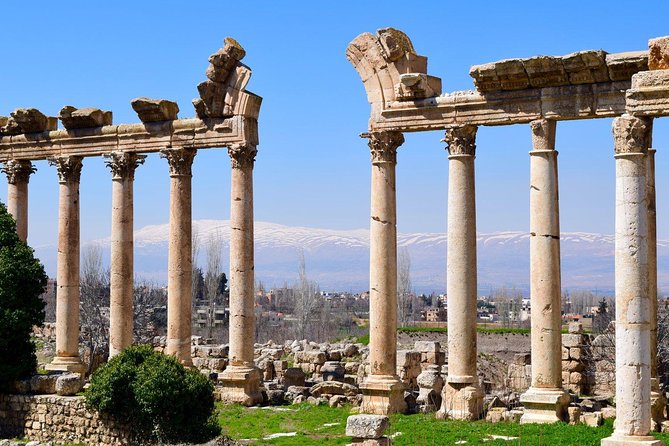
Baalbek receives the longest visit, about two hours, and rightly so. The complex includes the temples of Jupiter, Bacchus, and Venus, along with other Roman remains. The scale is the first thing you notice. Massive columns, broad stone platforms, and detailed carved fragments show how ambitious this ancient religious center was.
The Temple of Jupiter is the grandest part of the site. Even in ruin, it gives you a sense of the size of the original sanctuary. The Temple of Bacchus is smaller but often more complete in its surviving architectural detail, making it rewarding for close inspection. The Temple of Venus has a different shape and character, adding another visual contrast within the same complex.
A guide makes a meaningful difference here. Without context, Baalbek can become a sequence of impressive stones and hard-to-remember names. With a good explanation, you can understand how the temples fit together and why the site mattered across different periods. Dave is repeatedly praised for pointing out details that are easy to miss and for explaining the significance of the ruins rather than simply naming them.
You should wear comfortable shoes and bring water, especially in warm weather. The tour information does not specify the walking conditions in detail, but two hours among large archaeological remains naturally means time on foot and exposed ground. Smart casual dress is requested, so avoid treating this as a beach day.
The two-hour stop is generous enough for a proper guided visit, but it is not a full archaeological study. If you like to photograph every column from several angles or read every sign slowly, you may wish for more time. The advantage is that the schedule still leaves room for Anjar and Ksara.
Anjar, the Umayyad city in Lebanon
Anjar offers a sharp change from Baalbek. The site is described as the only Umayyad ruins in Lebanon, and its importance comes partly from its clear city plan. Instead of one giant temple complex, you see the remains of an organized settlement from the 8th century, built during the Umayyad period.
Allow about one hour here. That is enough for a focused walk through the ruins and an explanation of the city’s role, architecture, and place in Lebanon’s past. The shorter visit also keeps the whole day moving.
I like the inclusion of Anjar because it prevents the tour from becoming a Roman-only excursion. Baalbek is the visual powerhouse, but Anjar gives you a different way to think about the region. You are not just looking at isolated monuments. You are seeing evidence of a city, its layout, and a later phase of civilization in the same broad area.
The drawback is that one hour can feel quick if you are especially interested in early Islamic architecture. You will get a strong overview, but this is not the place for an unhurried specialist visit. Ask your guide to point out the most important structures early in the stop so you can use your time well.
The guide’s role matters at Anjar as much as at Baalbek. The site may not make an immediate impression in the same way as the huge Roman columns. A clear explanation helps you read the remains and understand why this quieter stop deserves its place on the route.
A few more vineyard days around the world worth a look
- Tuscany Day Trip from Florence: Siena, San Gimignano, Pisa and Lunch at a Winery
★ 5.0 · 21,634 reviews - Florence: Chianti Wineries Tour with Wine Tasting
★ 4.5 · 10,071 reviews - Porto: Douro Valley with Winery Lunch, Tastings & Cruise
★ 4.7 · 7,002 reviews - Barcelona: Montserrat, Cogwheel, Black Madonna & Winery Tour
★ 4.8 · 5,633 reviews
Chateau Ksara and Lebanon’s wine tradition
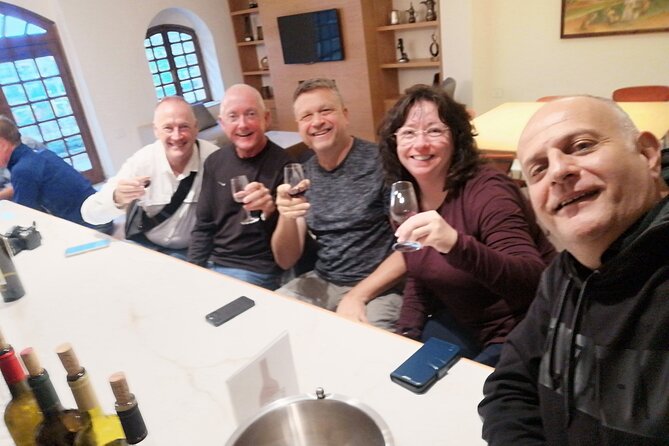
Chateau Ksara is the final scheduled stop, with about one hour for the winery tour and tasting. The property is described as Lebanon’s oldest winemaking chateau, and its natural cellars are a major part of the visit.
The underground sellers, more accurately described as cellars, add atmosphere and practical interest. You are not only tasting wine in a modern room. You are also seeing the storage spaces connected with the winery’s long tradition.
Wine tasting is not included among the tour’s listed inclusions, which means you should expect alcoholic drinks or purchases to cost extra. The tour does include the visit itself and the general fees and taxes listed by the operator. The minimum drinking age is 18.
This stop is a smart fit after the archaeological sites. It gives your feet a rest and lets you shift from ancient stonework to a living Lebanese industry. If you do not drink alcohol, the cellar visit may still interest you, but wine is clearly a central part of this stop.
Do not plan to drive yourself afterward. The tour’s private return transport is one of its practical strengths. You can take part in the tasting and leave the road to your guide.
What the guide adds to the day
The strongest theme in the feedback is the quality of the guiding. Dave is described as professional, entertaining, and highly informed about Lebanon’s history, culture, and people. One person even spent the drive asking him constant questions about the country and found that he could keep up.
That kind of guide is useful on a route with three very different stops. You need someone who can explain Roman religion at Baalbek, the Umayyad period at Anjar, and wine production at Ksara without making the day feel like three unrelated lectures.
The language record is also encouraging. Dave has been praised for speaking excellent English and French, while another account describes an easy, friendly conversation in Spanish. The tour may be operated by a multilingual guide, but the exact language available for your date is not guaranteed in the supplied details. Ask before confirming if language is important to you.
A guide can also help you use a limited schedule wisely. The route includes admission at each site, and the published timing is clear: two hours at Baalbek, one hour at Anjar, and one hour at Ksara. A guide who knows where to focus can keep you from wasting energy in less important corners.
Price, private value, and extra costs
At $113.34 per person, this is not the cheapest way to see Baalbek. It is also not a simple entrance ticket. The price includes hotel pickup and drop-off, a private driver-guide, local taxes, entrance fees, and the convenience of linking three major stops in one day.
For two or more people, the private format can make better financial sense than it first appears. You are paying for transport and guiding as well as the visits, and group discounts may be available. The value improves if you would otherwise need to hire separate transport or arrange several independent trips.
You should still plan for lunch, since it is not included. Alcoholic beverages are also excluded, so any wine tasting charges or purchases should be treated as additional spending. The supplied details do not give a fixed lunch stop or tasting price, so ask the operator if you need a firm daily budget.
I see the price as fair for someone who values time, comfort, and explanation. If you are happy navigating independently and only want entry to the ruins, you may find a self-guided approach cheaper. If you want the day handled from your hotel and prefer not to drive, the package is easier to justify.
Who should book this experience
I would recommend this trip to first-time visitors to Lebanon who want several major sights without building their own transport plan. It also suits couples, families with older children, and small groups who prefer a private day rather than a large coach.
It is a particularly good match for people who enjoy context. The ruins are spectacular, but the guide is central to making sense of them. If you like asking about politics, culture, religion, and the country’s past, the reports about Dave’s open conversation suggest this could be a strong fit.
It may be less suitable if you dislike full-day outings, want a slow lunch, or prefer to spend an entire day at one archaeological site. The route covers a lot, and the six to eight-hour estimate leaves limited room for long unplanned stops.
Children can participate, but they must be accompanied by an adult. Most people can take part, though the supplied information does not provide detailed accessibility notes. If anyone in your party needs special assistance, ask before booking.
The dress code is smart casual. That is easy to follow, but also sensible for a day that combines religiously important ruins, a winery, and a long drive.
Booking, cancellation, and practical planning
Confirmation is normally sent at booking. If you book within 12 hours of departure, confirmation arrives as soon as possible and remains subject to availability.
Free cancellation is available if you cancel at least 24 hours before the 9 a.m. start time. Changes or cancellations inside that 24-hour window are not accepted for a refund, and the local time in Lebanon controls the cut-off.
I would book with three simple questions in mind: Is pickup available at your exact Beirut hotel, which language will the guide use, and what will the winery charge for tasting? The tour details cover the main inclusions, but those points can affect your comfort and final cost.
Should you book the Baalbek, Anjar, and Ksara tour?
Book it if you want a well-organized day from Beirut that combines Lebanon’s biggest Roman site, an unusual Umayyad ruin, and a historic winery. The included transport and private format save effort, while the guide’s role adds the context these places deserve.
Skip it if you want a leisurely archaeological day, a guaranteed included lunch, or a low-cost self-guided outing. For most people with only limited time in Beirut, though, the mix is hard to beat. You see three distinct sides of Lebanon in one outing, and you do not have to take the wheel after the wine tasting.
FAQ
What time does the tour start?
The tour starts at 9 a.m.
How long does the experience last?
The outing lasts approximately six to eight hours.
Is hotel pickup and drop-off included?
Yes. Door-to-door round-trip transportation from your hotel is included.
Is this a private tour?
Yes. Only your own group participates in the activity.
Which sites are included?
The tour includes the Roman temples of Baalbek, the Umayyad city ruins of Anjar, and Chateau Ksara winery.
Are entrance fees included?
Yes. Admission tickets and all listed fees and taxes are included.
Is lunch included?
No. Lunch is not included in the tour price.
Are alcoholic beverages included?
No. Alcoholic beverages are not included. The minimum drinking age is 18.
Just added around the world
- Vineyard Tour and Tasting of Lugana Wines★ 4.5 · 6 reviews
- Day Trip to the Sancerre and Pouilly Vineyards★ 5.0 · 20 reviews
- Picnic and Lugana Tour at Perla del Garda winery★ 5.0 · 6 reviews
- Visit winery and vineyards, tasting 4 wines with 3 matching dishes★ 5.0 · 3 reviews
- Winery tours and tastings in Bolgheri with Wine Guide★ 5.0 · 16 reviews
- Guided tour of vineyards and winery with tasting 4 wines★ 4.5 · 12 reviews
- Private Chianti and SuperTuscan Tour 2 wineries with Light Lunch from Livorno★ 4.5 · 5 reviews
- Winery Tour & Tasting in Pisa Countryside★ 5.0 · 2 reviews
Private, compared.

Private Self-Guided E-Bike Ride in Tuscany with Vineyard Visit
Read our review →
Private Wine Tour with Wine Expert to Stellenbosch-Franschhoek Wine Regions
Read our review →
Private Wine Tasting in the Setúbal Wine Region, from Lisbon
Read our review →
Private Lisbon-Arrábida Wine Tour: 3 Wineries, Coast & Heritage
Read our review →
Private 6-Hour Tour of Three Etna Wineries with food&wine tasting
Read our review →