
REVIEW · BARCELONA
Bodega Barcelona Barrio Tradition in Bulk
Barcelona’s best food moments often happen in plain-looking bars, over a glass of vermouth or a small plate shared at the counter. This four-hour walk takes you through El Raval, Sant Antoni, Poble Sec, and Eixample, linking old bodegas with markets, tapas, and local drinks.
I like the tiny group size, capped at seven, and the way the experience ties food to architecture, city planning, and Catalan life. I also like that guides such as Ivan, Pam, Paola, Paula, and Senem bring their own warmth and local connections to the route.
The main consideration is the price: $160 per person is a serious spend for a food walk, and the exact stops or guide may vary. It is best for someone who wants context and conversation, not just a quick list of tastings.
Key points to know before booking
- Carajillo starts the story: Begin with coffee spiked with Catalan brandy in an old neighborhood haunt.
- Small groups matter: The maximum of seven makes conversation with the guide much easier.
- Food and city history share equal billing: Expect stories about architecture, planning, Catalonia, and daily life alongside the drinks and tapas.
- Vermouth is served the traditional way: Chilled, garnished with an olive, and paired with tapas, with a soda siphon available for a spritz.
- The route reaches beyond the postcard center: El Raval, Sant Antoni, Poble Sec, and Eixample offer a more local-feeling look at Barcelona.
- Plan ahead: The experience is often booked about 15 days in advance, and free cancellation ends 24 hours before the start.
Why this bodega walk feels different
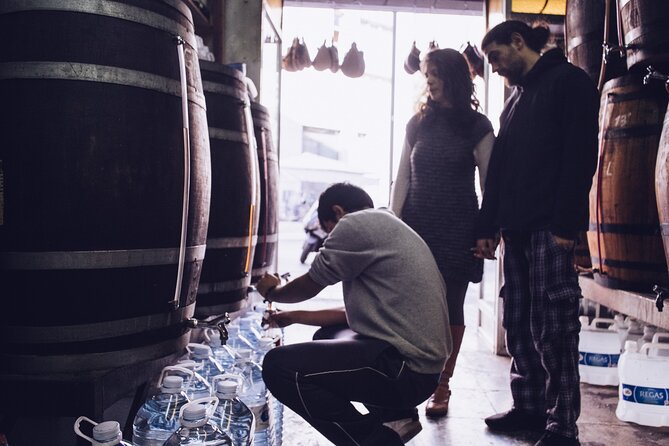
This is not a restaurant crawl built around famous addresses. It is a neighborhood walk built around the old bodega tradition, where drinks, snacks, conversation, and local identity often share the same small room.
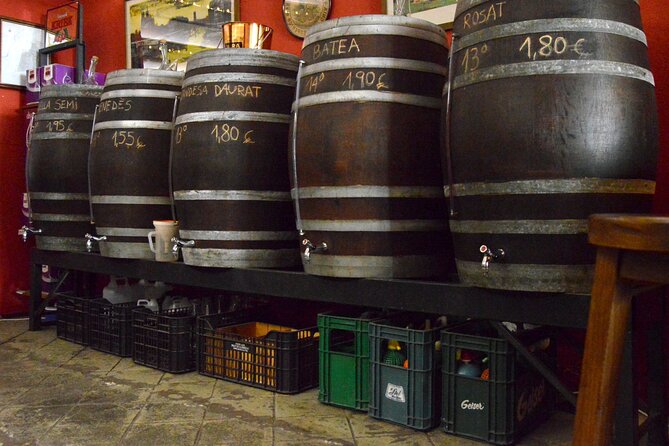
The word bodega can suggest a wine cellar, but in Barcelona it can also mean a modest neighborhood bar or shop with its own habits and regulars. The appeal here is the contrast. You may move from an old-fashioned place serving cava and Iberian ham to a tiny bar with an unfamiliar aperitif, then on to a more modern wine bar pouring vermouth from large barrels.
That variety gives the four hours a clear purpose. You are not simply sampling similar plates at several addresses. You are seeing how Barcelona’s drinking and eating customs have changed while older traditions remain in use.
The cultural side matters just as much. Ivan, one of the guides associated with the experience, is praised for explaining food, architecture, neighborhood history, and city planning. Pam and Pamela are noted for making bodega owners and staff feel like friends rather than formal stops on a paid route. Paola and Paula bring strong food knowledge, while Senem is known for greeting local people warmly and helping you feel at ease.
Your guide will vary, so you should not book expecting one specific person unless the operator confirms it. Still, the range of guide feedback points to the same strength: the personality and local relationships make the route work.
A few more vineyard days around Barcelona worth a look
- Barcelona: Montserrat, Cogwheel, Black Madonna & Winery Tour
★ 4.8 · 5,633 reviews - Montserrat with Black Madonna & Medieval Winery with Tapas/Lunch
★ 5.0 · 5,209 reviews - Montserrat Full Day Tour with Farmhouse Lunch and Winery Visit
★ 5.0 · 1,068 reviews
Starting around Mercat de Sant Antoni
The meeting point is Mercat de Sant Antoni in the Eixample area, at Eixample, 08015 Barcelona. The activity ends back at this meeting point, which makes arrival and departure simple.
The market is part of the route rather than just a place to meet. Inside, you will pass interesting stalls before stopping for a drink at a less obvious bar. This is a useful opening because the market gives you a quick sense of how food fits into ordinary city life. It is not only a monument for photographs. It is a working place connected to shopping, eating, and neighborhood routines.
The exact order of the listed stops may not feel perfectly linear on paper. The experience moves among El Raval, Sant Antoni, Poble Sec, and Eixample, so wear comfortable shoes and allow the full four hours. The provided details do not specify the exact walking distance or every transport segment, so ask the operator if mobility is a concern.
El Raval and the first carajillo
The first stop is El Raval, a historic and multicultural district with a strong everyday character. Here, the walk begins with a carajillo, coffee mixed with Catalan brandy, at a memorable local haunt.
That first drink sets the tone. You are introduced to a local custom before the tour becomes a sequence of larger tastings. It also gives the guide a natural way to explain how people drink, socialize, and use neighborhood bars in Barcelona.
A carajillo is not a light coffee. The brandy gives it a noticeable kick, so keep that in mind if you are starting early in the day or plan to continue drinking after the tour. The experience includes several alcoholic drinks, and one person described the route as an epicurean and alcoholic journey. That is a fair warning: this is not the right choice if you want a food walk with little or no alcohol.
El Raval can feel more ordinary and less polished than Barcelona’s best-known visitor districts. That is part of its appeal, but it also means the surroundings may feel rough around the edges. You are coming here for the neighborhood atmosphere and the food culture, not for a tidy sightseeing circuit.
Sant Antoni, Poble Sec, and the story behind the streets
After El Raval, the route continues toward the bodegas of Sant Antoni and Poble Sec. These districts help show the shift between older neighborhood traditions and newer food-and-drink businesses.
One stop is the Centre d’Interpretacio dels Tres Tombs de Sant Andreu, where you spend about 30 minutes learning about the neighborhood and its original character. The available details do not list every exhibit or activity inside, so think of this as a short cultural pause rather than a major museum visit.
That pause is valuable because it keeps the tour from becoming a string of snacks. Food makes more sense when you know something about the places that produced and consumed it. Guides have used maps to explain Barcelona and Catalonia, and this is the sort of setting where those stories can help you understand the city beyond its restaurant scene.
You will also stop around Casa Golferichs for what is described as the best bite of the route. Casa Golferichs is a community center, and its setting adds an architectural and civic layer to the experience. Again, the exact dish is not specified, so do not book with one particular food in mind.
I like this part of the route because it gives the walk some breathing room. You are not being rushed from counter to counter. You have time to look around, listen, and connect the food with the neighborhoods.
Same wine country, a different day out:
- Montserrat & Winery Visit Tour with Traditional Farmhouse Lunch
★ 4.5 · 1,035 reviews - From Barcelona: Penedés Vineyards Tour by 4WD w/Wine & Cava
★ 4.8 · 808 reviews - Barcelona: Montserrat with Winery, Lunch, and Train Options
★ 4.8 · 525 reviews - Montserrat,Vineyard, Wine Tasting Small Group Tour & Hotel Pickup
★ 5.0 · 513 reviews
Mercat de Sant Antoni and a less obvious drink stop
The market stop takes about an hour. You will walk through the market, look at selected stalls, and then head to a tucked-away place for a drink.
The strength here is the contrast between public market and private neighborhood bar. A market shows you ingredients and daily shopping habits. The drink stop shows you how people use those ingredients, traditions, and local places in social life.
The food may include some unusual items. Gildas, a sharp pintxo made around an olive, pickled pepper, and anchovy, have been a favorite for some people on this route. Other tastings have included Cava, Iberian ham, local vermouth, and unfamiliar aperitifs. The exact selection is not promised, so bring curiosity rather than a fixed checklist.
This is also where the guide’s local connections matter most. The difference between entering as a stranger and arriving with someone who knows the staff can change the entire mood. You may get a warmer welcome and a better explanation of what to order, even if the stop itself is small.
Eixample vermouth hour
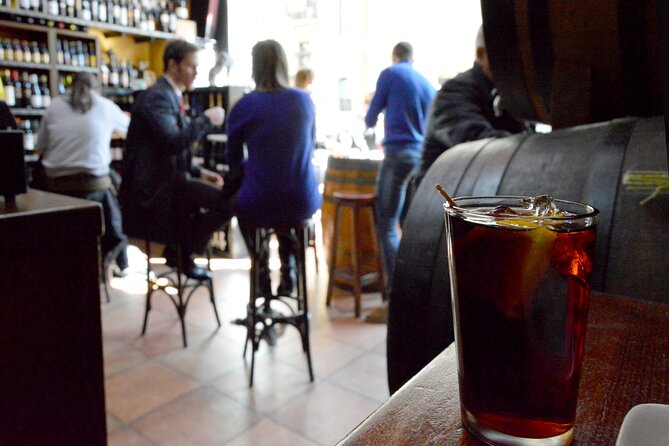
The final major food-and-drink section takes place during the traditional afternoon vermouth hour in Eixample. Vermouth is served chilled with an olive, alongside a few paired tapas. A soda siphon bottle is ready if you want to add a light spritz.
This detail is more important than it may sound. Vermouth in Barcelona is not only a bottle on a back bar. It is a social ritual, often tied to a relaxed snack before a later meal. The simple garnish and soda siphon show how the drink is traditionally enjoyed without turning it into a complicated cocktail.
The stop may also feature vermouth poured from large barrels at a modern wine bar. That gives you another useful contrast: the same drink can belong to an old family habit, a neighborhood bar, or a newer place with a more contemporary feel.
You should expect several tastes, but the information provided does not give a fixed number of servings or a complete food menu. If you have allergies or dietary limits, tell the operator before booking. One guide adapted tastings for a pescatarian diner, which suggests that some flexibility may be possible, but it should be confirmed in advance.
What the $160 price buys you
At $160 per person, this is not a bargain food walk. You are paying for roughly four hours, a maximum group size of seven, food and drink experiences along the route, and a guide who adds local background and personal connections.
The value depends on what you want from Barcelona. If you only want to eat as much as possible for the lowest cost, you can spend less by ordering tapas and vermouth on your own. You would also have more freedom to choose the menu.
I think the price makes more sense for a first visit, a short stay, or anyone who values explanation as much as the food. The guide can help you understand why a carajillo, Gilda, or vermouth matters, then give you ideas for using that knowledge during the rest of your time in Spain.
The small group is another part of the calculation. With seven people or fewer, you have a better chance to ask questions and hear the guide clearly. In some cases, only two people have booked, and the tour still ran rather than being canceled. That can result in a very personal experience, though it also means you may spend most of four hours in direct conversation with the guide.
Who will enjoy this most
I would choose this walk for a curious eater who wants to see Barcelona through ordinary bars, markets, and local customs. It suits people who enjoy trying unfamiliar drinks and asking why a place matters.
It also works well as an early activity in a longer Spain trip. The food and wine knowledge can help you order more confidently in Barcelona and in other regions later on. Several guides also offer advice about food and wine beyond the city.
This is a good choice for a cruise stop if you have only one day in Barcelona. The route gives you food, history, and neighborhood atmosphere in four hours, rather than asking you to spend the day inside major sights.
I would think twice if you dislike alcohol, need a guaranteed meal menu, or prefer a fixed schedule with named restaurants and exact dishes. The tour’s appeal comes from its local character, and that means the mood and stops may depend partly on the guide and the day.
Practical details that affect your day
The experience is offered in English and uses a mobile ticket. Confirmation is sent at booking, and the group can include no more than seven people.
Most people can take part, service animals are allowed, and the meeting point is near public transportation. The details do not specify the total walking distance, so ask before booking if you have limited mobility or need a slower pace.
Free cancellation is available if you cancel at least 24 hours before the start time. Changes or cancellations inside that window are not refunded. The cut-off follows local Barcelona time.
The activity requires good weather and a minimum number of participants. If poor weather or low enrollment causes cancellation, you can choose another date or experience, or receive a full refund. Since the tour is often booked about 15 days ahead, reserving early is sensible for a preferred date.
Should you book Bodega Barcelona?
Book it if you want Barcelona to feel like a city of neighborhoods rather than a list of famous sights. The best parts are the local bars, the traditional vermouth ritual, the links between food and city history, and the chance to talk with a guide such as Ivan, Pam, Paola, Paula, or Senem in a very small group.
Skip it if $160 feels too high for tastings, if you want a precise menu, or if several alcoholic drinks do not appeal to you. For the right person, this is a strong introduction to Barcelona’s everyday food culture, especially at the beginning of a Spain trip or during a short visit.
FAQ
Where does the tour start?
The tour starts at Mercat de Sant Antoni, Eixample, 08015 Barcelona, Spain.
Where does the tour end?
The activity ends back at the meeting point.
How long does the experience last?
The tour lasts approximately four hours.
What language is the tour offered in?
The tour is offered in English.
How many people can join?
The maximum group size is seven people.
What neighborhoods does the route visit?
The route includes El Raval, Sant Antoni, Poble Sec, and Eixample.
What drinks are part of the experience?
The route includes a carajillo with Catalan brandy, vermouth, and other drinks at the bodegas and bars. Cava, wine, and unfamiliar aperitifs may also appear, but the exact selection is not fixed in the provided details.
Does the tour include food?
Food is part of the route, including tapas and bites paired with drinks. Examples connected with the experience include Iberian ham and Gildas, but a complete fixed menu is not provided.
Can someone with a pescatarian diet take part?
A guide has adapted tastings for a pescatarian diner. You should still tell the operator about dietary needs before booking so the arrangements can be confirmed.
What is the cancellation policy?
You can cancel for a full refund up to 24 hours before the start time. Cancellations or changes made less than 24 hours before the experience are not refunded. If poor weather or insufficient enrollment cancels the tour, you can receive a full refund or choose another date or experience.
Just added around Barcelona
- eBike Tour from Barcelona with Alella D.O. Wine Tasting★ 4.5 · 6 reviews
- Winery Tour with Private Luxury Vehicle from Barcelona with Hotel pick up★ 5.0 · 2 reviews
- From Barcelona: Wine Cellar Visit in Penedes with Tasting★ 4.5 · 12 reviews
- WINE TOUR PRIORAT: Visit 2 Top Wineries, Wine Tasting & Gourmet Lunch★ 5.0 · 3 reviews
- 2 Wineries Small Group Tour with Free Hotel PickUp from Sitges★ 5.0 · 83 reviews
- Wine & Cava Penedes Tour: Wineries, Wine Tasting and Tapas★ 5.0 · 5 reviews
- Private Montserrat and Cava Winery Tour with Hotel Pick Up from Barcelona★ 5.0 · 79 reviews
- Montserrat with Black Madonna, Winery Tour & Lunch | Private Tour★ 5.0 · 15 reviews
Barcelona Vineyard Tours, compared.
Montserrat, Cogwheel, Black Madonna & Winery Tour
Read our review →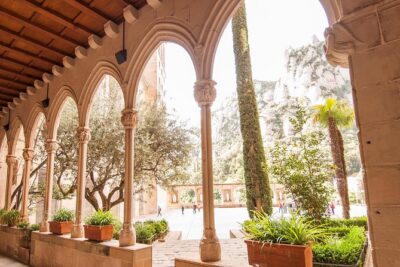
Montserrat with Black Madonna & Medieval Winery with Tapas/Lunch
Read our review →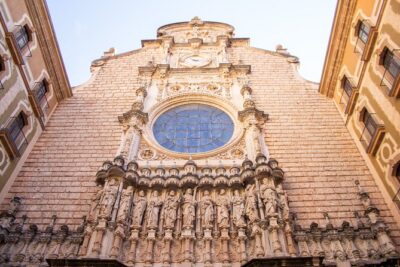
Montserrat Full Day Tour with Farmhouse Lunch and Winery Visit
Read our review →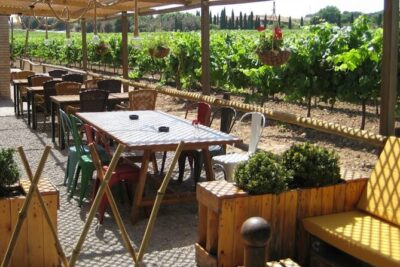
Montserrat & Winery Visit Tour with Traditional Farmhouse Lunch
Read our review →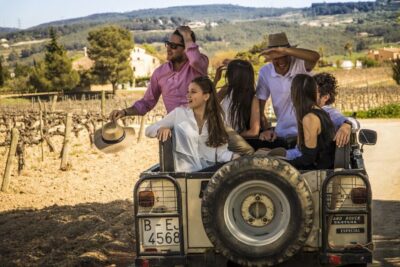
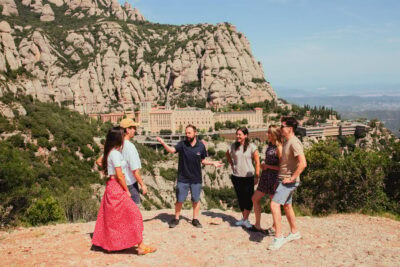
Montserrat with Winery, Lunch, and Train Options
Read our review →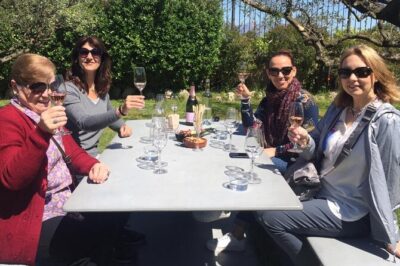
Montserrat,Vineyard, Wine Tasting Small Group Tour & Hotel Pickup
Read our review →
Barcelona Sailing Adventure and Small Group Winery Tasting Tour
Read our review →Browse the lists this tour appears in