
REVIEW · ITALY
Private tasting of organic wines in the cellar in Arezzo
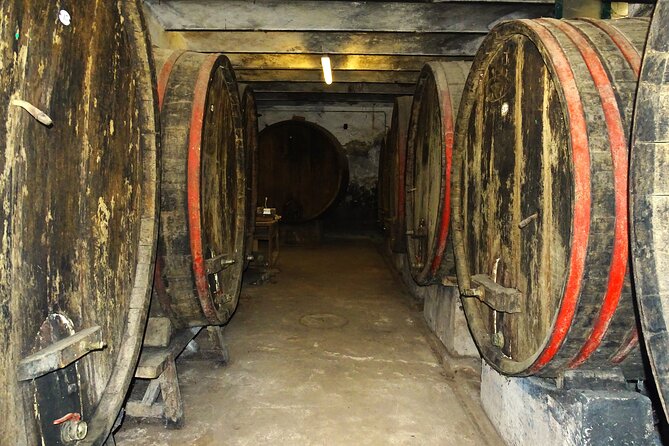
A century-old farm, several working cellars, and a tasting built around organic wine make this more than a quick pour-and-snack stop. You move from the new cellar and vat cellar to the vinsantaia and old cellar, hearing how Fattoria di San Leo shifted from sharecropping traditions toward a circular approach to farming. I like the direct connection between place, work, and food. I also like that the tasting includes proper Tuscan pairings, not just a few crackers.
The main consideration is the schedule. Visits are listed Monday through Thursday, from 10:30 a.m. to 6 p.m., and the tour lasts about 90 minutes, so it may not fit a tight Arezzo day trip. The activity is private for your group, but confirmation is subject to availability, so book ahead, especially since it is commonly reserved about a month in advance.
Key points at a glance
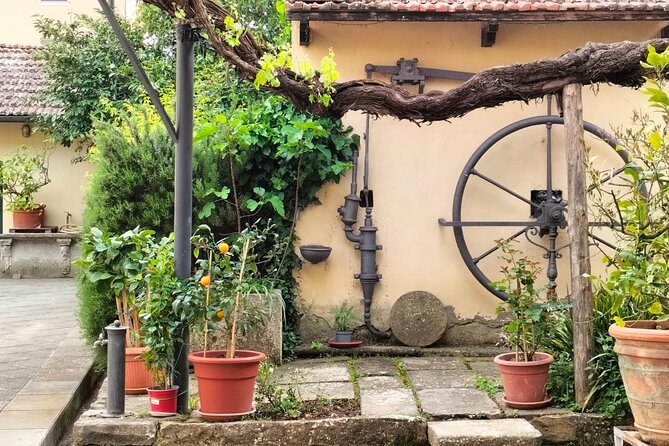
- Four cellar spaces: See the new cellar, vat cellar, vinsantaia, and old cellar, each with its own role and story.
- Organic Tuscan tasting: Sample Chianti DOCG, Rosso Toscano IGT, Bianco Toscano IGT, and Vin Santo DOC.
- Food from the region: Tuscan bread, estate olive oil, Arezzo cheeses, cold cuts, and cantucci accompany the wines.
- Circular-farm theme: Learn how processing waste can become useful, desirable products rather than something thrown away.
- Private format: Only your own group takes part, which allows a more personal pace and conversation.
- Friendly family welcome: Marco, Simone, Carlo, and Valentina are closely involved in explaining the farm and its products.
A farm story told through four working cellars
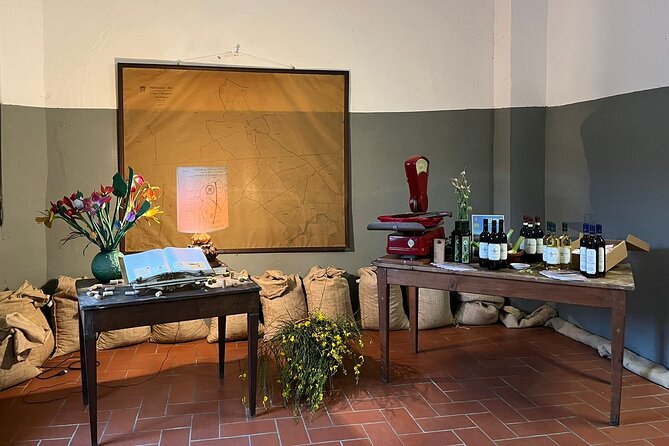
Fattoria di San Leo gives you a useful way to understand wine production without turning the visit into a technical lecture. The tour moves through the new cellar, vat cellar, vinsantaia, and old cellar, linking the farm’s past methods with its present work.
The old spaces matter because they show the physical side of farming. You can expect to see tools and objects connected with earlier production, along with explanations of which features remain unchanged and which spaces now serve a different purpose. That makes the visit more tactile than a standard tasting held at a polished bar.
The farm’s story begins with sharecropping, a familiar part of rural Tuscan life. The focus is not simply on dates or family names. You hear how the farm worked, how wine was made in earlier generations, and how the current owners have carried some of those habits forward while changing the business for the future.
The circular-economy idea gives the tour a distinct angle. You are shown processing waste and told how materials once treated as useless can be put to work in new ways. The point is practical rather than abstract: farming creates by-products, and careful producers can find value in them.
I like this part because it gives the wines some context before you taste them. You are not just comparing labels. You are connecting the glass to the cellar, the cellar to the farm, and the farm to a way of working that tries not to waste what it produces.
More Organic and Biodynamic Wineries in Italy
- Wine and food tasting in an organic family winery
★ 5.0 · 170 reviews - Winemaker for a Day: Tour an Organic Winery
★ 5.0 · 135 reviews - Tour and Tasting at an Organic Winery in the Heart of Chianti Classico Area
★ 5.0 · 132 reviews
How the 90-minute visit unfolds
The visit begins at Via di S. Leo, 23, just outside Arezzo. From there, the tour stays at the farm and ends back at the same meeting point. The listed duration is approximately one hour and 30 minutes, enough time for a guided look around and a generous tasting without taking up your whole day.
Expect the first part to focus on the estate and its working areas. You may move between rooms rather than remain in one tasting hall. Each environment has its own glass and its own part in the explanation, helping you see how wine changes from grape processing to storage and aging.
The vat cellar is where the production story becomes easier to picture. The wines are not presented as mysterious products. Instead, you learn about the patient stages of the work and the care required before a bottle reaches your table.
The vinsantaia is particularly useful for understanding Vin Santo, the sweet Tuscan wine served at the end of the tasting. Its place in the visit prepares you for a wine made through a slower, more traditional process than the younger reds and whites tasted earlier.
The old cellar supplies the strongest sense of continuity. It connects present-day organic production with the methods and equipment used in the past. If you enjoy old farm buildings, tools, and working spaces more than sleek modern tasting rooms, this part should appeal to you.
There is no indication that the itinerary includes a long walk through vineyards or a broad estate tour. The focus is the cellar and its connected spaces. That is worth knowing if you are looking for views, a vineyard stroll, or a full-day agricultural program.
The wine lineup, from Tuscan reds to Vin Santo
The central tasting includes four wines:
- Chianti DOCG
- Rosso Toscano IGT
- Bianco Toscano IGT
- Vin Santo DOC
The Chianti DOCG gives you the most familiar Tuscan reference point. It is the bottle to consider if you want to connect the tasting with the wine culture you will encounter across the region.
Rosso Toscano IGT provides a second red style. The IGT designation allows a producer more flexibility than the stricter DOCG rules, so tasting it beside Chianti helps you compare two approaches from the same part of Italy.
Bianco Toscano IGT changes the pace. Tuscan wine tours can lean heavily toward reds, so the white gives the tasting some balance. It should also work well with the bread, oil, cheeses, and cold cuts served alongside it.
Vin Santo DOC closes the flight. The accompanying cantucci are traditional, but the sweet wine is meant to be good enough to enjoy on its own. One particularly useful detail from the tasting comments is that the Vin Santo made a strong impression even without the biscuit. Try a sip first, then decide how much cantuccio you want with it.
The tasting is not framed as a blind competition or a formal wine class. It is a guided introduction to the farm’s own wines, with explanations of production, tradition, and the work behind each bottle. That makes it a good fit if you want to learn without needing a technical background.
Why the food pairings matter
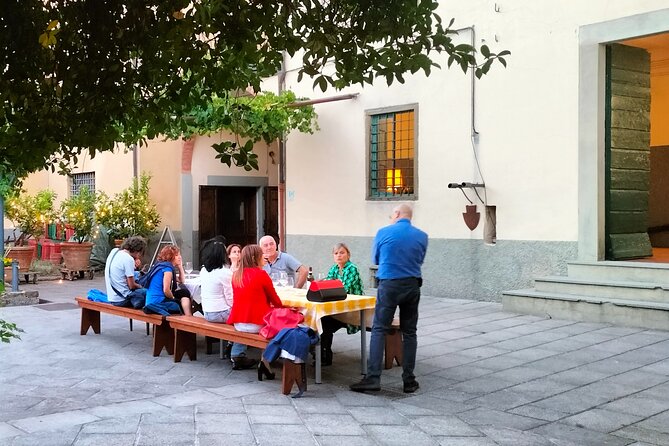
The food is a meaningful part of the price, not a decorative plate placed beside the wine. You receive Tuscan bread with the estate’s extra virgin olive oil, along with Arezzo cheeses and cold cuts. Vin Santo comes with cantucci.
The bread and oil pairing is especially useful because it lets you assess the oil directly. Good olive oil is easy to hide in a dish, but bread gives it nowhere to go. The visit also discusses the processing of grapes and olives, so the oil adds another part of the farm’s production story.
The cheeses and cold cuts provide salt, fat, and texture for the reds and white. They also make the tasting feel more like a small Tuscan food experience than a series of isolated sips. You get a better sense of how local products are meant to work together at the table.
The cantucci are the familiar final touch, but do not rush to dunk them. Try the Vin Santo by itself first. Its sweetness and character may be easier to appreciate before the biscuit changes your palate.
If you need a full meal, keep your expectations in check. The food is described as a tasting accompaniment, not lunch or dinner. For most people, it should be substantial enough for the visit, but you may still want a later meal in Arezzo.
More Wine Cellar Visits in Italy
- Montepulciano: Wine Tasting and Cellar Tour
★ 4.8 · 545 reviews - Modena: Balsamic Lunch with Vinegar Cellar Tour and Tasting
★ 5.0 · 395 reviews - Tasting Tour in One of The Most Beautiful Cellars in the World
★ 5.0 · 278 reviews - Abellonio Cascina Piccaluga – visit to the vineyards, to the wine tasting cellar
★ 5.0 · 237 reviews
A private visit with a family feel
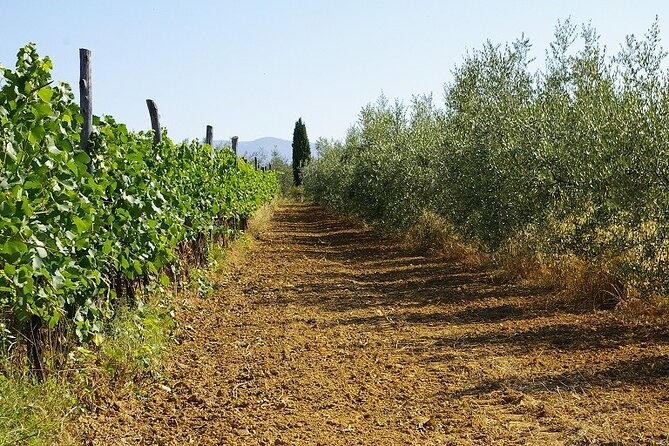
The private setup is one of the strongest reasons to choose this activity over a larger winery stop. Only your group participates, so the pace can feel more personal. You can ask about the wines, the cellars, the farm’s past, or the circular-economy work without trying to speak over a busload of people.
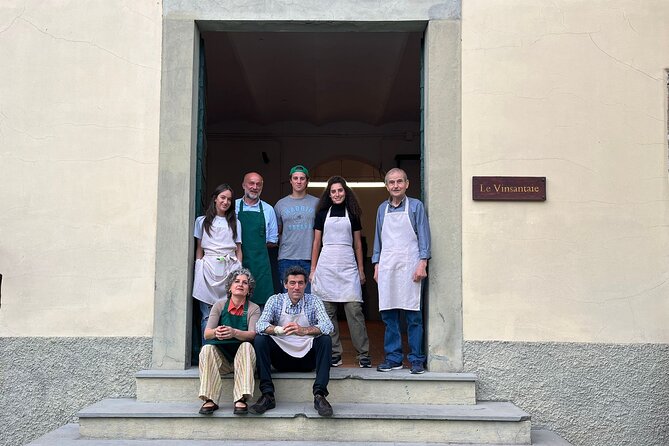
The people associated with the welcome include Marco, Simone, Carlo, and Valentina. Simone is described as closely involved in the family business and able to explain its past, present, and future plans. Carlo and Valentina are also involved in hosting and presenting the wines and oil.
The tone is warm and informal. You should expect patient explanations rather than a rushed speech followed by a sales pitch. Language support is also mentioned in connection with the hosts, though the exact languages available for every departure are not specified. If language is important to you, ask when booking.
A private tour does not automatically mean you can choose any time you want. The listed hours are Monday through Thursday, 10:30 a.m. to 6 p.m., and booking confirmation arrives within 48 hours if space is available. The limited schedule is the main practical weakness.
What the price means at $38.45
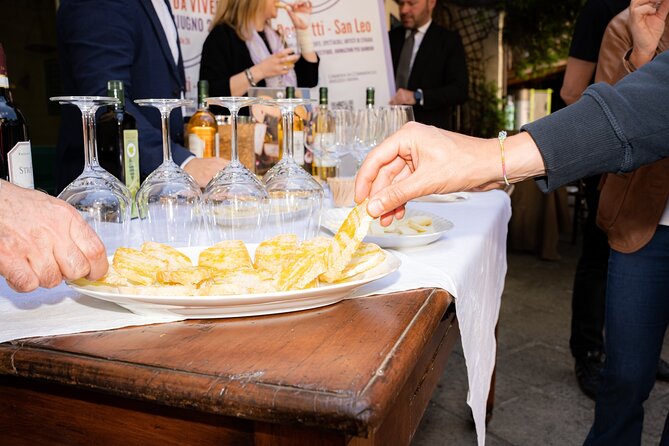
At $38.45 per person, this is priced above a basic tasting of two or three wines, but the comparison is not quite fair. You are paying for about 90 minutes, a private visit, access to several cellar areas, a guided explanation of the farm, four wines, olive oil, bread, cheeses, cold cuts, and cantucci.
The value improves if your group is interested in both wine and food. A short pour at a shop may cost less, but it will not give you the same connection to the production spaces or the farm’s reuse of processing materials.
Group discounts are available, though the exact discount is not provided. If you are booking with family or friends, check the final group price rather than assuming the per-person rate is fixed.
The activity is best judged as a compact cultural visit with wine, not simply as a wine flight. If you want a formal lesson on Tuscan grape varieties, extensive vineyard time, or a large selection of bottles, the price may feel less appealing. If you want a personal introduction to one Arezzo-area farm, it is a reasonable spend.
Who should book this Arezzo tasting
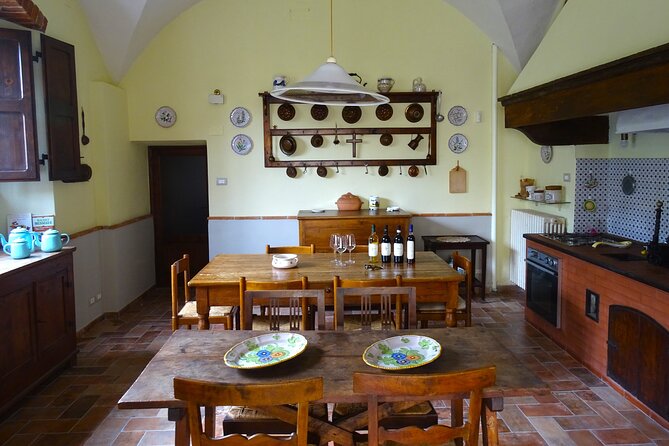
I would recommend it to couples, families, and small groups who want a relaxed food-and-wine stop close to Arezzo. It should also suit people who care about organic production, traditional methods, and the practical side of farming.
You do not need advanced wine knowledge. The explanations are designed to connect the products with the place, so beginners can follow along. At the same time, anyone who already enjoys Tuscan wine will have several styles to compare.
This may not be the right pick if you want a late-evening activity. The listed opening days and hours stop at Thursday and 6 p.m. It also may not suit someone seeking a vineyard walk, expansive countryside views, or a long multi-course meal.
Most people can participate, and service animals are allowed. The farm is near public transportation, though no specific route or travel time is provided. Use the mobile ticket option, and confirm the meeting details before setting out.
Booking and cancellation details
The activity is commonly booked about 31 days ahead, which suggests you should not leave it until the final morning of your Arezzo stay. Confirmation is sent within 48 hours, subject to availability.
You can cancel for a full refund up to 24 hours before the local start time. Cancellations or changes made less than 24 hours ahead are not accepted for a refund. That policy is fairly flexible, but it still matters if your Italian itinerary is likely to shift.
Should you book Fattoria di San Leo?
Book this private tasting if you want personal hosting, organic Tuscan wine, and a real look at a working farm’s cellars. The strongest parts are the family connection, the four distinct cellar spaces, the careful food pairings, and the way waste products become part of the farm’s wider story.
I would skip it only if your schedule does not allow a weekday visit, or if you want a large vineyard estate with long walks and a much bigger wine selection. For a 90-minute stop near Arezzo, the mix of history, practical farming, wine, oil, and local food offers good value. The Vin Santo and cantucci are a fine finale, but the best reason to book is the chance to see how the whole farm fits together before you taste what it produces.
FAQ
Where does the private wine tasting take place?
It takes place at Fattoria di San Leo, Via di S. Leo, 23, 52100 Arezzo AR, Italy.
How long does the experience last?
The visit lasts approximately one hour and 30 minutes.
Which wines are included?
The tasting includes Chianti DOCG, Rosso Toscano IGT, Bianco Toscano IGT, and Vin Santo DOC.
What food is served with the wine?
You receive Tuscan bread with the farm’s extra virgin olive oil, Arezzo cheeses, cold cuts, and cantucci with Vin Santo.
Is this a private activity?
Yes. Only your own group participates in the activity.
When is the experience available?
The listed opening schedule is Monday through Thursday, from 10:30 a.m. to 6 p.m., for dates between May 5, 2024, and March 3, 2027.
Is the location near public transportation?
Yes. The activity information states that the farm is near public transportation.
Can I cancel for a full refund?
Yes, if you cancel at least 24 hours before the experience start time. Cancellations or changes made less than 24 hours ahead are not eligible for a refund.
More Food and Drink Experiences in Italy
- Florence: Chianti Wineries Tour with Wine Tasting
★ 4.5 · 10,071 reviews - From Florence: Private Chianti Hills Tour with Tasting
★ 4.3 · 809 reviews - Lucca: Guided Winery Tour with Wine Tasting
★ 4.7 · 611 reviews - Olbia: Gallura Winery Guided Tour with Tasting
★ 4.7 · 451 reviews
Just added around Italy
- Vineyard Tour and Tasting of Lugana Wines★ 4.5 · 6 reviews
- Picnic and Lugana Tour at Perla del Garda winery★ 5.0 · 6 reviews
- Visit winery and vineyards, tasting 4 wines with 3 matching dishes★ 5.0 · 3 reviews
- Winery tours and tastings in Bolgheri with Wine Guide★ 5.0 · 16 reviews
- Guided tour of vineyards and winery with tasting 4 wines★ 4.5 · 12 reviews
- Private Chianti and SuperTuscan Tour 2 wineries with Light Lunch from Livorno★ 4.5 · 5 reviews
- Winery Tour & Tasting in Pisa Countryside★ 5.0 · 2 reviews
- San Gimignano and Winery Experience with Lunch from Livorno★ 5.0 · 3 reviews
Italy Vineyard Tours, compared.
Tuscany Day Trip from Florence: Siena, San Gimignano, Pisa and Lunch at a Winery
Read our review →

Half day Chianti Vineyard Escape from Florence with Wine Tastings
Read our review →
Tuscany Wine Tour: 2 Wineries & San Gimignano from Florence
Read our review →
Chianti Wineries Tour with Tuscan Lunch and San Gimignano
Read our review →
Private Self-Guided E-Bike Ride in Tuscany with Vineyard Visit
Read our review →
Browse the lists this tour appears in