
REVIEW · MADRID
Madrid: half day wine region tour
Madrid’s wine country begins surprisingly close to the capital. In about 40 minutes, you leave city traffic behind for vineyards, olive groves, cereal fields, and old Castilian villages. I like that this is not simply a tasting-room hop: you visit two family-scale wineries and hear directly from the people who make the wine.
I also like the small group of no more than eight, plus an English and Spanish-speaking guide trained as a winemaker. Enrique has earned especially warm praise for his lively explanations. The main drawback is practical: hotel pickup is not included, and six hours with several tastings may feel long if wine is only a minor interest.
Key points to know before booking
- Two working wineries: You visit producers in the Denominación de Origen Vinos de Madrid, not just a shop selling bottles.
- At least six wines: Tastings include reds, whites, rosés, and sparkling wines, with grapes such as Tempranillo, Garnacha, Malvar, Syrah, and Cabernet Sauvignon.
- A close look at rural Madrid: The route passes olive trees, vineyards, grain fields, medieval villages, churches, and traditional plazas.
- A useful guide makes the difference: Your bilingual guide is trained as a winemaker and certified as a wine expert. Enrique is one guide named in the available tour information.
- Food is part of the day: Appetizers accompany the tastings, and one account specifically notes wine and tapas leaving them very full.
- Simple meeting point: Meet at Granier bakery near Menéndez Pelayo Metro, one stop from Atocha Station.
Why Madrid’s wine country is worth your time
Madrid is better known for the Prado, the Royal Palace, and late dinners than for wine. Yet the surrounding Community of Madrid has its own wine designation, Vinos de Madrid, which has produced recognized wines for more than 30 years.
That makes this outing useful for anyone who wants to see a side of the region that is easy to miss from the city center. You are not heading to a famous wine capital with grand estates and polished tourism facilities. Instead, you are visiting smaller, family-scale producers where the focus is on the vineyard, the cellar, and the bottle.
I like that distinction. The experience is likely to feel more personal than a large commercial tasting. You get a chance to understand how wine is made in this part of Spain and how local grapes express the dry Castilian setting.
The tour also gives you a better sense of Madrid as a region. Vineyards are mixed with olive groves and cereal fields, and old villages appear along the route. It is a good match for you if a day outside the city should include scenery and local culture, not only alcohol.
A few more vineyard days around Madrid worth a look
- Toledo Tour & Vineyard Walk with Wine Tasting from Madrid
★ 5.0 · 2,546 reviews - Madrid Countryside Wineries Guided Tour with Wine Tasting
★ 5.0 · 740 reviews - Ribera del Duero Wineries Guided Tour & Wine Tasting from Madrid
★ 5.0 · 328 reviews
Meeting near Atocha and setting out by Mercedes van
The day begins at Granier, a small coffee and bakery shop close to Menéndez Pelayo Metro station. The station is on Line 1, and it is only one stop from Atocha, making the meeting point fairly easy to reach if you are staying in central Madrid or arriving by train.
Hotel pickup and drop-off are not included, so allow time to get there on your own. This is not a door-to-door excursion. The tradeoff is a central, public meeting point and a small group rather than a large coach collecting people from many hotels.
You then travel in a Mercedes van. The first drive takes about 45 minutes, giving you time to watch the city give way to open fields and cultivated land. Since the full outing lasts six hours, the van transfer is a meaningful part of the day, but it also keeps the schedule practical. You can reach the wine area without spending a full day on the road.
The group is limited to eight people. That matters at a winery. A small party can usually gather around the winemaker, ask questions, and hear explanations without the echo and delay that come with a large bus group.
The first winery: family wine and a proper tasting
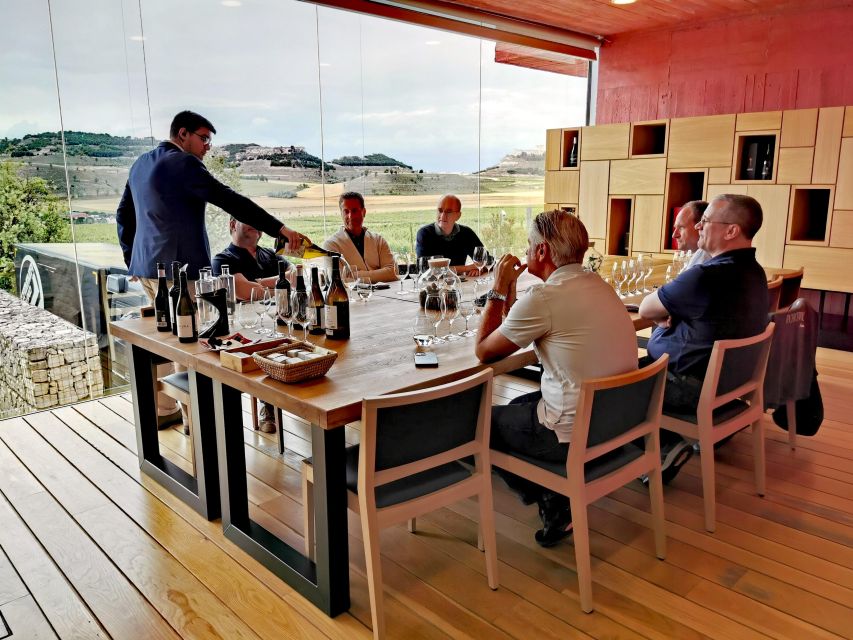
The first winery visit lasts about 105 minutes, or nearly two hours. That is enough time for more than a quick pour and a rushed photograph.
The focus is on the winery itself and on its top wines. Tastings include at least six wines across the full day, with reds, whites, rosés, and sparklings included. The exact number poured at each stop is not specified, so you should think of six as the minimum rather than a fixed number at each winery.
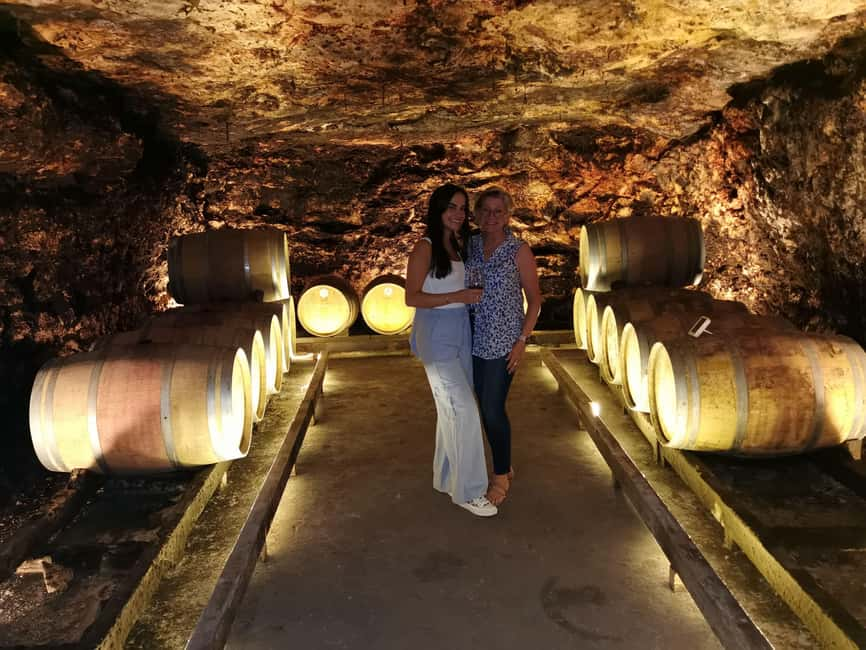
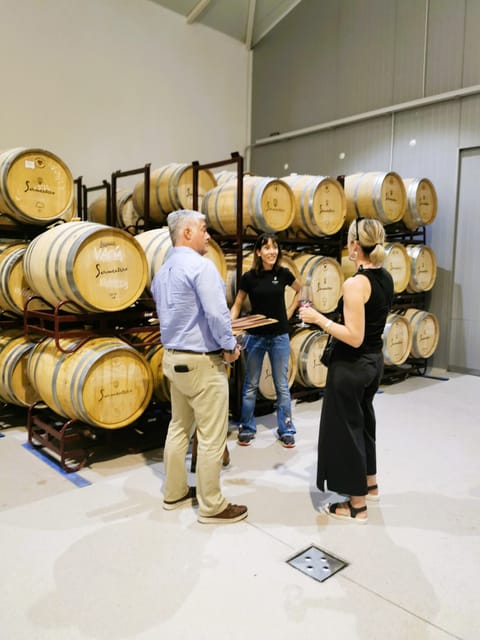
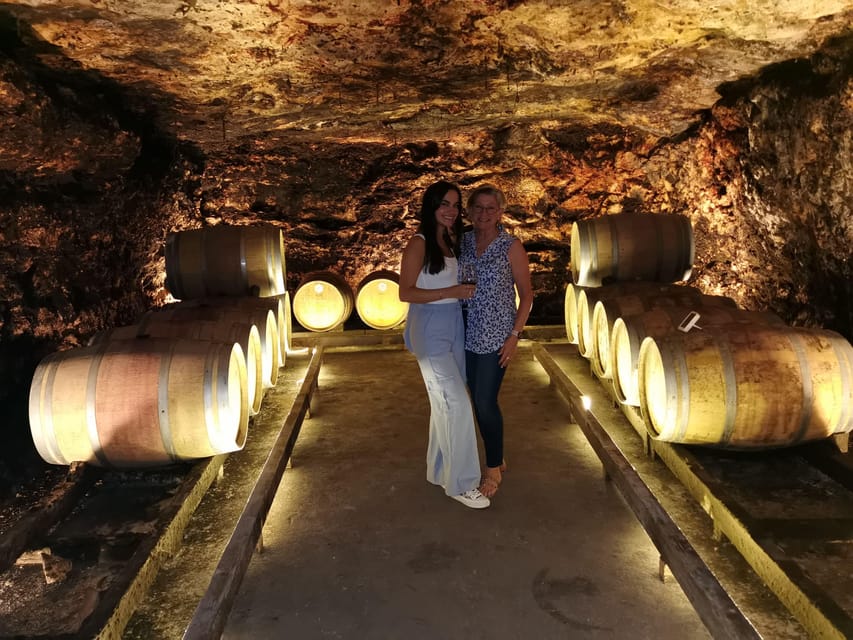
The grape varieties help explain the character of Madrid wine. You may encounter Tempranillo, Cabernet Sauvignon, Garnacha, Syrah, or Malvar. Some bottles are meant to be easy to drink, while others gain complexity from time in oak barrels.
That range gives the tasting a useful structure. You are not comparing six nearly identical reds. You can consider how different grapes and methods create different styles, from lighter and fresher wines to fuller bottles shaped by oak aging.
The most valuable part is the chance to hear from the winery owners, winemakers, or cellar masters. The tour description specifically says the tasting is led by the owners and that the wineries remain family-scale operations. That puts the wine in context. You are tasting a product connected to a working household and local business, not an anonymous label.
Appetizers are included. One detailed account praised the combination of wine and tapas and noted that the food was substantial enough to leave them very full. You should not treat the included appetizers as a full restaurant lunch unless told otherwise, but they do make the tasting more comfortable and help keep the day from becoming a series of empty-stomach pours.
Chinchón, Colmenar de Oreja, and the rural route
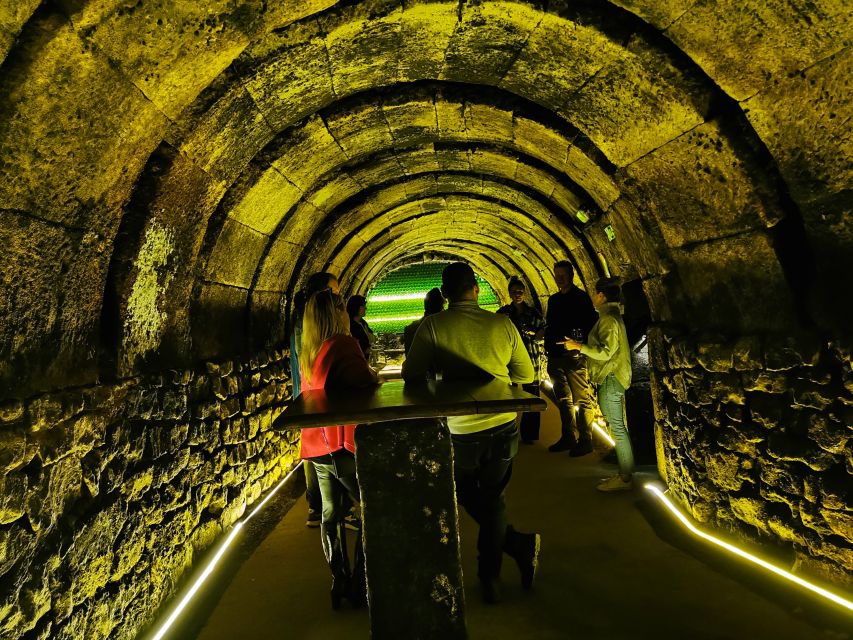
Between the two wineries, the van passes through or near traditional villages such as Chinchón and Colmenar de Oreja. The stop is scheduled for about 30 minutes, with scenic views along the way.
Do not expect a long guided town visit in that short window. Instead, this portion gives you a quick look at the kind of old settlements that shape the wine region. Medieval architecture, churches, and plazas mayores provide a useful contrast to the vineyards and olive trees outside town.
Chinchón is especially associated with a classic Spanish village setting, while Colmenar de Oreja has its own historic character. The available details do not promise a particular monument entry or a full walking tour, so keep your expectations focused on a brief village stop and views from the route.
I consider this a real strength of the experience. A winery-only tour can feel enclosed, with one cellar blending into the next. The village stop breaks up the tastings and helps you connect the wine to the wider area.
The timing also keeps the excursion from becoming too demanding. You get a pause after the first long tasting, but not enough time for an independent exploration of every street. If you want a detailed archaeological or architectural tour, this is not the right format. If you want a taste of rural Madrid alongside the wine, the stop works well.
Same wine country, a different day out:
- From Madrid: Toledo Guided Tour & Winery Visit with Tasting
★ 4.8 · 313 reviews - Madrid Region Wineries Guided Tour with Wine Tastings
★ 4.9 · 222 reviews - Ribera del Duero:4 Wineries, tasting & Lunch included from Madrid
★ 5.0 · 199 reviews - Madrid: Toledo Day Trip with Winery Visit and Wine Tasting
★ 4.4 · 177 reviews
The second winery and a wider range of bottles
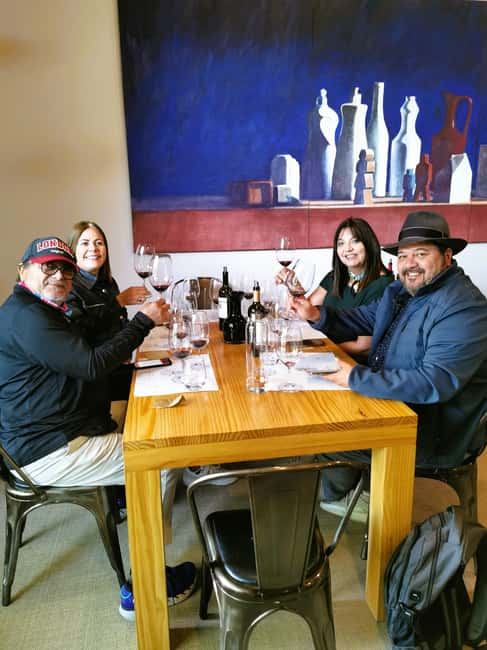
The second winery also receives about 105 minutes. By this point, you will have a basis for comparison. You can ask better questions about grape varieties, oak, aging, and the differences between producers.
The wineries are described as centennial businesses still operating on a family scale. That is an appealing combination. Their roots reach back through several generations, but the operation is not presented as a mass-market attraction.
One winery specifically named in the available information is Jesús Díaz e Hijos. If that producer is part of your scheduled visit, you will see one example of the small, family-run style that defines the tour. The exact winery lineup may depend on the day and operating schedule, so I would not book this expecting a guaranteed pairing unless the provider confirms it.
The second tasting is also a chance to revisit the guide’s explanations. A good wine tour is not only about the number of glasses. It should help you notice why one bottle tastes fresher, fuller, fruitier, or more shaped by barrel aging.
The guide is bilingual in English and Spanish and trained as a winemaker, with wine-expert certification. That is particularly useful if you want more than a basic introduction. You can ask about local grapes, cellar methods, and why Madrid wine may taste different from bottles associated with Rioja or Ribera del Duero.
The information supplied does not give a detailed technical lesson plan, so I would not assume a formal class with printed tasting sheets. The strength here is direct conversation and guided tasting in the wineries themselves.
What the scenery adds to the tasting
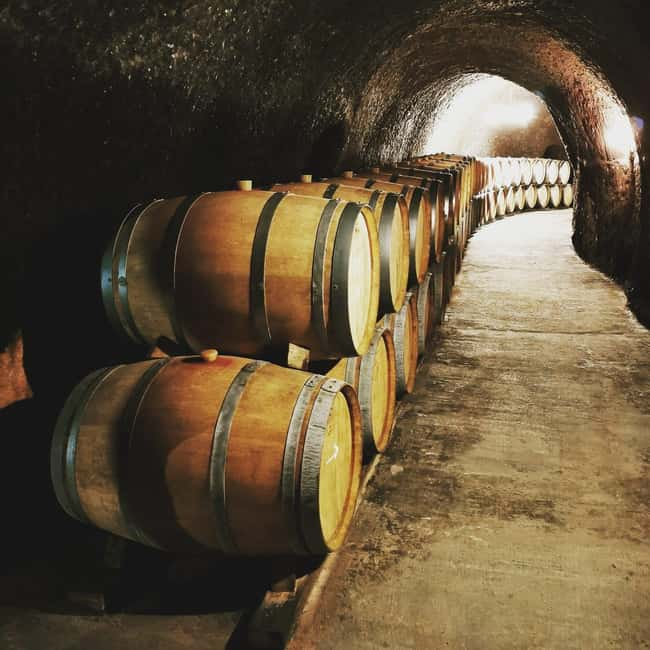
The countryside is not just a backdrop between stops. Vineyards, olive groves, and cereal fields show how several forms of farming share the same dry interior setting.
That setting helps explain why place matters in wine. Even without a long lecture on soil and climate, you can see the crops that define the region and understand that the wine is part of a broader agricultural culture.
The route also gives you a break from Madrid’s dense urban rhythm. The drive is short enough to remain convenient, but long enough for a clear change of pace. You might find the best moments come between formal stops, when the van passes fields and villages and the guide points out what you are seeing.
Weather is not a reason to assume the tour will be canceled. The outing runs rain or shine, so bring comfortable clothes and shoes that can handle a winery visit and a short village stop. The information does not specify walking distances or ground surfaces, so sensible footwear is the safest choice.
The guide, group size, and the social side of the day
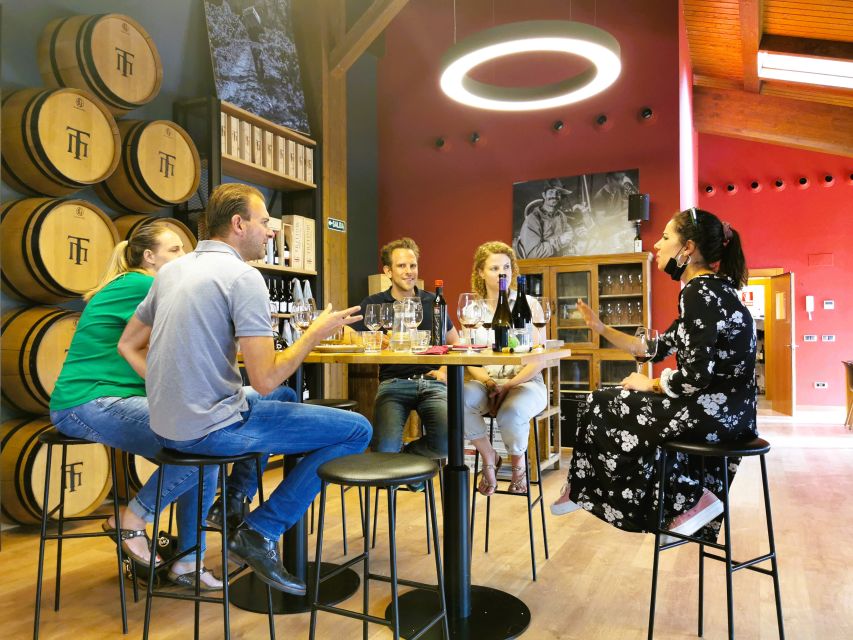
A small group can shape the whole experience. With no more than eight participants, you are more likely to have a conversation with the guide rather than simply listen from the back of a bus.
The guide’s wine training is important because the day includes several styles and grape varieties. You do not need to arrive with technical knowledge. The purpose of the guide is to help you make sense of what is in the glass and connect it to the place.
Enrique is named in the available feedback and is described as lively, funny, and very informative. That combination matters. Wine talk can become overly technical or overly vague, while a guide who explains clearly and keeps the mood light makes a six-hour outing easier to enjoy.
The bilingual format also works well for mixed groups. English and Spanish are offered, though the precise language arrangement for each departure is not stated. If you need one language throughout, confirm that when booking.
This tour is best for adults who enjoy conversation, food, scenery, and a moderate amount of wine. Children under 16 are not permitted, and the stated upper age limit is 95. The age rules are clear, but the tour does not provide detailed accessibility information, so you should ask the provider about mobility needs before reserving.
Is $182 a fair price?
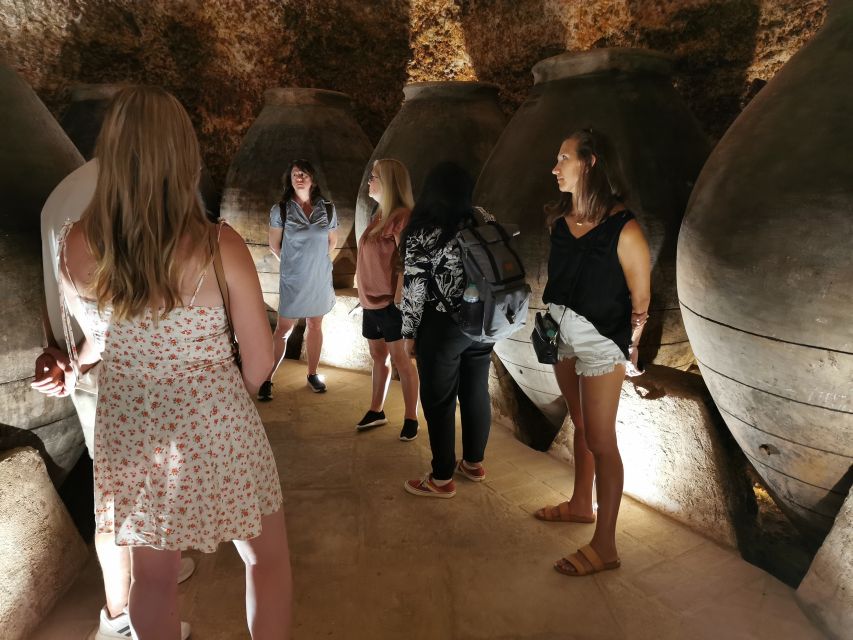
At $182 per person, this is not the cheapest way to taste Spanish wine. The price includes transportation in a Mercedes van, two complete winery visits, at least six wines, a bilingual wine-trained guide, and accompanying appetizers.
I think the value depends on what you would otherwise need to arrange. Reaching two wineries outside Madrid on your own would require transport planning, navigation, and a safe way to return after tasting. This tour combines the driving with interpretation and food in one six-hour package.
The small group adds value, too. You are paying for access to a more personal outing rather than a large coach excursion. If your main goal is simply to drink inexpensive wine, the price will seem high. If you want a structured introduction to Madrid’s wine region without renting a car, the cost is easier to justify.
Hotel pickup is not included, which keeps the price from being fully door-to-door. You will need to reach Granier near Menéndez Pelayo Metro on your own. For many people, the connection from Atocha makes that manageable.
Free cancellation is available up to 24 hours before departure, and you can reserve now and pay later. Those terms give you some flexibility, but check the available start times because the exact departure schedule is not fixed in the supplied information.
Who should book this six-hour wine outing?
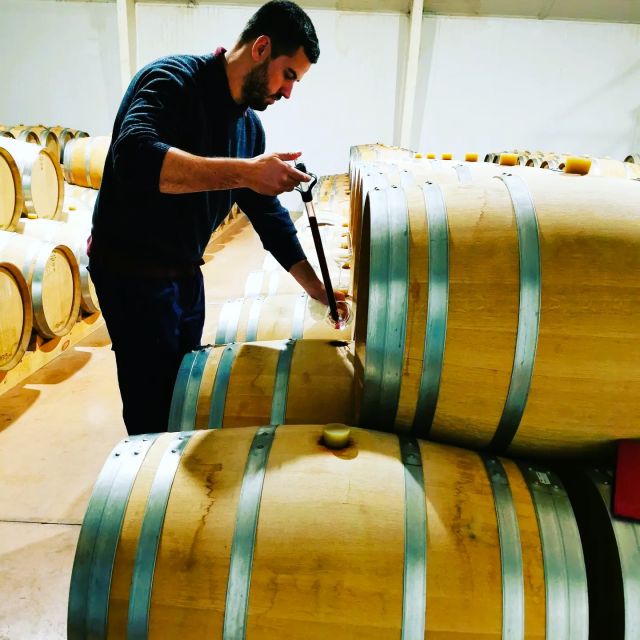
I would recommend it to you if you want to pair Madrid with a short rural escape. It suits adults who enjoy small producers, regional food, old villages, and a guide who can explain wine without making the day feel like a lecture.
It is also a strong choice if you do not want to drive. The van handles the countryside connections, and the small group keeps the day personal.
I would hesitate if you want a full town tour, a large historic estate, or a highly formal wine course. The village stop is brief, the exact wineries may vary, and the experience is built around tasting and conversation rather than extensive sightseeing.
You should also think about the six-hour length. With two tastings of about 105 minutes each, this is a substantial half-day. The appetizers help, but wine remains the central subject.
Should you book it?
Book this tour if you want to see the quieter side of Madrid and learn how local wine is made from people close to the work. The combination of two family-scale wineries, village scenery, tapas, and a trained bilingual guide gives you more than a city tasting room can offer.
Skip it if you only have a short time in Madrid, dislike long tasting sessions, or need hotel pickup. For the right audience, though, the $182 price buys a convenient and personal introduction to Vinos de Madrid, with enough food, scenery, and local detail to make the day feel distinct from ordinary city sightseeing.
FAQ
How long does the Madrid wine tour last?
The tour lasts six hours, including transportation, two winery visits, wine tastings, appetizers, and a stop in a traditional village.
How many wineries will I visit?
You will visit two wineries in the Denominación de Origen Vinos de Madrid.
How many wines are included?
You will taste at least six wines. The selection includes reds, whites, rosés, and sparkling wines.
Which grape varieties might I taste?
The tour information names Tempranillo, Cabernet Sauvignon, Garnacha, Syrah, and Malvar as grapes used in the region’s wines.
Is transportation included?
Transportation between Madrid and the wineries is included in a Mercedes van. Hotel pickup and drop-off are not included.
Where is the meeting point?
Meet at Granier, a small coffee and bakery shop near Menéndez Pelayo Metro station. It is on Line 1 and one stop from Atocha Train Station.
Is the tour offered in English?
Yes. The tour is offered in English and Spanish, with a bilingual guide trained as a winemaker and certified as a wine expert.
Can children join the tour?
No. The tour is not suitable for children under 16. The stated upper age limit is 95.
Just added around Madrid
- From Madrid: Ribera del Duero Winery and Segovia Tour★ 5.0 · 7 reviews
- Ribera del Duero wine region private tour★ 4.5 · 4 reviews
- Ribera del Duero Tour From Madrid: 2 Wineries with Transport★ 4.9 · 18 reviews
- Madrid: Luxury Winery Emilio Moro Tour★ 5.0 · 2 reviews
- Half-Day Trip from Madrid: Alcalá de Henares & Winery Visit★ 4.1 · 16 reviews
- From Madrid: Traditional Villages, Winery Tour & Tapas Lunch★ 4.6 · 30 reviews
- From Madrid: Ribera del Duero 3 Wineries + Traditional Lunch★ 4.8 · 2 reviews
- From Madrid: Alcalá de Henares, Winery Tour & Wine Tasting★ 4.4 · 63 reviews
Madrid Vineyard Tours, compared.
Madrid Countryside Wineries Guided Tour with Wine Tasting
Read our review →
Ribera del Duero Wineries Guided Tour & Wine Tasting from Madrid
Read our review →
Toledo Guided Tour & Winery Visit with Tasting
Read our review →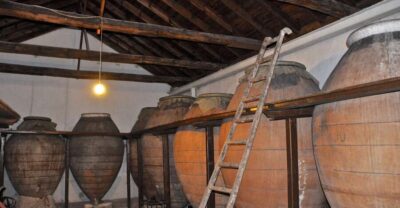
Madrid Region Wineries Guided Tour with Wine Tastings
Read our review →
Ribera del Duero:4 Wineries, tasting & Lunch included from Madrid
Read our review →
Toledo Day Trip with Winery Visit and Wine Tasting
Read our review →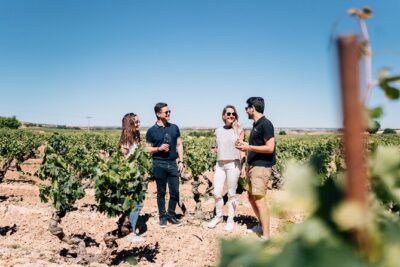
Spanish Villages & Winery Visit with Wine Tasting and Tapas Lunch
Read our review →
Ribera del Duero Tour of 3 Wineries w/ Tastings
Read our review →Browse the lists this tour appears in