
REVIEW · PORTUGAL
Grande Prova Honrado Vineyards
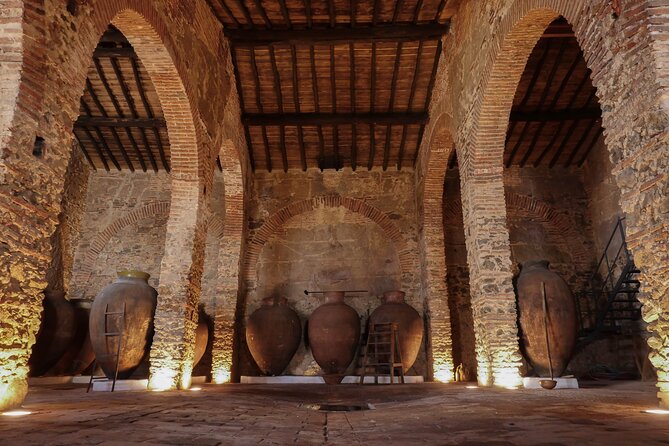
The most striking part of Grande Prova Honrado Vineyards is the setting: wine tasting takes place inside Cella Vinaria Antiqua, a historic building linked to the Roman roots of wine production in Portugal. Giant clay pots, traditional tools, and old methods give the visit a sense of place that a modern tasting room cannot match.
I like two things in particular. First, the tasting explains Talha wine rather than simply pouring it, so you learn why Alentejo winemakers ferment and age wine in large earthenware vessels. Second, the four wines arrive with a generous spread of local bread, cheese, charcuterie, olives, jam or honey, and olive oil. The main drawback is the short 90-minute format, which leaves little time for a long winery visit or a leisurely meal.
Key points to know before you book
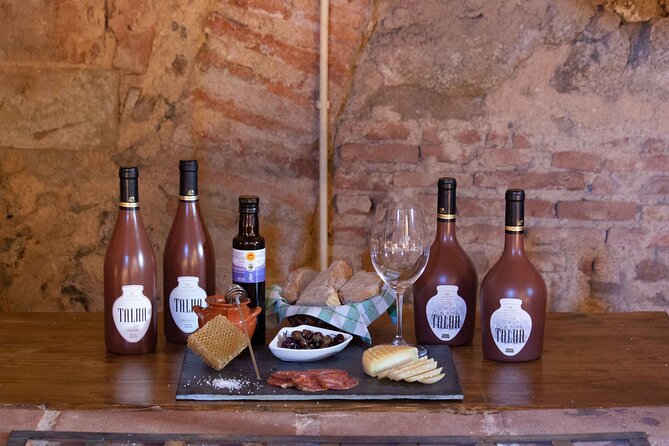
- Four DOC Alentejo Talha wines: Taste red, white, premium red, and premium white wines from Honrado Vineyards.
- A wine museum in a historic building: The guided visit to Cella Vinaria Antiqua is the heart of the experience.
- Clay pots instead of stainless-steel tanks: You see the traditional vessels and hear how this old method works.
- A full Alentejo snack board: Bread, cheese, charcuterie, olives, jam or honey, and olive oil are included.
- Friendly English or Portuguese guidance: Natalia has led visits with clear explanations and warm enthusiasm.
- A useful nearby tip: An adjacent family-linked tavern is not part of the tour, but it offers a chance to continue with local food and wine.
Why Talha wine makes this visit different
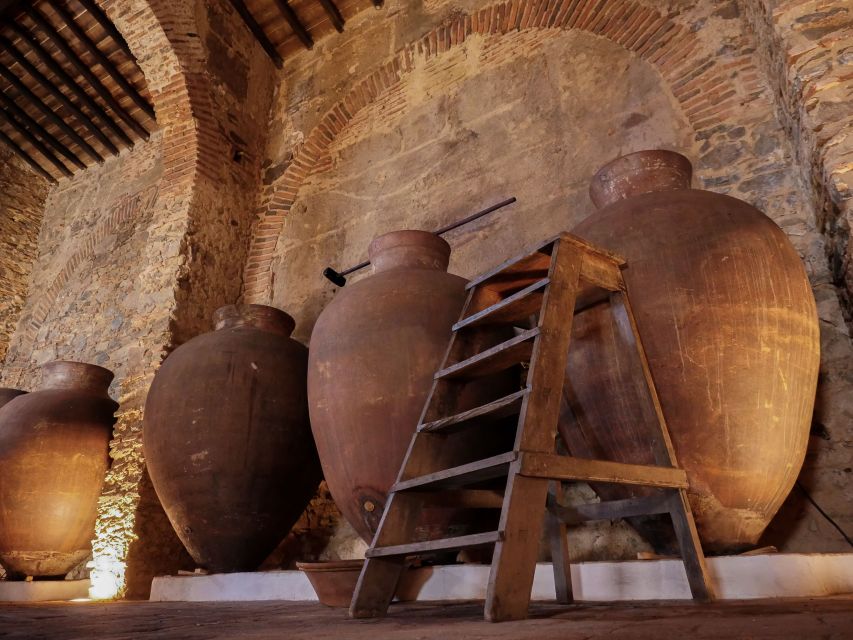
Talha wine is made in large clay pots, called talhas, using methods tied to the ancient wine culture of Alentejo. The pots are not just decoration. They are the main subject of the visit, and they help you understand how wine was made before modern steel tanks and tightly controlled industrial cellars became common.
You will see traditional utensils and the giant vessels used by Honrado Vineyards. The point is not to present old methods as a museum piece only. The winery continues to produce Talha red and white wines, including premium versions, under the DOC Alentejo designation.
That makes the tasting more useful than a simple sample flight. You can compare four expressions of the same broad tradition:
- Talha Red DOC Alentejo
- Talha White DOC Alentejo
- Talha Premium Red DOC Alentejo
- Talha Premium White DOC Alentejo
I like this lineup because it gives you a clear structure. The red and white wines let you compare color and style, while the premium bottles show how Honrado presents its more selective or refined versions. The experience does not promise a technical wine course, but it gives you enough background to understand what you are tasting.
A few more vineyard days around Portugal worth a look
- Porto: Douro Valley with Winery Lunch, Tastings & Cruise
★ 4.7 · 7,002 reviews - Porto: Bridges Cruise & Sunset & Port Wine Cellar Option
★ 4.2 · 4,180 reviews - Porto: Cálem Cellar Tour, Interactive Museum & Wine Tasting
★ 4.5 · 4,113 reviews
Entering Cella Vinaria Antiqua
The guided tour lasts about 20 minutes, but the building gives it more weight than that number suggests. Cella Vinaria Antiqua is the wine museum where the visit takes place, and the room has an unusual Roman connection.
During renovation, the space was found to reach back to the period when the Romans arrived in Portugal and began wine production there. The visit uses that setting to connect modern Alentejo wine with much older practices. You are not only looking at bottles on shelves. You are seeing a place where the story of local wine is built into the walls and cellar spaces.
The museum portion is best for anyone who likes context. Natalia, one of the guides associated with the experience, has been praised for explaining the cellar with energy and clarity. The tour is offered in English or Portuguese, so you can ask questions about the pots, tools, and production method in either language.
The setting may also appeal to people who are not serious wine experts. You do not need to know grape varieties or winemaking terms before arriving. The clay vessels and historic rooms give you something concrete to look at while the guide explains the process.
One practical point: this is a compact visit. The museum tour is not designed as a long archaeological tour, and the time moves quickly once the tasting begins. If you want a detailed study of Roman Portugal, this will feel light. If you want a focused introduction before tasting traditional wine, the balance works well.
How the 90-minute visit unfolds
The meeting point is at R. Gen. Humberto Delgado 17 in the Beja District. Hotel pickup and drop-off are not included, so you need to make your own way there. Plan around the fixed meeting location rather than expecting a transfer from your accommodation.
The visit begins with the winery and the guided museum tour. Allow roughly 20 minutes for this part. It sets up the tasting by showing you the cellar, the giant clay pots, and the utensils linked to the traditional process.
The next hour is devoted to wine and food tasting. This is the main part of the experience, and the pace should suit you if you want to taste four wines without spending half a day at the winery. The final 10 minutes are set aside for a photo stop and free time at a local restaurant area.
That last stop sounds brief, and it is. Treat it as a chance to take a photograph or look around, not as a full restaurant visit. If you want a proper meal, you need to plan extra time after the tour.
Four wines and a table of Alentejo flavors
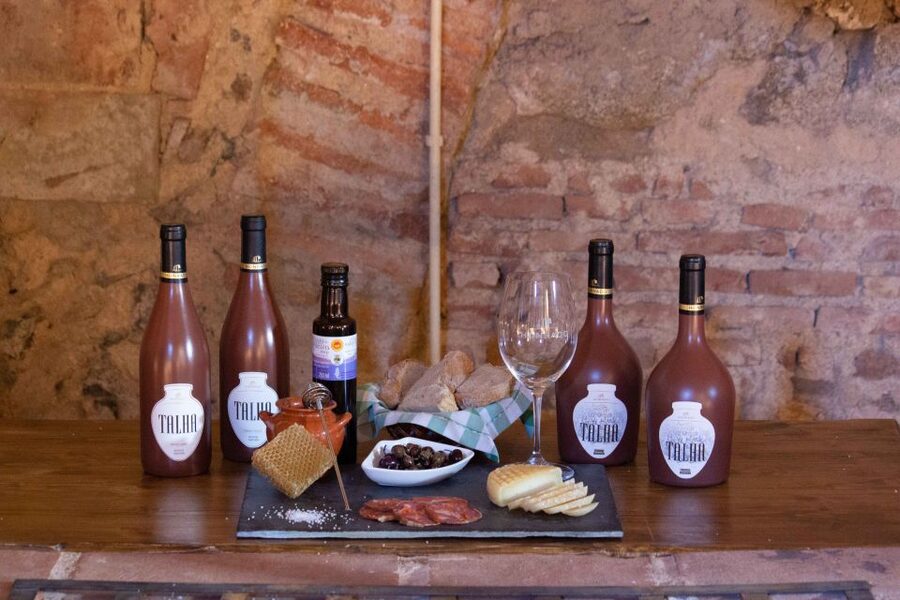
The food matters here because it shows how the wines fit into local eating habits. You receive traditional Alentejo bread, cheese and charcuterie, locally produced olives, handmade jam or honey, and local olive oil.
This is more than a few crackers placed beside the glasses. Bread, olives, cured meats, cheese, and olive oil give you familiar regional flavors to test alongside both red and white wine. Jam or honey adds a sweet contrast, which can be useful when comparing the wines at the end of the tasting.
I would pay attention to how each item changes the wine. A salty cured meat may make a red seem rounder, while bread and cheese can soften sharper notes in a white. You do not need to analyze every sip. The point is to slow down and notice how local wine works with local food.
The tasting includes four Honrado wines, all labeled DOC Alentejo. You will try a standard Talha red, a standard Talha white, a premium red, and a premium white. The tasting is commented, meaning the guide explains the wines as they are served rather than leaving you to guess what makes them different.
The generous food selection is one reason the $41 price feels reasonable. You are paying for a guided cultural visit, four wines, a substantial regional tasting board, and access to a distinctive historic setting. It is not the cheapest way to have a drink in Portugal, but it offers more than a casual glass at a bar.
Same wine country, a different day out:
- From Porto: 2 Wine Regions, Farm-to-Table Lunch & Boat
★ 4.9 · 5,724 reviews - Douro Valley Tour: 2 Vineyard Visits, River Cruise, Winery Lunch
★ 5.0 · 3,542 reviews - Porto: Cálem Cellar Tour, Fado Show & Wine Tasting
★ 4.4 · 3,530 reviews - Porto: Taylor’s Port Cellars & Tasting
★ 4.6 · 3,374 reviews
What the traditional clay pots add
The clay pots are the visual and practical center of the visit. They explain why Talha wine has such a strong identity in Alentejo. Modern wineries often rely on stainless steel, concrete, or small oak barrels. Here, the vessels themselves are part of the method and the story.
You will see how the winery uses traditional techniques and utensils. The experience does not turn this into a lecture filled with technical detail, so do not expect a full winemaking seminar. Instead, you get enough explanation to understand how old tools and large clay containers still shape the finished wine.
That approach is useful for first-time Talha drinkers. You can taste the wine immediately after seeing its production setting, which gives the samples a clear frame of reference. The method becomes less abstract when you are standing near the vessels that make it possible.
The premium wines also add a helpful comparison. You are not tasting only one rustic style and leaving with the idea that all Talha wine is alike. Four pours allow you to see that the traditional vessel can be used across red and white wines and across different levels within the producer’s range.
The mood: small-scale, warm, and personal
The experience has a family-scale feel rather than the polished rhythm of a large commercial winery. That can be a major advantage if you prefer conversation and direct explanations over a big group moving from room to room.
Natalia has been singled out for her enthusiasm during both the cellar visit and the tasting. That matters because Talha wine is unfamiliar to many people. A warm guide can make the difference between simply hearing facts and actually following the story from Roman-era production to the present day.
The visit is available in English and Portuguese. You should still book at least 24 hours ahead, since advance booking is required. The experience has a separate entrance for skip-the-line access, though its short duration and small-scale format are the more important practical features.
Pets are allowed. The site is wheelchair accessible, but conditions apply for people with reduced mobility. If you need step-free access or other specific assistance, check the conditions before paying.
Is $41 a fair price?
At $41 per person, I would rate this as fair value for a visitor who wants both wine and cultural context. Four wines alone might not justify the price for someone focused only on drinking. The museum visit, guide, historic room, regional food, and discount voucher make the package more useful.
You also receive a $5 voucher for the Honrado wine shop. That brings the effective value down slightly if you intend to buy a bottle or two afterward. The voucher is not a reason to book by itself, but it is a nice way to continue the tasting at home.
The price works best for couples, small groups, and curious food-and-wine visitors who want a concentrated introduction to Alentejo traditions. It is less suited to anyone looking for a long cellar tour, a full meal, or a broad survey of many Portuguese wineries.
There is no hotel transportation included. That is the main cost consideration beyond the ticket itself. You need to reach R. Gen. Humberto Delgado 17 independently, so factor in your own transport plans when comparing this with a full-day wine excursion.
Allow time for the nearby tavern
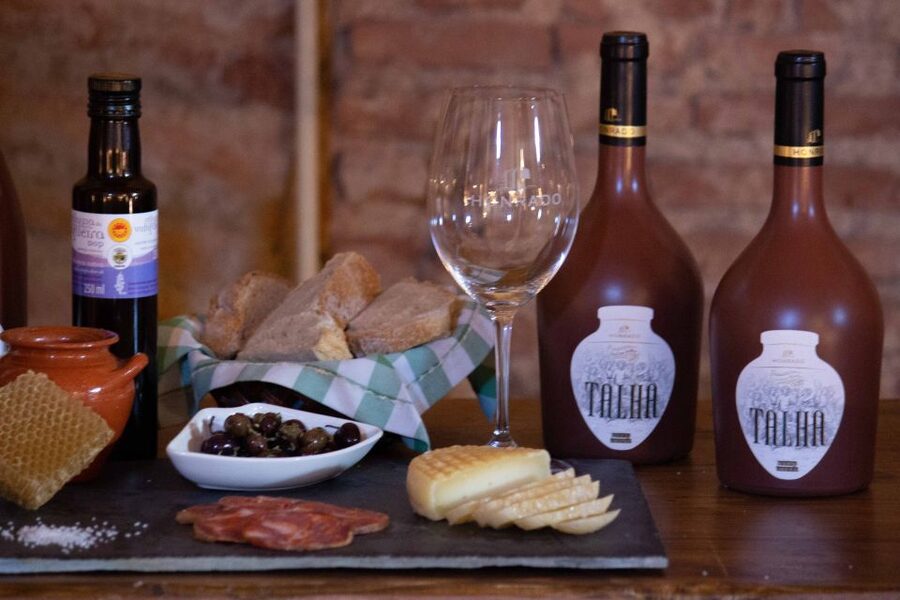
A useful tip is to consider the family-linked tavern beside the tour location. It is not included in the 90-minute experience, but it can turn the visit into a longer food stop.
You should not assume the tavern is part of your booking or that a table is arranged for you. Think of it as an optional add-on after the tasting. The short final stop at a local restaurant area gives you a chance to take a photo and keep exploring, but it does not replace a meal.
This matters because the tasting food is generous but still functions as accompaniment to wine. If you want a complete lunch or dinner, allow extra time and budget separately. The nearby tavern is especially appealing if you want to stay with local dishes and the same family connection after the formal tour ends.
Who will enjoy this most
I would choose this experience if you want to understand one distinctive wine tradition in a short visit. It suits first-time Talha drinkers, people interested in old production methods, and anyone who enjoys pairing regional food with wine.
It is also a good fit for a Beja District itinerary with a spare 90 minutes. The compact timing makes it easier to add to a day of sightseeing than a full winery excursion. The English-language option helps international visitors, while Portuguese speakers can enjoy the same visit in the local language.
Families may appreciate that pets are allowed, though the tasting itself is clearly designed around adults and wine. People with reduced mobility should check the specific access conditions in advance. Wheelchair access is available, but the provided information warns that conditions apply.
I would hesitate if you dislike guided tastings or prefer to choose your own wines without commentary. I would also skip it if your main goal is a long meal, a large estate tour, or extensive vineyard time. This is about the historic cellar, clay-pot wine, and local tasting table.
Should you book Grande Prova Honrado Vineyards?
Book it if you want a focused and genuinely local introduction to Alentejo Talha wine. The best reasons are the unusual Roman-linked setting, the giant clay pots, the four-wine comparison, and the generous plate of regional foods.
The visit is short, but that is also its strength. You get a clear story, a guided look at Cella Vinaria Antiqua, and enough wine to understand the producer without giving up an entire day. I would book at least 24 hours ahead and add time afterward if the nearby tavern appeals to you.
At $41, it is good value for a first Talha experience, especially if you plan to use the $5 wine-shop voucher. Skip it only if you want a full winery day or a formal meal. For curious drinkers passing through the Beja District, this is a smart, manageable stop with real local character.
FAQ
Where does Grande Prova Honrado Vineyards take place?
The meeting point is R. Gen. Humberto Delgado 17 in the Beja District of Portugal.
How long does the experience last?
The full experience lasts 1.5 hours, or 90 minutes.
What wines are included?
You taste Talha Red DOC Alentejo, Talha White DOC Alentejo, Talha Premium Red DOC Alentejo, and Talha Premium White DOC Alentejo.
What is Talha wine?
Talha wine is made using traditional Alentejo methods in large clay pots, with traditional techniques and utensils.
Is a guided tour included?
Yes. The experience includes a guided tour of the Wine-Museum Cella Vinaria Antiqua.
What food is served with the wine?
The tasting includes traditional Alentejo bread, cheese and charcuterie, locally produced olives, handmade jam or honey, and locally produced olive oil.
What languages are available?
The live guide speaks English or Portuguese.
Is hotel transportation included?
No. Hotel pickup and drop-off are not included.
Is the experience wheelchair accessible?
The experience is wheelchair accessible, but conditions apply for people with reduced mobility.
Can I cancel for a refund?
Yes. You can cancel up to 24 hours before the experience for a full refund. You can also reserve now and pay later.
Just added around Portugal
- Wine tasting at Quinta das Murgas★ 4.5 · 11 reviews
- Óbidos, Nazaré and Wineries, Day Private Tour by SUV from Lisbon★ 5.0 · 2 reviews
- Évora, Esporão Winery & Monsaraz | Exclusive Private Wine Tour★ 3.5 · 2 reviews
- Sintra,Palácio da Pena,Quinta da Regaleira and Cascais★ 5.0 · 11 reviews
- Tile painting experience and visit Azeitão wine cellar★ 5.0 · 2 reviews
- 1 day tour of Sintra and Cascais, Palácio da Pena, Quinta da Regaleira ….★ 3.0 · 4 reviews
- South Portugal Wine Route Private Full Day Tour from Lisbon★ 4.0 · 2 reviews
- Quinta da Regaleira and Cabo da Roca Half Day Private Tour★ 5.0 · 2 reviews
Portugal Vineyard Tours, compared.
Douro Valley with Winery Lunch, Tastings & Cruise
Read our review →
Cálem Cellar Tour, Interactive Museum & Wine Tasting
Read our review →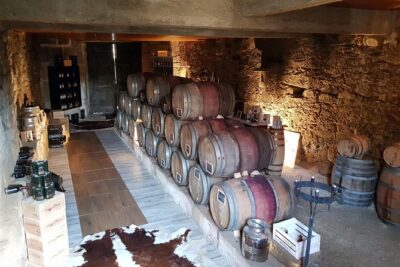
Douro Valley Tour: 2 Vineyard Visits, River Cruise, Winery Lunch
Read our review →

Tastings at 2 Wineries, Chef’s Lunch & Boat Tour
Read our review →
Douro Valley with Two Winery, Boat Trip and Lunch From Porto
Read our review →Browse the lists this tour appears in